
8周哈他瑜伽训练对健康中国女性受试者代谢和炎症标志物的影响:一项随机临床试验
Effects of 8-Week Hatha Yoga Training on Metabolic and Inflammatory Markers in Healthy, Female Chinese Subjects: A Randomized Clinical Trial.
作者信息
Chen Neng, Xia Xianghou, Qin Liqiang, Luo Li, Han Shufen, Wang Guiping, Zhang Ru, Wan Zhongxiao
机构信息
Department of Nutrition and Food Hygiene, School of Public Health, Soochow University, 199 Renai Road, Suzhou 215123, China.
Department of Breast Surgery, Zhejiang Cancer Hospital, Hangzhou, Zhejiang 310022, China.
出版信息
Biomed Res Int. 2016;2016:5387258. doi: 10.1155/2016/5387258. Epub 2016 Aug 3.
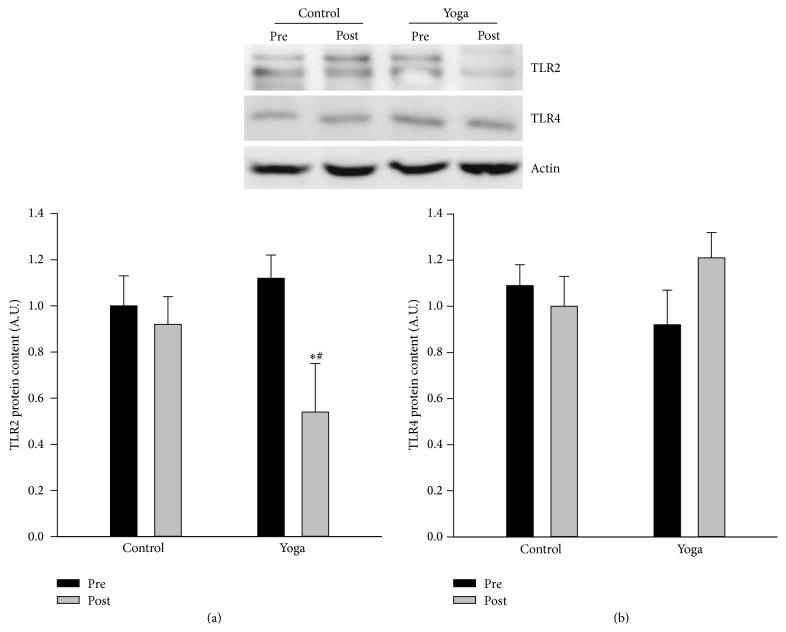
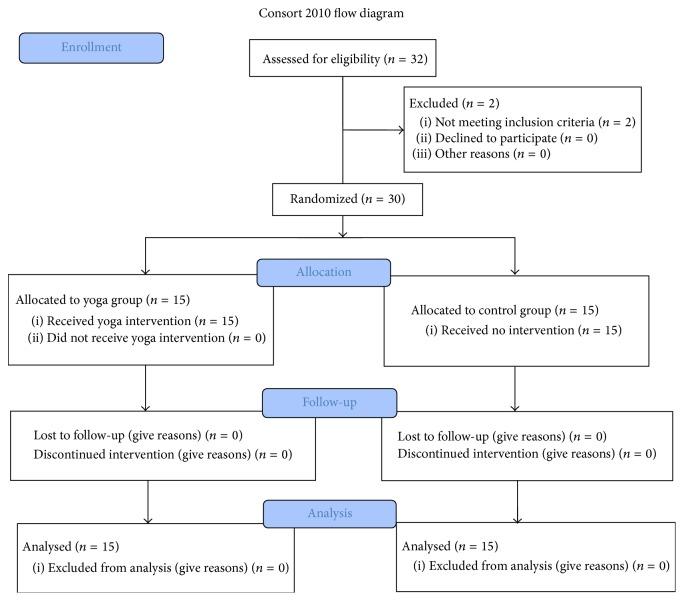
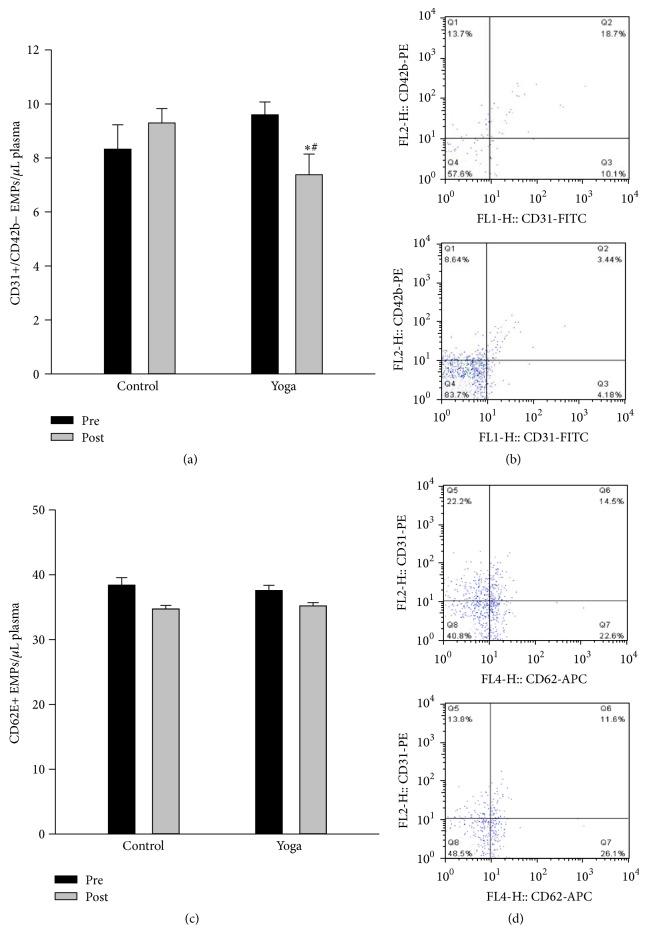
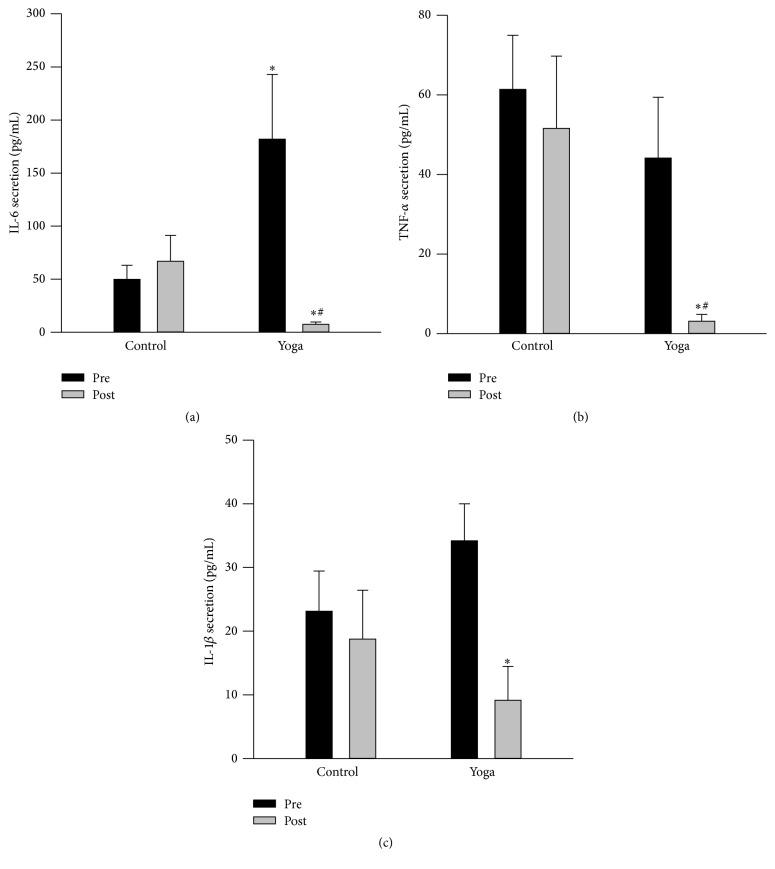
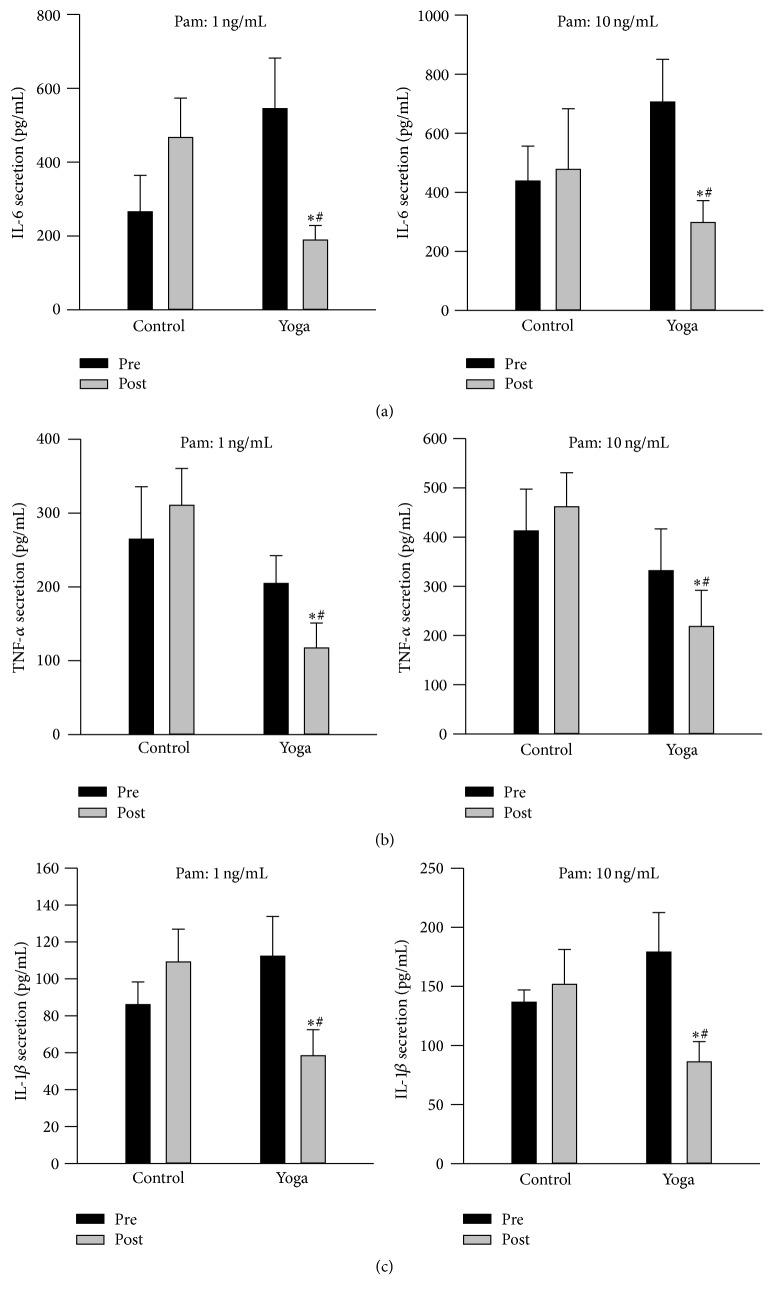
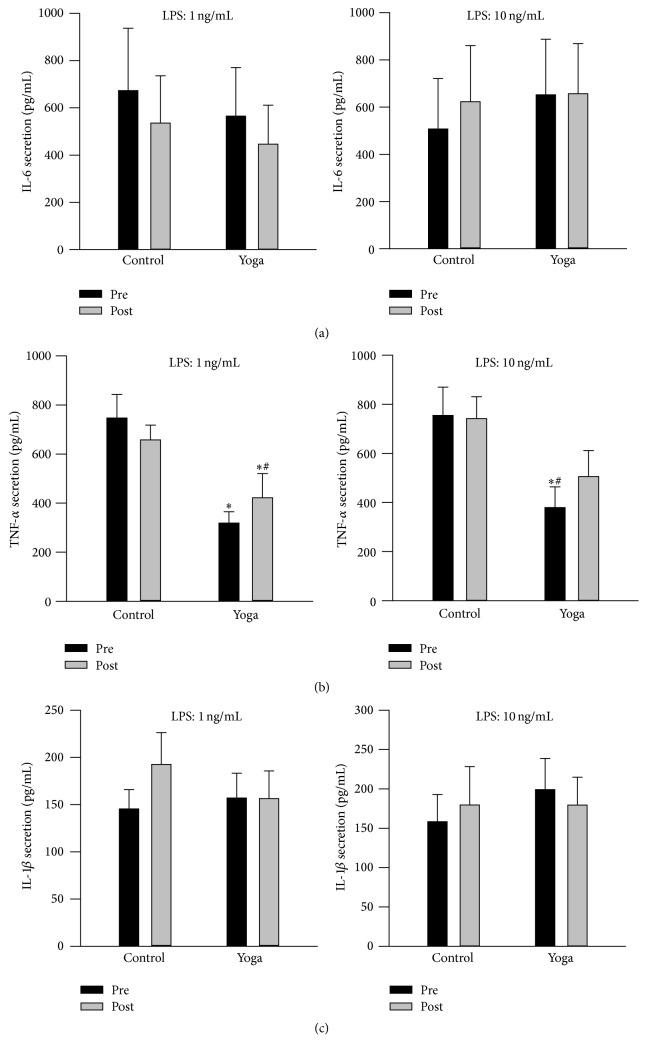
We aimed to determine the effects of an 8 wk Hatha yoga training on blood glucose, insulin, lipid profiles, endothelial microparticles (EMPs), and inflammatory status in healthy, lean, and female Chinese subjects. A total of 30 healthy, female Chinese subjects were recruited and randomized into control or yoga practice group. The yoga practice included 8 wks of yoga practice (2 times/wk) for a total of 16 times. Fasting blood samples were collected before and after yoga training. Plasma was isolated for the measurement of lipid profiles, glucose, insulin, EMPs, and inflammatory cytokines. Whole blood was cultured ex vivo and stimulated with lipopolysaccharide (LPS) and Pam3Cys-SK4. Peripheral blood mononuclear cells (PBMCs) were isolated for the measurement of TLR2 and TLR4 protein expression. Yoga practice significantly reduced plasma cholesterol, LDL-cholesterol, insulin levels, and CD31+/CD42b- EMPs. Cultured whole blood from the yoga group has reduced proinflammatory cytokines secretion both at unstimulated condition and when stimulated with Pam3Cys-SK4; this might be associated with reduced TLR2 protein expression in PBMCs after yoga training. Hatha yoga practice in healthy Chinese female subjects could improve hallmarks related to MetS; thus it can be considered as an ancillary intervention in the primary MetS prevention for the healthy population. This trial is registered with ChiCTR-IOR-14005747.
我们旨在确定为期8周的哈他瑜伽训练对健康、体型偏瘦的中国女性受试者的血糖、胰岛素、血脂谱、内皮微粒(EMPs)和炎症状态的影响。总共招募了30名健康的中国女性受试者,并将其随机分为对照组或瑜伽练习组。瑜伽练习包括为期8周的瑜伽训练(每周2次,共16次)。在瑜伽训练前后采集空腹血样。分离血浆以测量血脂谱、葡萄糖、胰岛素、EMPs和炎症细胞因子。将全血进行体外培养,并用脂多糖(LPS)和Pam3Cys-SK4刺激。分离外周血单核细胞(PBMCs)以测量TLR2和TLR4蛋白表达。瑜伽练习显著降低了血浆胆固醇、低密度脂蛋白胆固醇、胰岛素水平和CD31+/CD42b- EMPs。瑜伽组培养的全血在未刺激状态和用Pam3Cys-SK4刺激时,促炎细胞因子分泌均减少;这可能与瑜伽训练后PBMCs中TLR2蛋白表达降低有关。健康中国女性受试者进行哈他瑜伽练习可以改善与代谢综合征相关的指标;因此,它可被视为对健康人群进行原发性代谢综合征预防的辅助干预措施。本试验已在中国临床试验注册中心注册,注册号为ChiCTR-IOR-14005747。
 Zotero 插件