Ke Qingbo, Kim Ho Soo, Wang Zhi, Ji Chang Yoon, Jeong Jae Cheol, Lee Haeng-Soon, Choi Young-Im, Xu Bingcheng, Deng Xiping, Yun Dae-Jin, Kwak Sang-Soo
Plant Systems Engineering Research Center, Korea Research Institute of Bioscience and Biotechnology (KRIBB), Daejeon, Korea.
Department of Green Chemistry and Environmental Biotechnology, Korea University of Science and Technology (UST), Daejeon, Korea.
Plant Biotechnol J. 2017 Mar;15(3):331-343. doi: 10.1111/pbi.12628. Epub 2016 Sep 23.
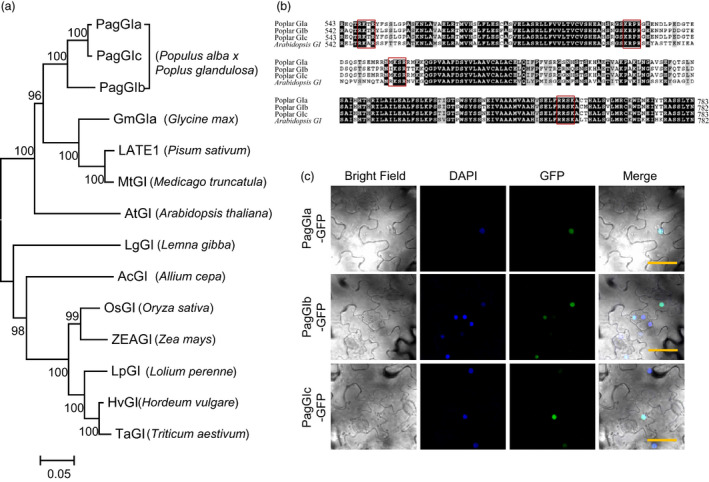
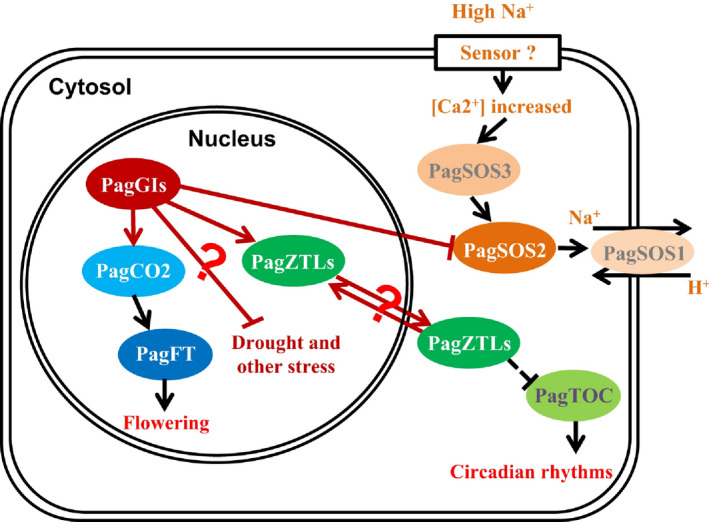
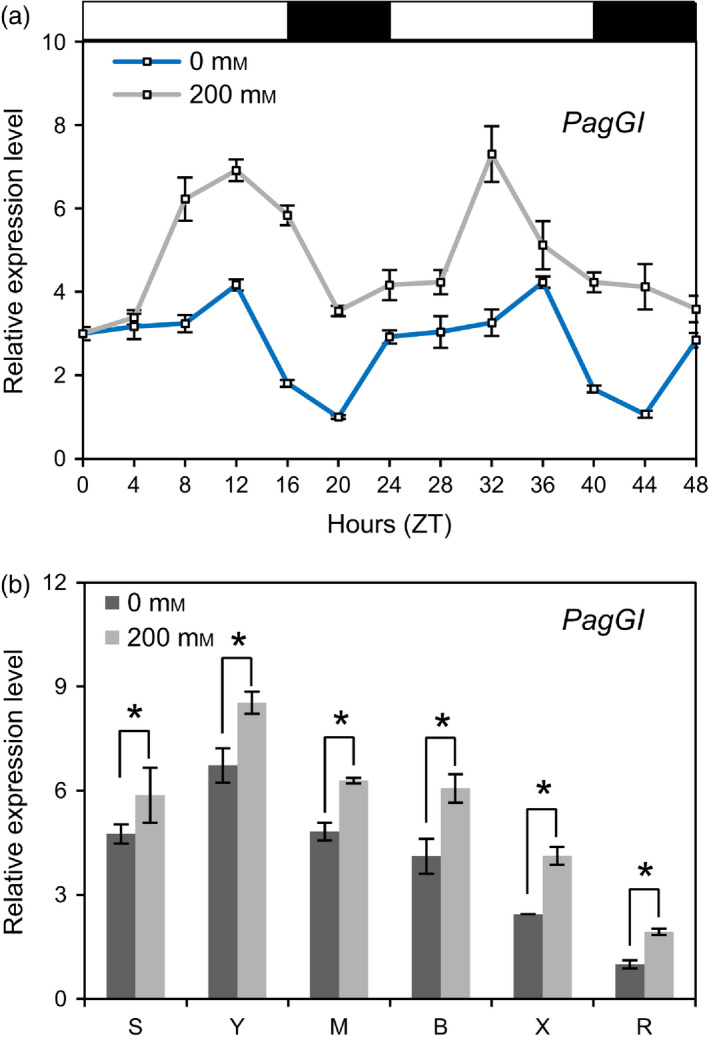
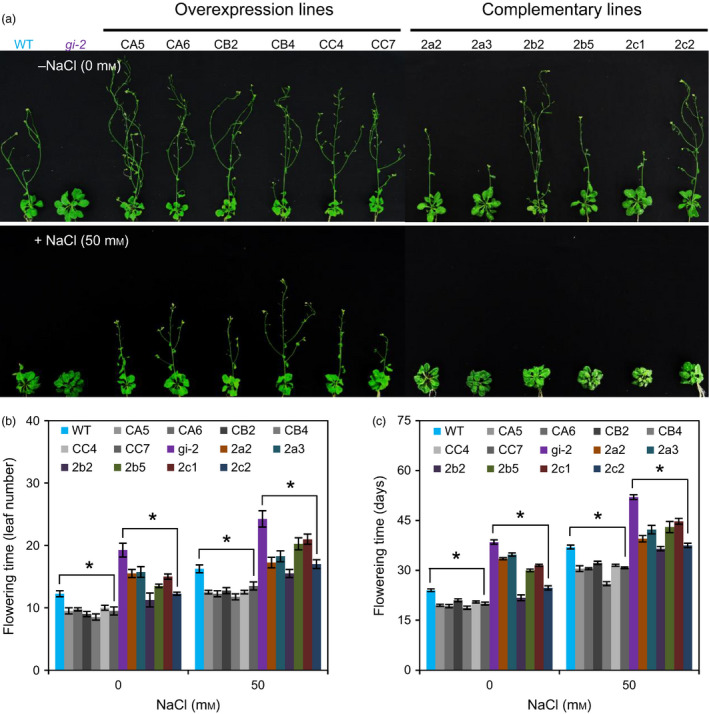
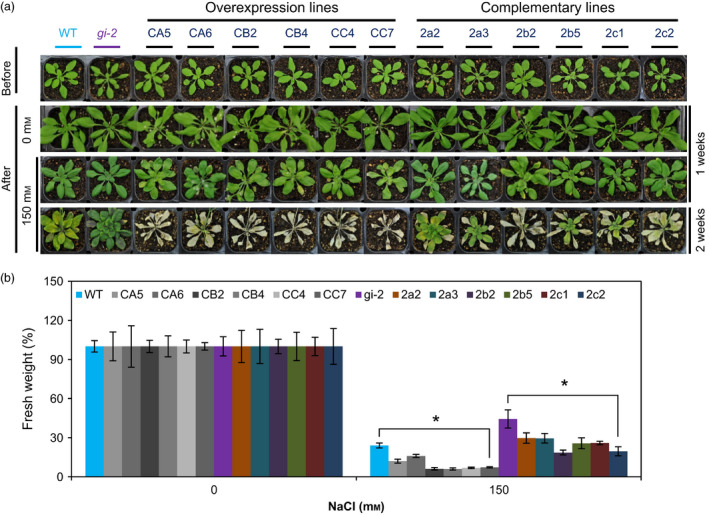
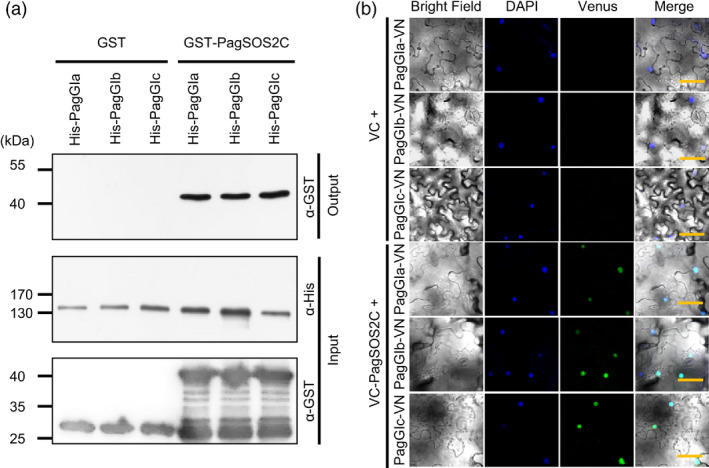
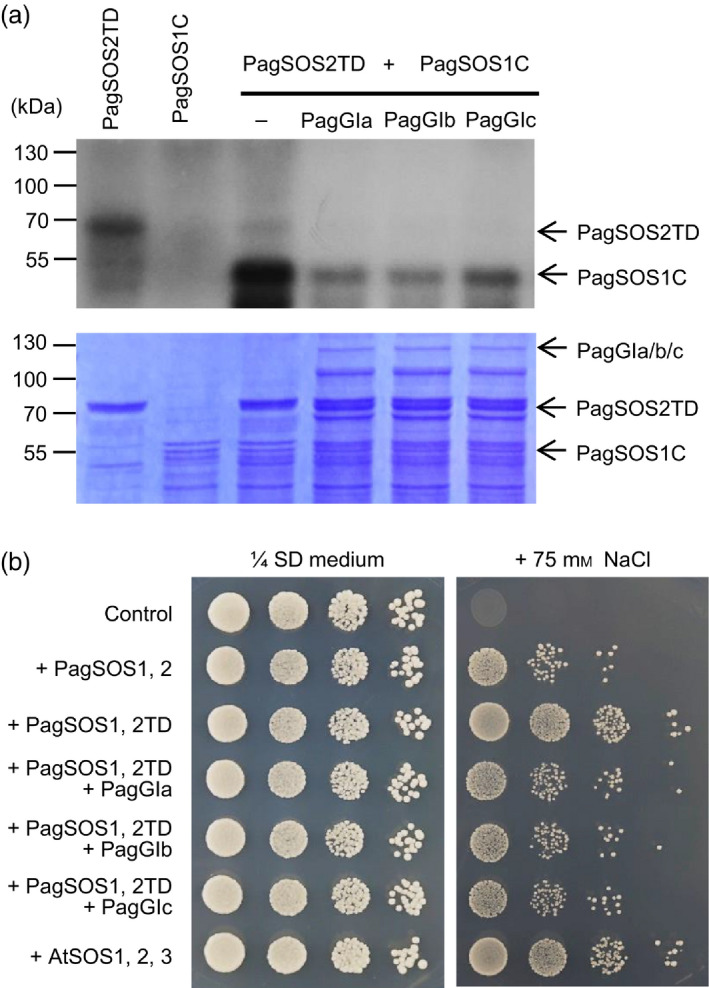
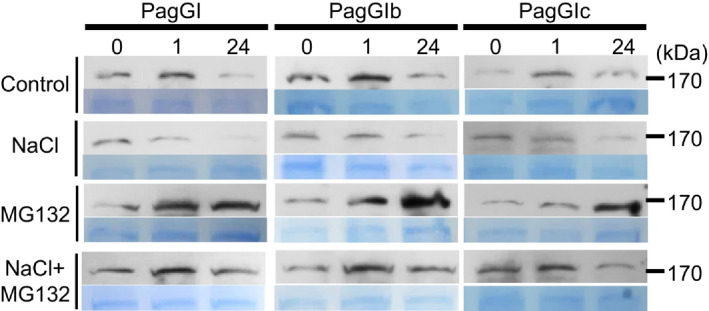
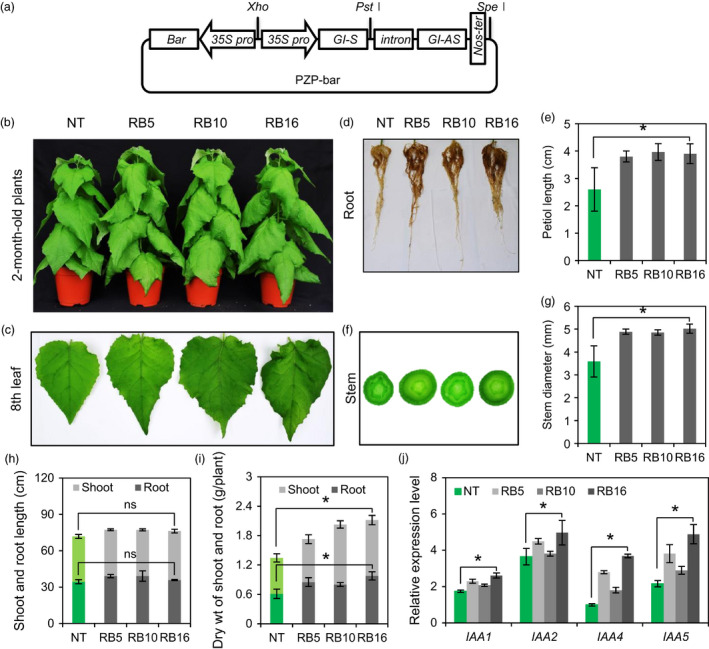
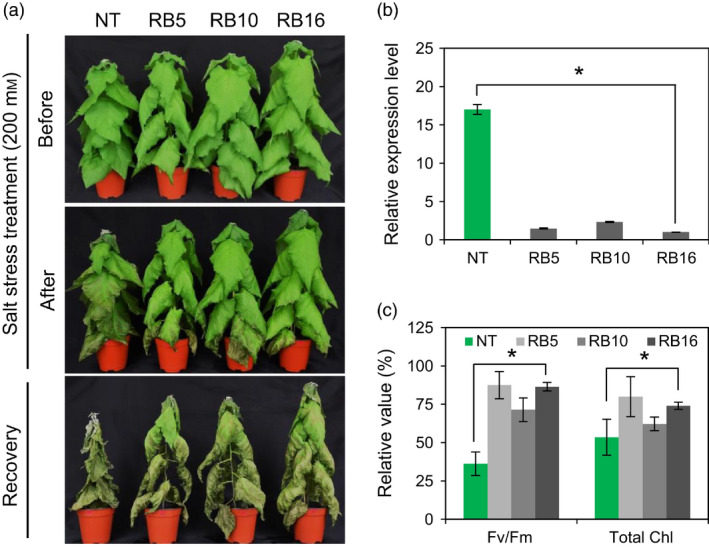
The flowering time regulator GIGANTEA (GI) connects networks involved in developmental stage transitions and environmental stress responses in Arabidopsis. However, little is known about the role of GI in growth, development and responses to environmental challenges in the perennial plant poplar. Here, we identified and functionally characterized three GI-like genes (PagGIa, PagGIb and PagGIc) from poplar (Populus alba × Populus glandulosa). PagGIs are predominantly nuclear localized and their transcripts are rhythmically expressed, with a peak around zeitgeber time 12 under long-day conditions. Overexpressing PagGIs in wild-type (WT) Arabidopsis induced early flowering and salt sensitivity, while overexpressing PagGIs in the gi-2 mutant completely or partially rescued its delayed flowering and enhanced salt tolerance phenotypes. Furthermore, the PagGIs-PagSOS2 complexes inhibited PagSOS2-regulated phosphorylation of PagSOS1 in the absence of stress, whereas these inhibitions were eliminated due to the degradation of PagGIs under salt stress. Down-regulation of PagGIs by RNA interference led to vigorous growth, higher biomass and enhanced salt stress tolerance in transgenic poplar plants. Taken together, these results indicate that several functions of Arabidopsis GI are conserved in its poplar orthologues, and they lay the foundation for developing new approaches to producing salt-tolerant trees for sustainable development on marginal lands worldwide.
开花时间调节因子GIGANTEA(GI)连接着拟南芥中参与发育阶段转变和环境胁迫响应的网络。然而,关于GI在多年生植物杨树的生长、发育及对环境挑战的响应中的作用,我们所知甚少。在此,我们从杨树(银白杨×腺毛杨)中鉴定出三个类GI基因(PagGIa、PagGIb和PagGIc)并对其进行了功能表征。PagGIs主要定位于细胞核,其转录本呈节律性表达,在长日条件下,在生物钟时间12左右达到峰值。在野生型(WT)拟南芥中过表达PagGIs会诱导早花和盐敏感性,而在gi-2突变体中过表达PagGIs则完全或部分挽救了其开花延迟和盐耐受性增强的表型。此外,在无胁迫条件下,PagGIs-PagSOS2复合物抑制PagSOS2调节的PagSOS1磷酸化,而在盐胁迫下,由于PagGIs的降解,这些抑制作用被消除。通过RNA干扰下调PagGIs导致转基因杨树植株生长旺盛、生物量增加且盐胁迫耐受性增强。综上所述,这些结果表明拟南芥GI的几种功能在其杨树直系同源物中是保守的,它们为开发新方法以培育耐盐树木从而在全球边缘土地上实现可持续发展奠定了基础。