Akerstrom M, Almerud P, Andersson E M, Strandberg B, Sallsten G
Department of Occupational and Environmental Medicine, Sahlgrenska University Hospital and Academy, University of Gothenburg, PO Box 414, 405 30, Göteborg, Sweden.
Int Arch Occup Environ Health. 2016 Nov;89(8):1289-1297. doi: 10.1007/s00420-016-1163-1. Epub 2016 Aug 27.
Petroleum refinery workers' exposure to the carcinogens benzene and 1,3-butadiene has decreased during normal operations. However, certain occupational groups or events at the refineries still involve a risk of higher exposures. The aim of this study was to examine the personal exposure to benzene and 1,3-butadiene at refinery turnarounds and during work in the oil harbour.
Personal exposure measurements of benzene and 1,3-butadiene were taken during work shifts, with a priori assumed higher benzene exposure, using PerkinElmer diffusive samplers filled with Carbopack X. Mean exposure levels were calculated, and repeated exposure measurements, when available, were assessed using mixed effect models. Group and individual compliance with the Swedish occupational exposure limit (OEL) was tested for the different exposure groups.
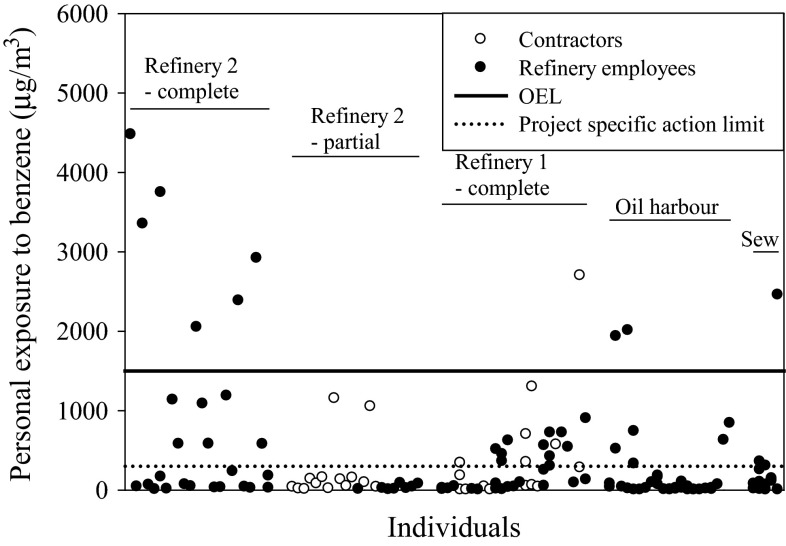
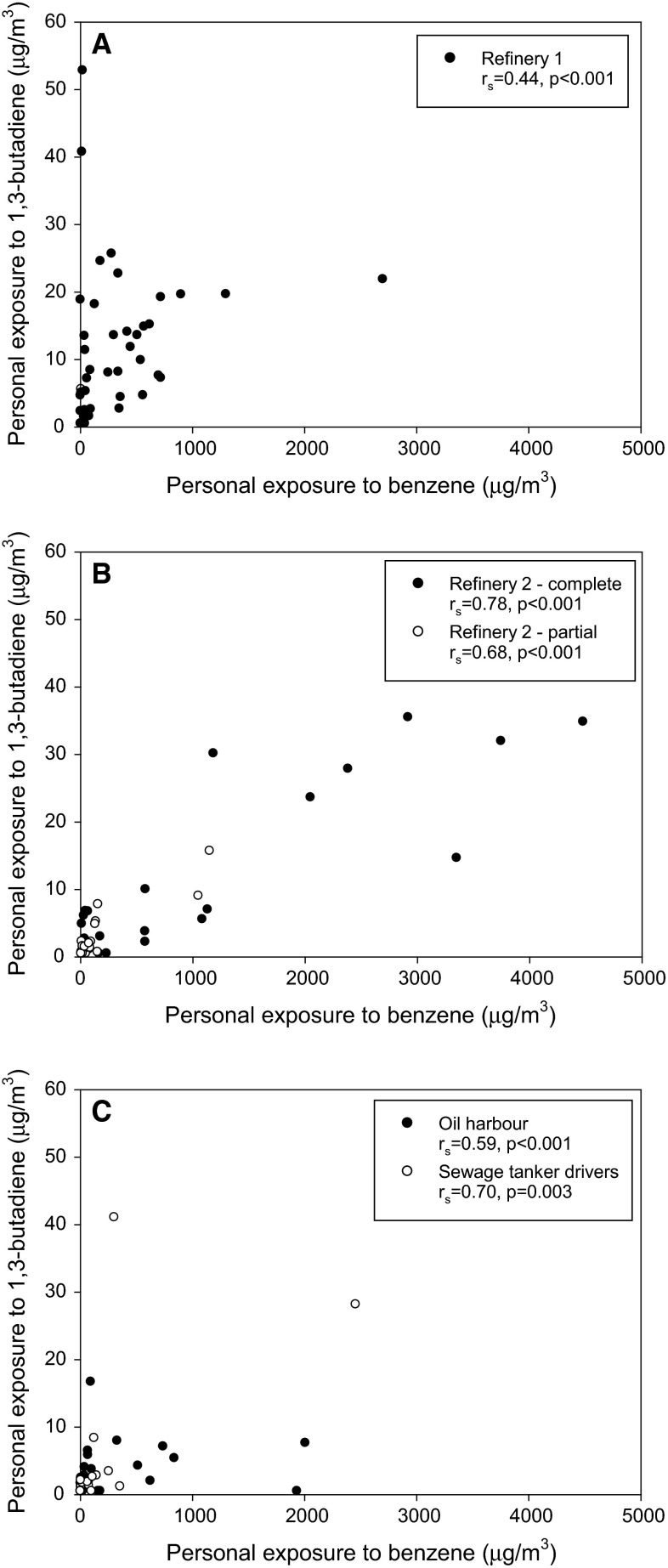
Mean benzene exposure levels for refinery workers during the three measured turnarounds were 150, 610 and 960 µg/m, and mean exposures for oil harbour workers and sewage tanker drivers were 310 and 360 µg/m, respectively. Higher exposures were associated with handling benzene-rich products. Most occupational groups did not comply with the Swedish OEL for benzene nor did the individuals within the groups. The exposure to 1,3-butadiene was very low, between <1 and 3 % of the Swedish OEL.
Work within the petroleum refinery industry, with potential exposure to open product streams containing higher fractions of benzene, pose a risk of personal benzene exposures exceeding the OEL. Refinery workers performing these work tasks frequently, such as contractors, sewage tanker drivers and oil harbour workers, need to be identified and protected.
在正常作业期间,炼油厂工人接触致癌物苯和1,3 - 丁二烯的情况有所减少。然而,炼油厂的某些职业群体或作业活动仍存在接触风险较高的情况。本研究的目的是检测炼油厂检修期间以及在油港工作时个人对苯和1,3 - 丁二烯的接触情况。
在轮班期间,使用填充有Carbopack X的珀金埃尔默扩散采样器,对苯和1,3 - 丁二烯进行个人接触测量,预先假定苯接触量较高。计算平均接触水平,对于可用的重复接触测量数据,使用混合效应模型进行评估。对不同接触组的群体和个体是否符合瑞典职业接触限值(OEL)进行了测试。
在三次测量的炼油厂检修期间,炼油厂工人的平均苯接触水平分别为150、610和960微克/立方米,油港工人和污水罐车司机的平均接触水平分别为310和360微克/立方米。较高的接触与处理富含苯的产品有关。大多数职业群体不符合瑞典苯的OEL,各群体中的个体也不符合。1,3 - 丁二烯的接触量非常低,在瑞典OEL的<1%至3%之间。
石油炼制行业内的工作,由于可能接触到含苯比例较高的开放产品流,存在个人苯接触量超过OEL的风险。需要识别并保护经常执行这些工作任务的炼油厂工人,如承包商、污水罐车司机和油港工人。