Edokpolo Benjamin, Yu Qiming Jimmy, Connell Des
Griffith School of Engineering, Griffith University, Nathan Campus, Brisbane, QLD 4111, Australia.
Griffith School of Environment, Griffith University, Nathan Campus, Brisbane, QLD 4111, Australia.
Int J Environ Res Public Health. 2015 Jan 12;12(1):595-610. doi: 10.3390/ijerph120100595.
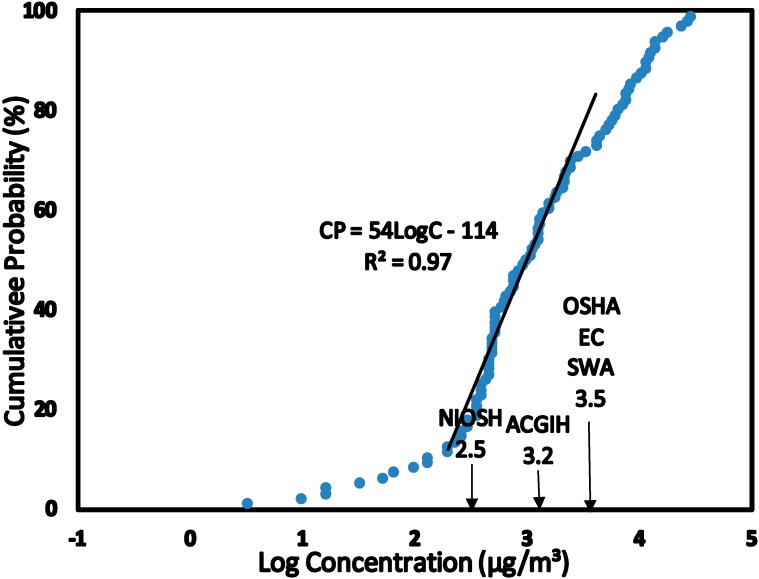
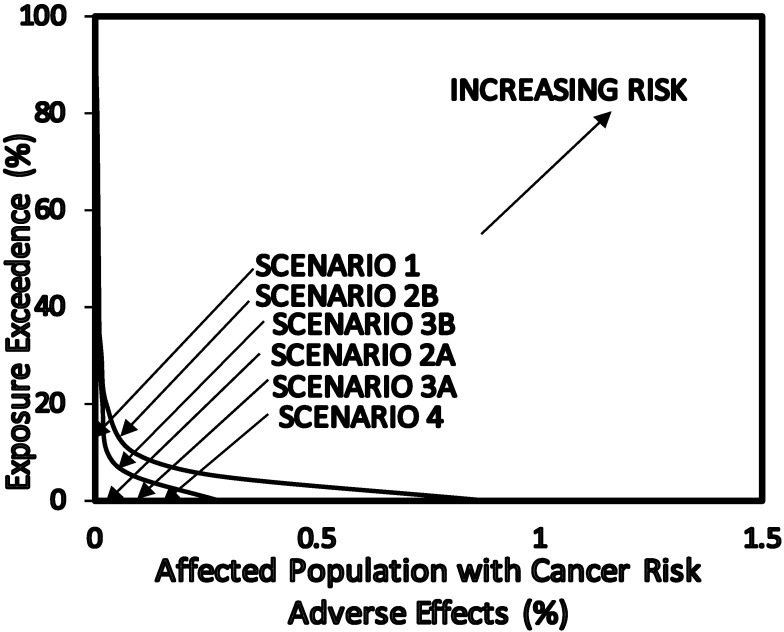
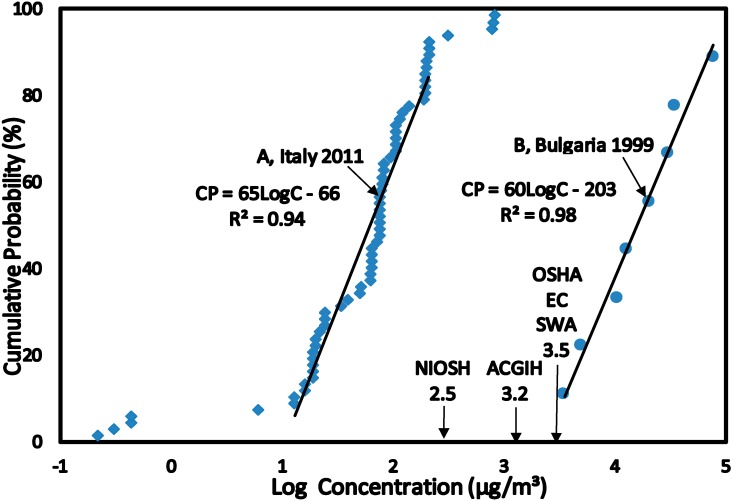
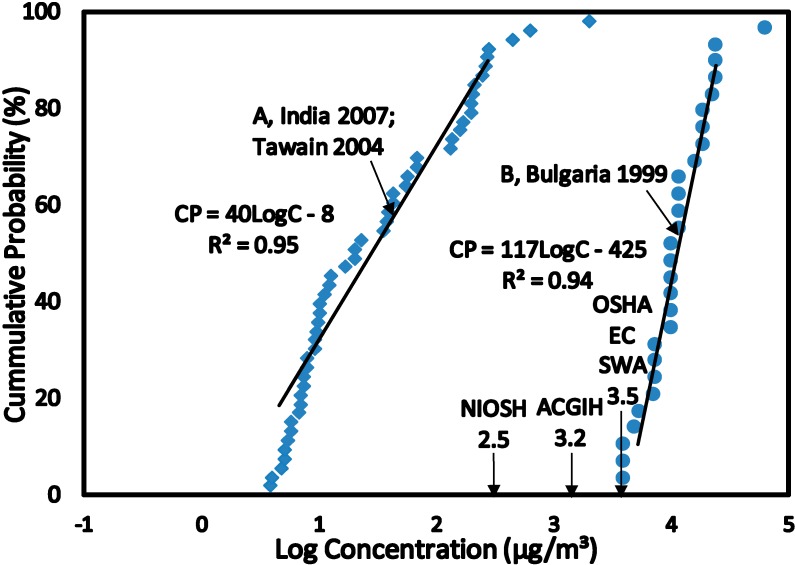
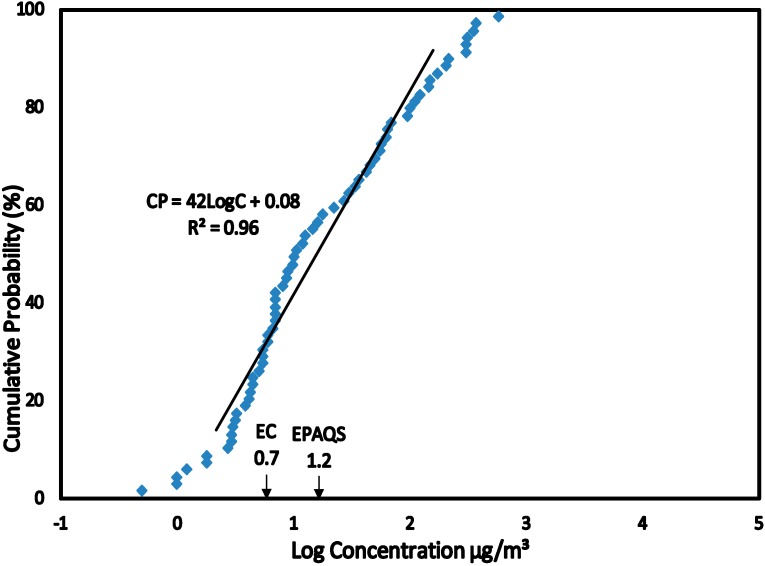
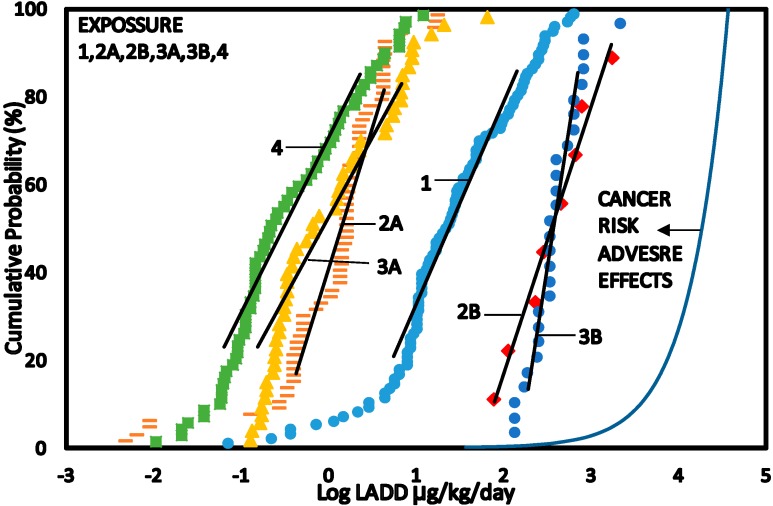
The health risk resulting from benzene exposure in petroleum refineries was calculated using data from the scientific literature from various countries throughout the world. The exposure data was collated into four scenarios from petroleum refinery environments and plotted as cumulative probability distributions (CPD) plots. Health risk was evaluated for each scenario using the Hazard Quotient (HQ) at 50% (CEXP50) and 95% (CEXP95) exposure levels. Benzene levels were estimated to pose a significant risk with HQ50 > 1 and HQ95 > 1 for workers exposed to benzene as base estimates for petroleum refinery workers (Scenario 1), petroleum refinery workers evaluated with personal samplers in Bulgarian refineries (Scenario 2B) and evaluated using air inside petroleum refineries in Bulgarian refineries (Scenario 3B). HQ50 < 1 were calculated for petroleum refinery workers with personal samplers in Italian refineries (Scenario 2A), air inside petroleum refineries (Scenario 3A) and air outside petroleum refineries (Scenario 4) in India and Taiwan indicating little possible adverse health effects. Also, HQ95 was < 1 for Scenario 4 however potential risk was evaluated for Scenarios 2A and 3A with HQ95 > 1. The excess Cancer risk (CR) for lifetime exposure to benzene for all the scenarios was evaluated using the Slope Factor and Overall Risk Probability (ORP) methods. The result suggests a potential cancer risk for exposure to benzene in all the scenarios. However, there is a higher cancer risk at 95% (CEXP95) for petroleum refinery workers (2B) with a CR of 48,000 per 106 and exposure to benzene in air inside petroleum refineries (3B) with a CR of 28,000 per 106.
利用来自世界各国科学文献的数据,计算了石油炼制厂中接触苯所带来的健康风险。将接触数据整理成来自石油炼制厂环境的四种情景,并绘制为累积概率分布(CPD)图。使用50%(CEXP50)和95%(CEXP95)接触水平下的危害商数(HQ)对每种情景进行健康风险评估。对于作为石油炼制厂工人基本估计值的接触苯的工人(情景1)、在保加利亚炼油厂使用个人采样器评估的石油炼制厂工人(情景2B)以及在保加利亚炼油厂使用炼油厂内空气评估的工人(情景3B),估计苯水平在HQ50 > 1和HQ95 > 1时会带来重大风险。对于在意大利炼油厂使用个人采样器的石油炼制厂工人(情景2A)、印度和台湾炼油厂内的空气(情景3A)以及炼油厂外的空气(情景4),计算出HQ50 < 1,表明几乎没有可能的不良健康影响。此外,情景4的HQ95 < 1,但对于情景2A和3A,HQ95 > 1时评估有潜在风险。使用斜率因子和总体风险概率(ORP)方法评估了所有情景下终身接触苯的超额癌症风险(CR)。结果表明所有情景下接触苯都存在潜在癌症风险。然而,对于石油炼制厂工人(2B)在95%(CEXP95)接触水平下癌症风险更高,CR为每106人中有48,000人,以及在炼油厂内空气中接触苯(3B)时CR为每106人中有28,000人。