Department of Information and Basic Science and Research Center for Biological Diversity, Graduate School of Natural Sciences, Nagoya City University, 1 Yamanohata, Mizuho-cho, Mizuho-ku, Nagoya, Aichi 467-8501 Japan ; Laboratory of Animal Genetics, Department of Applied Molecular Biosciences, Graduate School of Bioagricultural Sciences, Nagoya University, Furo-cho, Chikusa-ku, Nagoya, Aichi 464-8601 Japan ; Current affiliation: Research Center for Bioinformatics and Biosciences, National Research Institute of Fisheries Science, Japan Fisheries Research and Education Agency, Yokohama, Kanagawa 236-8648 Japan.
Department of Biological Science, Faculty of Science, Hokkaido University, North 10 West 8, Kita-ku, Sapporo, Hokkaido 060-0810 Japan.
Zoological Lett. 2016 Aug 26;2(1):19. doi: 10.1186/s40851-016-0056-1. eCollection 2016.
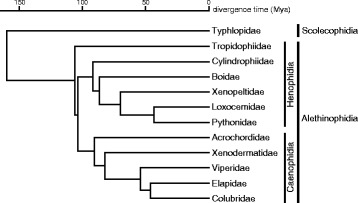
The discovery of differentially organized sex chromosome systems suggests that heteromorphic sex chromosomes evolved from a pair of homologous chromosomes. Whereas karyotypes are highly conserved in alethinophidian snakes, the degeneration status of the W chromosomes varies among species. The Z and W chromosomes are morphologically homomorphic in henophidian species, whereas in snakes belonging to caenophidian families the W chromosomes are highly degenerated. Snakes therefore are excellent animal models in which to study sex chromosome evolution. Herein, we investigated the differentiation processes for snake sex chromosomes using both coding and repetitive sequences. We analyzed phylogenetic relationships of CTNNB1 and WAC genes, localized to the centromeric and telomeric regions, respectively, of the long arms on snake sex chromosomes, and chromosome distribution of sex chromosome-linked repetitive sequences in several henophidian and caenophidian species.
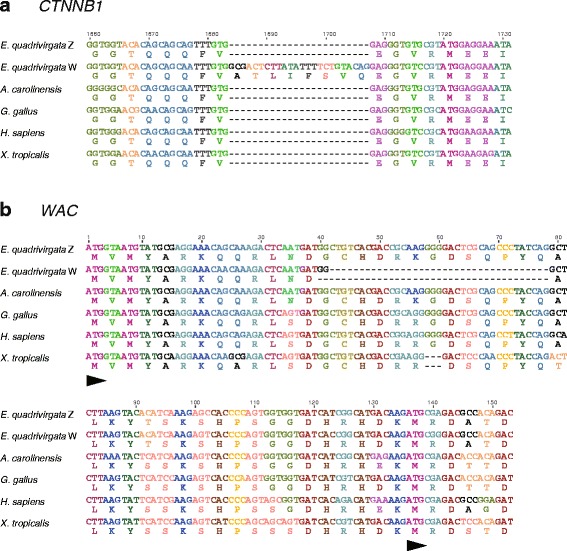
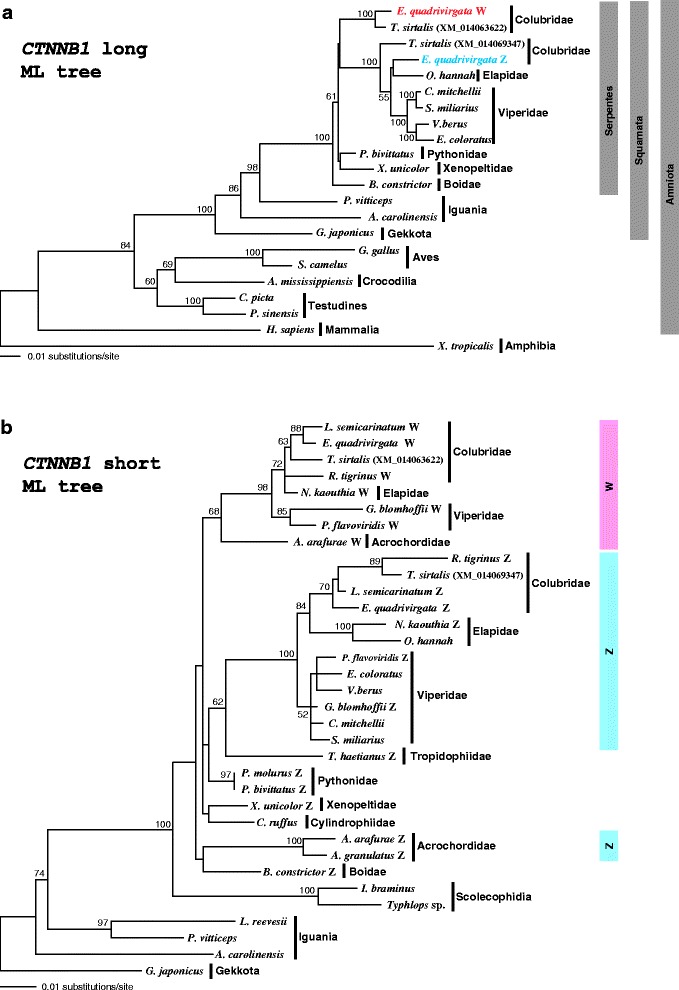
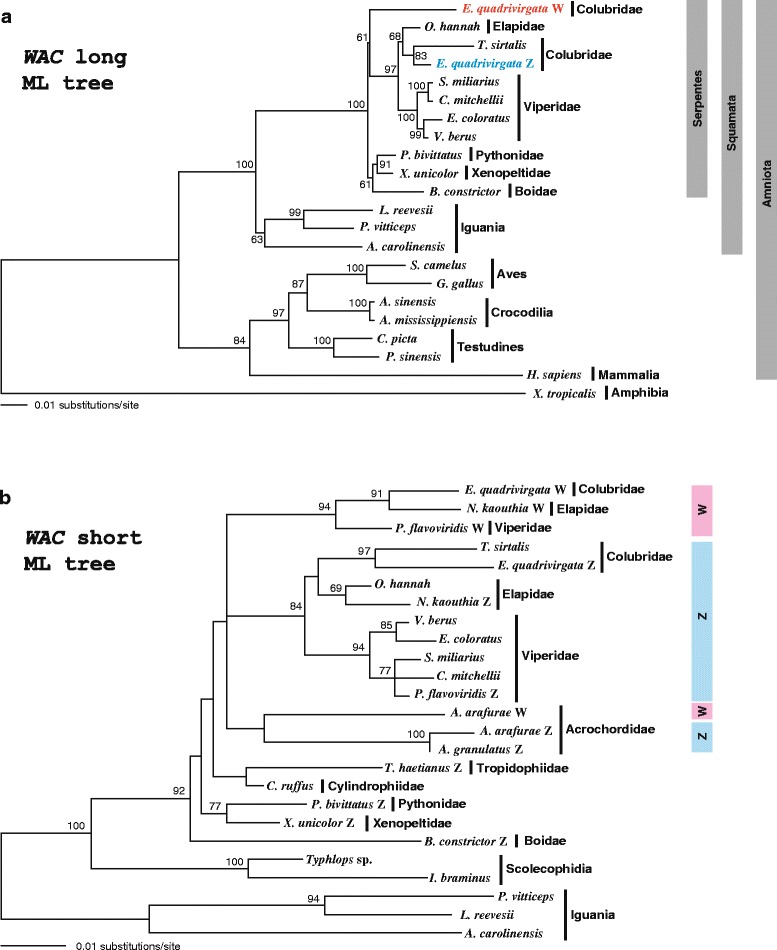
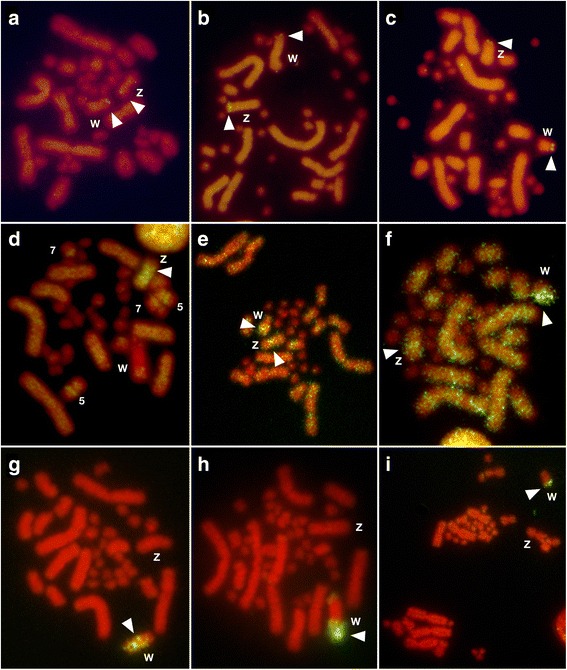
Partial or full-length coding sequences of CTNNB1 and WAC were identified for Z homologs of henophidian species from Tropidophiidae, Boidae, Cylindrophiidae, Xenopeltidae, and Pythonidae, and for Z and W homologs of caenophidian species from Acrochordidae, Viperidae, Elapidae, and Colubridae. Female-specific sequences for the two genes were not found in the henophidian (boid and pythonid) species examined. Phylogenetic trees constructed using each gene showed that the Z and W homologs of the caenophidian species cluster separately. The repetitive sequence isolated from the W chromosome heterochromatin of the colubrid Elaphe quadrivirgata and a microsatellite motif (AGAT)8 were strongly hybridized with W chromosomes of the viperid and colubrid species examined.
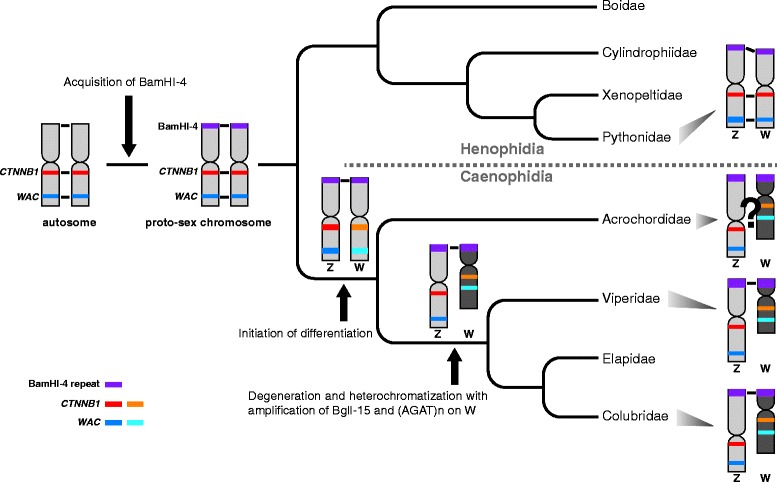
Our phylogenetic analyses suggest that the cessation of recombination between the Z and W homologs of CTNNB1 and WAC predated the diversification of the caenophidian families. As the repetitive sequences on the W chromosomes were shared among viperid and colubrid species, heterochromatinization of the proto-W chromosome appears to have occurred before the splitting of these two groups. These results collectively suggest that differentiation of the proto-Z and proto-W chromosomes extended to wide regions on the sex chromosomes in the common ancestor of caenophidian families during a relatively short period.
性染色体系统的差异组织的发现表明,异型性染色体是从一对同源染色体进化而来的。虽然 alethinophidian 蛇的核型高度保守,但 W 染色体的退化状态在物种间有所不同。在 henophidian 物种中,Z 和 W 染色体在形态上是同形的,而在属于 caenophidian 科的蛇中,W 染色体高度退化。因此,蛇是研究性染色体进化的极好的动物模型。在此,我们使用编码和重复序列研究了蛇性染色体的分化过程。我们分析了分别位于蛇性染色体长臂着丝粒和端粒区的 CTNNB1 和 WAC 基因的系统发育关系,以及几个 henophidian 和 caenophidian 物种的性染色体连锁重复序列的染色体分布。
从 Tropidophiidae、Boidae、Cylindrophiidae、Xenopeltidae 和 Pythonidae 的 henophidian 物种中鉴定出 CTNNB1 和 WAC 的部分或全长编码序列,以及来自 Acrochordidae、Viperidae、Elapidae 和 Colubridae 的 caenophidian 物种的 Z 和 W 同源物。在所检查的 henophidian(boid 和 pythonid)物种中,未发现这两个基因的雌性特异性序列。使用每个基因构建的系统发育树表明,caenophidian 物种的 Z 和 W 同源物分别聚类。从 colubrid Elaphe quadrivirgata 的 W 染色体异染色质中分离出的重复序列以及微卫星基序(AGAT)8 与所检查的 viperid 和 colubrid 物种的 W 染色体强烈杂交。
我们的系统发育分析表明,CTNNB1 和 WAC 的 Z 和 W 同源物之间重组的停止发生在 caenophidian 科的多样化之前。由于 W 染色体上的重复序列在 viperid 和 colubrid 物种中共享,因此原 W 染色体的异染色质化似乎发生在这两个群体分裂之前。这些结果共同表明,在 caenophidian 科的共同祖先中,原 Z 和原 W 染色体的分化在相对较短的时间内在性染色体上扩展到广泛的区域。