Singh Nivedita, Choudhury Debjani Roy, Tiwari Gunjan, Singh Amit Kumar, Kumar Sundeep, Srinivasan Kalyani, Tyagi R K, Sharma A D, Singh N K, Singh Rakesh
Division of Genomic Resources, ICAR-National Bureau of Plant Genetic Resources, New Delhi, 110 012, India.
Division of Germplasm Conservation, ICAR-National Bureau of Plant Genetic Resources, New Delhi, 110 012, India.
BMC Genet. 2016 Sep 5;17(1):127. doi: 10.1186/s12863-016-0437-7.
The knowledge of the extent and pattern of diversity in the crop species is a prerequisite for any crop improvement as it helps breeders in deciding suitable breeding strategies for their future improvement. Rice is the main staple crop in India with the large number of varieties released every year. Studies based on the small set of rice genotypes have reported a loss in genetic diversity especially after green revolution. However, a detailed study of the trend of diversity in Indian rice varieties is lacking. SSR markers have proven to be a marker of choice for studying the genetic diversity. Therefore, the present study was undertaken with the aim to characterize and assess trends of genetic diversity in a large set of Indian rice varieties (released between 1940-2013), conserved in the National Gene Bank of India using SSR markers.
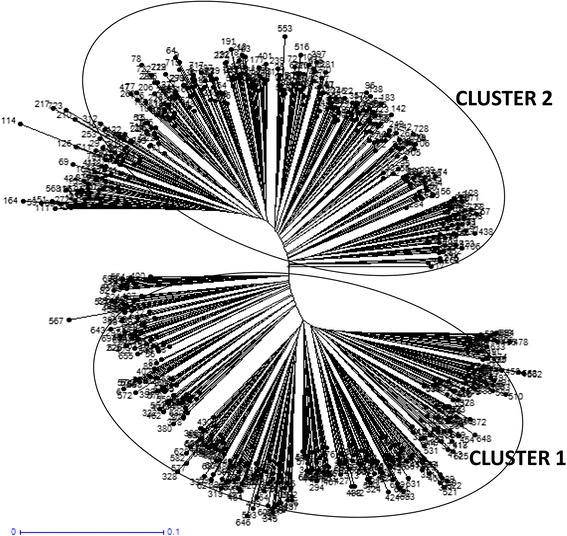
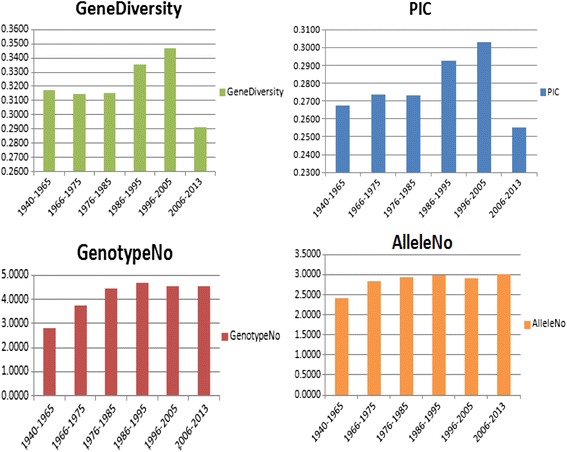
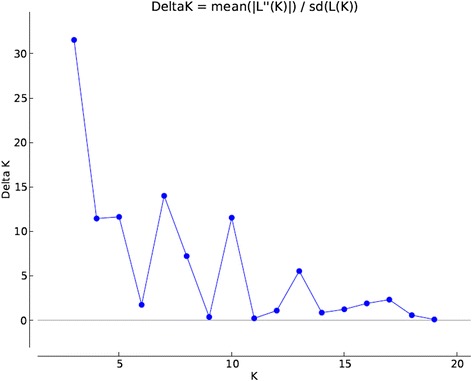
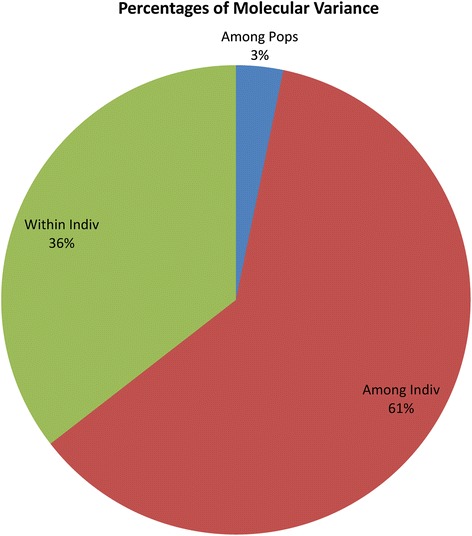
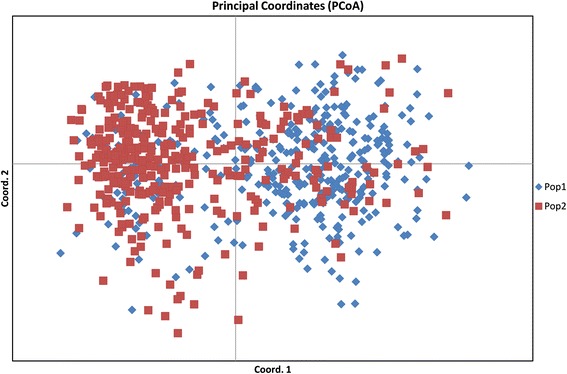
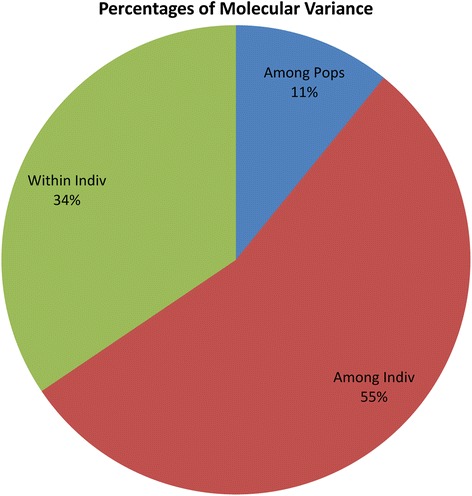
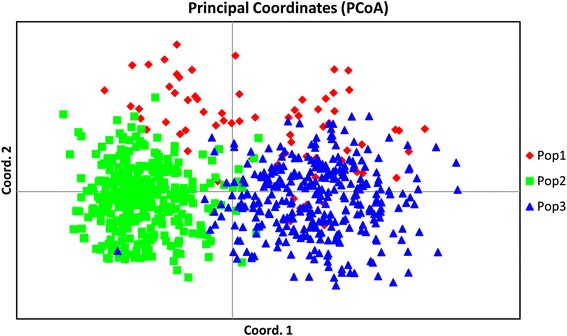
A set of 729 Indian rice varieties were genotyped using 36 HvSSR markers to assess the genetic diversity and genetic relationship. A total of 112 alleles was amplified with an average of 3.11 alleles per locus with mean Polymorphic Information Content (PIC) value of 0.29. Cluster analysis grouped these varieties into two clusters whereas the model based population structure divided them into three populations. AMOVA study based on hierarchical cluster and model based approach showed 3 % and 11 % variation between the populations, respectively. Decadal analysis for gene diversity and PIC showed increasing trend from 1940 to 2005, thereafter values for both the parameters showed decreasing trend between years 2006-2013. In contrast to this, allele number demonstrated increasing trend in these varieties released and notified between1940 to 1985, it remained nearly constant during 1986 to 2005 and again showed an increasing trend.
Our results demonstrated that the Indian rice varieties harbors huge amount of genetic diversity. However, the trait based improvement program in the last decades forced breeders to rely on few parents, which resulted in loss of gene diversity during 2006 to 2013. The present study indicates the need for broadening the genetic base of Indian rice varieties through the use of diverse parents in the current breeding program.
了解作物物种多样性的程度和模式是任何作物改良的先决条件,因为它有助于育种者决定适合其未来改良的育种策略。水稻是印度的主要主食作物,每年都有大量品种推出。基于一小部分水稻基因型的研究报告称,特别是在绿色革命之后,遗传多样性有所丧失。然而,缺乏对印度水稻品种多样性趋势的详细研究。SSR标记已被证明是研究遗传多样性的首选标记。因此,本研究旨在利用SSR标记对保存在印度国家基因库中的大量印度水稻品种(1940 - 2013年间发布)的遗传多样性趋势进行表征和评估。
使用36个HvSSR标记对729个印度水稻品种进行基因分型,以评估遗传多样性和遗传关系。共扩增出112个等位基因,每个位点平均3.11个等位基因,平均多态信息含量(PIC)值为0.29。聚类分析将这些品种分为两个簇,而基于模型的群体结构将它们分为三个群体。基于层次聚类和基于模型方法的AMOVA研究分别显示群体间变异为3%和11%。对基因多样性和PIC的十年分析表明,从1940年到2005年呈上升趋势,此后在2006 - 2013年期间这两个参数的值均呈下降趋势。与此相反,等位基因数量在1940年至1985年发布和通知的这些品种中呈增加趋势,在1986年至2005年期间几乎保持不变,之后又呈增加趋势。
我们的结果表明,印度水稻品种具有大量的遗传多样性。然而,过去几十年基于性状的改良计划迫使育种者依赖少数亲本,这导致在2006年至2013年期间基因多样性丧失。本研究表明需要通过在当前育种计划中使用不同亲本来拓宽印度水稻品种的遗传基础。