Hobbs Charlie, Dailey Harry A, Shepherd Mark
School of Biosciences, University of Kent, Canterbury, Kent CT2 7NJ, U.K.
Biomedical and Health Sciences Institute, University of Georgia, Athens, GA 30602, U.S.A. Department of Microbiology, University of Georgia, Athens, GA 30602, U.S.A. Department of Biochemistry and Molecular Biology, University of Georgia, Athens, GA 30602, U.S.A.
Biochem J. 2016 Nov 1;473(21):3997-4009. doi: 10.1042/BCJ20160696. Epub 2016 Sep 5.
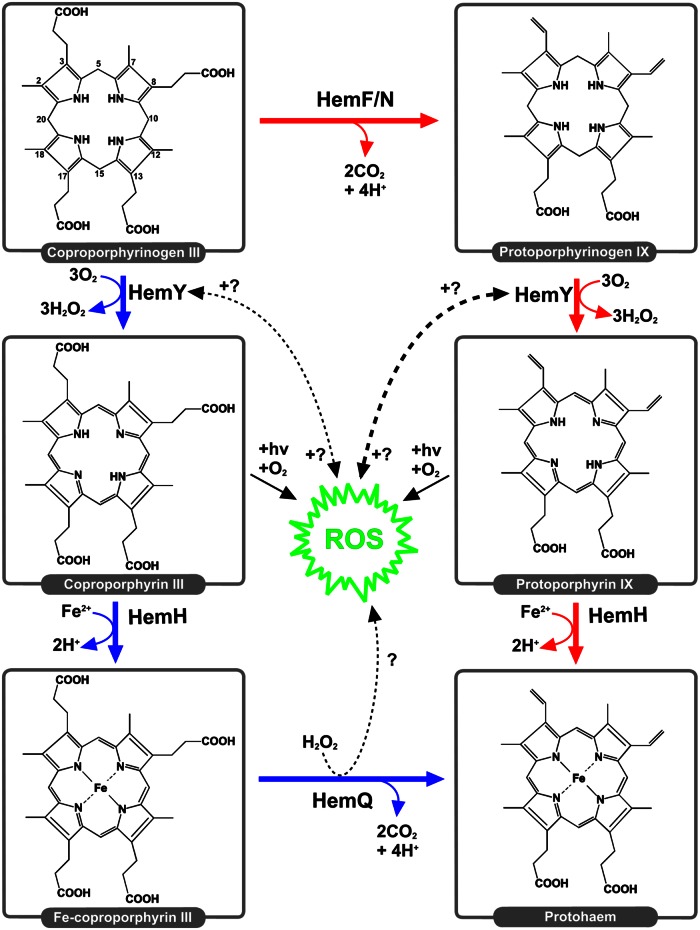
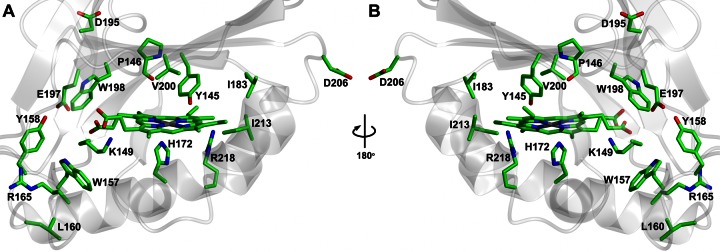
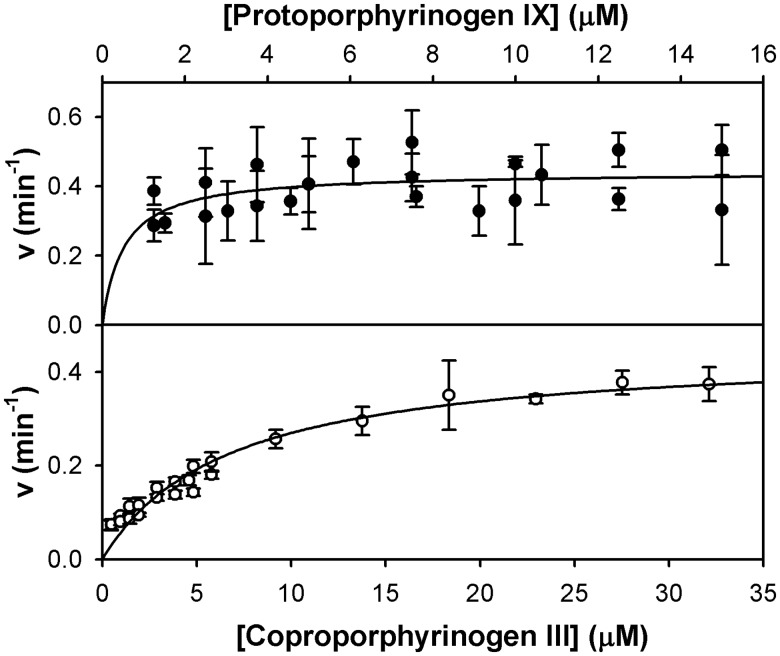
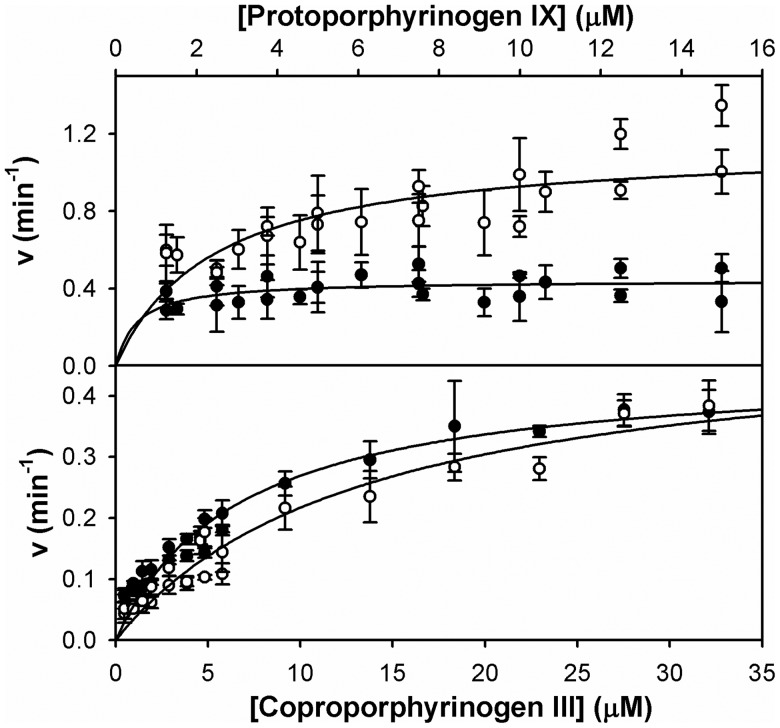
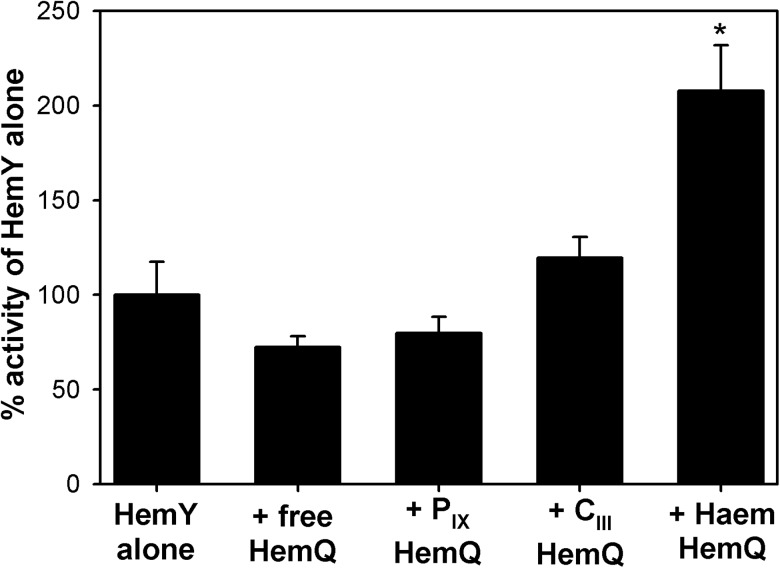
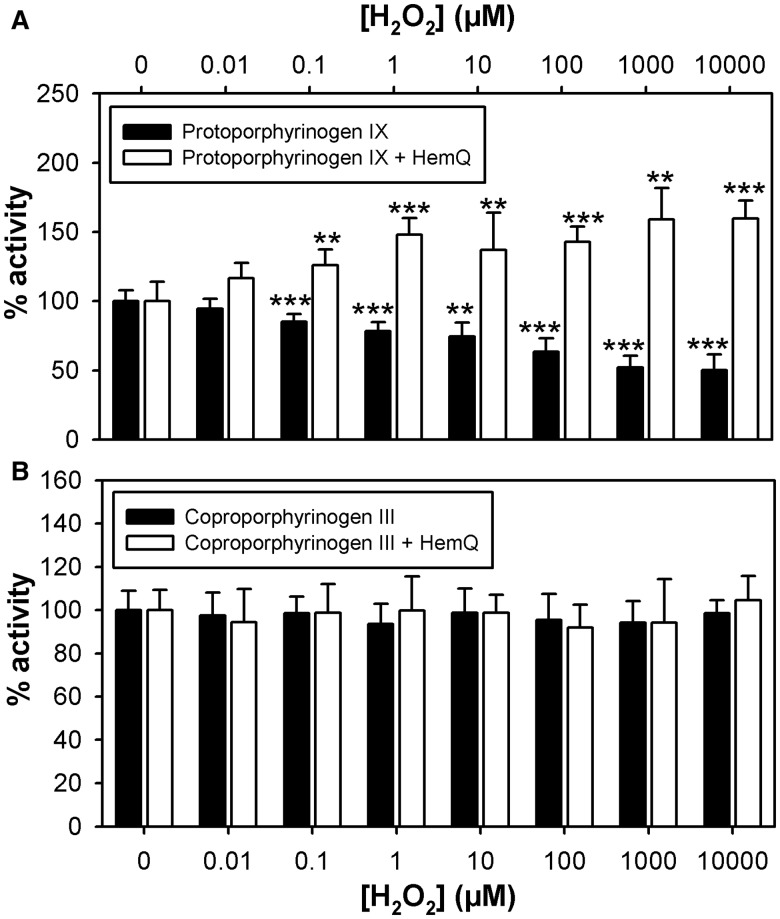
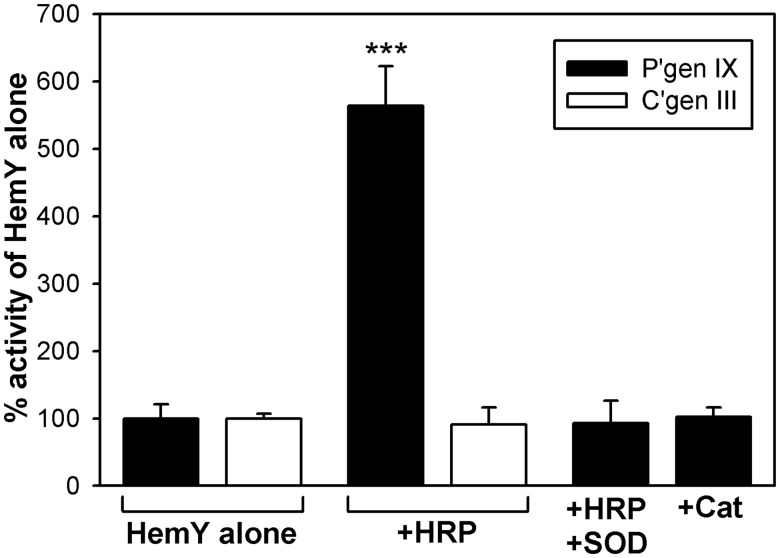
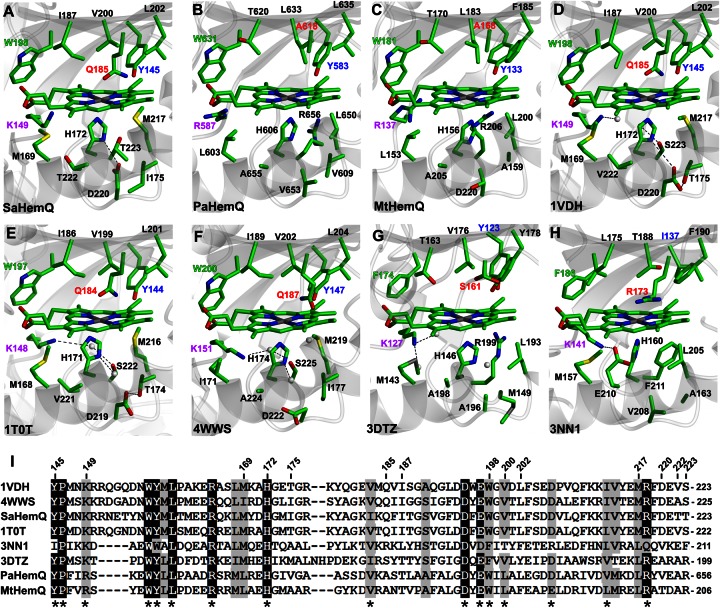
Bacteria require a haem biosynthetic pathway for the assembly of a variety of protein complexes, including cytochromes, peroxidases, globins, and catalase. Haem is synthesised via a series of tetrapyrrole intermediates, including non-metallated porphyrins, such as protoporphyrin IX, which is well known to generate reactive oxygen species in the presence of light and oxygen. Staphylococcus aureus has an ancient haem biosynthetic pathway that proceeds via the formation of coproporphyrin III, a less reactive porphyrin. Here, we demonstrate, for the first time, that HemY of S. aureus is able to generate both protoporphyrin IX and coproporphyrin III, and that the terminal enzyme of this pathway, HemQ, can stimulate the generation of protoporphyrin IX (but not coproporphyrin III). Assays with hydrogen peroxide, horseradish peroxidase, superoxide dismutase, and catalase confirm that this stimulatory effect is mediated by superoxide. Structural modelling reveals that HemQ enzymes do not possess the structural attributes that are common to peroxidases that form compound I [Fe==O], which taken together with the superoxide data leaves Fenton chemistry as a likely route for the superoxide-mediated stimulation of protoporphyrinogen IX oxidase activity of HemY. This generation of toxic free radicals could explain why HemQ enzymes have not been identified in organisms that synthesise haem via the classical protoporphyrin IX pathway. This work has implications for the divergent evolution of haem biosynthesis in ancestral microorganisms, and provides new structural and mechanistic insights into a recently discovered oxidative decarboxylase reaction.
细菌需要血红素生物合成途径来组装多种蛋白质复合物,包括细胞色素、过氧化物酶、球蛋白和过氧化氢酶。血红素通过一系列四吡咯中间体合成,包括非金属化卟啉,如原卟啉IX,众所周知,原卟啉IX在光和氧存在下会产生活性氧。金黄色葡萄球菌具有一条古老的血红素生物合成途径,该途径通过生成反应性较低的卟啉——粪卟啉III进行。在此,我们首次证明,金黄色葡萄球菌的HemY能够生成原卟啉IX和粪卟啉III,并且该途径的末端酶HemQ可以刺激原卟啉IX的生成(但不能刺激粪卟啉III的生成)。用过氧化氢、辣根过氧化物酶、超氧化物歧化酶和过氧化氢酶进行的测定证实,这种刺激作用是由超氧化物介导的。结构建模表明,HemQ酶不具备形成化合物I [Fe==O]的过氧化物酶所共有的结构特征,结合超氧化物数据,芬顿化学可能是超氧化物介导刺激HemY原卟啉原IX氧化酶活性的途径。这种有毒自由基的产生可以解释为什么在通过经典原卟啉IX途径合成血红素的生物体中尚未发现HemQ酶。这项工作对祖先微生物中血红素生物合成的趋异进化具有启示意义,并为最近发现的氧化脱羧酶反应提供了新的结构和机制见解。