Cooper Simon J, Kinsman Leigh, Chung Catherine, Cant Robyn, Boyle Jayne, Bull Loretta, Cameron Amanda, Connell Cliff, Kim Jeong-Ah, McInnes Denise, McKay Angela, Nankervis Katrina, Penz Erika, Rotter Thomas
School of Nursing Midwifery and Healthcare, Federation University Australia, Churchill, Victoria 3842 and Mt. Helen, Victoria 3350, Australia.
School of Nursing, The University of Tasmania, PO Box 1322, Launceston, Tasmania, 7250, Australia.
BMC Health Serv Res. 2016 Sep 7;16(1):475. doi: 10.1186/s12913-016-1683-0.
There are international concerns in relation to the management of patient deterioration which has led to a body of evidence known as the 'failure to rescue' literature. Nursing staff are known to miss cues of deterioration and often fail to call for assistance. Medical Emergency Teams (Rapid Response Teams) do improve the management of acutely deteriorating patients, but first responders need the requisite skills to impact on patient safety.
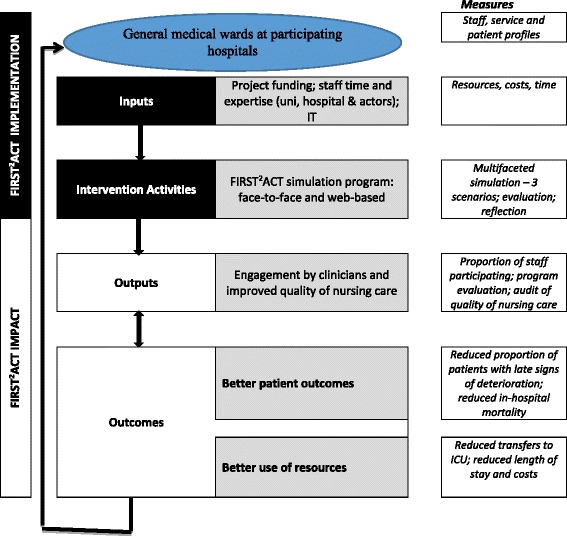
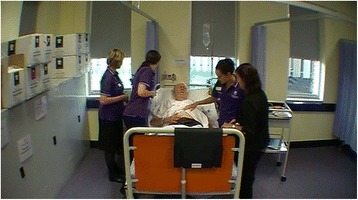
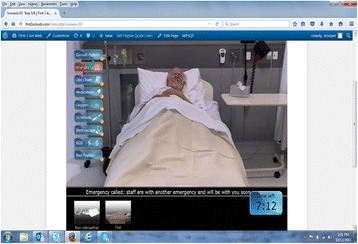
METHODS/DESIGN: In this study we aim to address these issues in a mixed methods interventional trial with the objective of measuring and comparing the cost and clinical impact of face-to-face and web-based simulation programs on the management of patient deterioration and related patient outcomes. The education programs, known as 'FIRST(2)ACT', have been found to have an impact on education and will be tested in four hospitals in the State of Victoria, Australia. Nursing staff will be trained in primary (the first 8 min) responses to emergencies in two medical wards using a face-to-face approach and in two medical wards using a web-based version FIRST(2)ACTWeb. The impact of these interventions will be determined through quantitative and qualitative approaches, cost analyses and patient notes review (time series analyses) to measure quality of care and patient outcomes.
In this 18 month study it is hypothesised that both simulation programs will improve the detection and management of deteriorating patients but that the web-based program will have lower total costs. The study will also add to our overall understanding of the utility of simulation approaches in the preparation of nurses working in hospital wards. (ACTRN12616000468426, retrospectively registered 8.4.2016).
患者病情恶化的管理引发了国际关注,这催生了一系列被称为“未能成功抢救”的文献。众所周知,护理人员会错过病情恶化的迹象,且常常未能呼叫援助。医疗急救团队(快速反应团队)确实改善了对急性病情恶化患者的管理,但急救人员需要具备必要技能才能对患者安全产生影响。
方法/设计:在本研究中,我们旨在通过一项混合方法干预试验来解决这些问题,目的是测量和比较面对面模拟程序和基于网络的模拟程序在患者病情恶化管理及相关患者结局方面的成本和临床影响。名为“FIRST(2)ACT”的教育项目已被发现对教育有影响,并将在澳大利亚维多利亚州的四家医院进行测试。护理人员将在两个内科病房采用面对面方式接受针对紧急情况的初级(最初8分钟)应对培训,并在另外两个内科病房采用基于网络的FIRST(2)ACTWeb版本接受培训。这些干预措施的影响将通过定量和定性方法、成本分析以及患者病历审查(时间序列分析)来确定,以衡量护理质量和患者结局。
在这项为期18个月的研究中,假设两个模拟程序都将改善对病情恶化患者的检测和管理,但基于网络的程序总成本会更低。该研究还将增进我们对模拟方法在培训医院病房护士方面效用的全面理解。(澳大利亚临床试验注册号:ACTRN12616000468426,于2016年4月8日追溯注册)