Shrestha Mohan, Park Pil-Hoon
College of Pharmacy, Yeungnam University, Gyeongsan 38541, Korea.
Korean J Physiol Pharmacol. 2016 Sep;20(5):487-98. doi: 10.4196/kjpp.2016.20.5.487. Epub 2016 Aug 26.
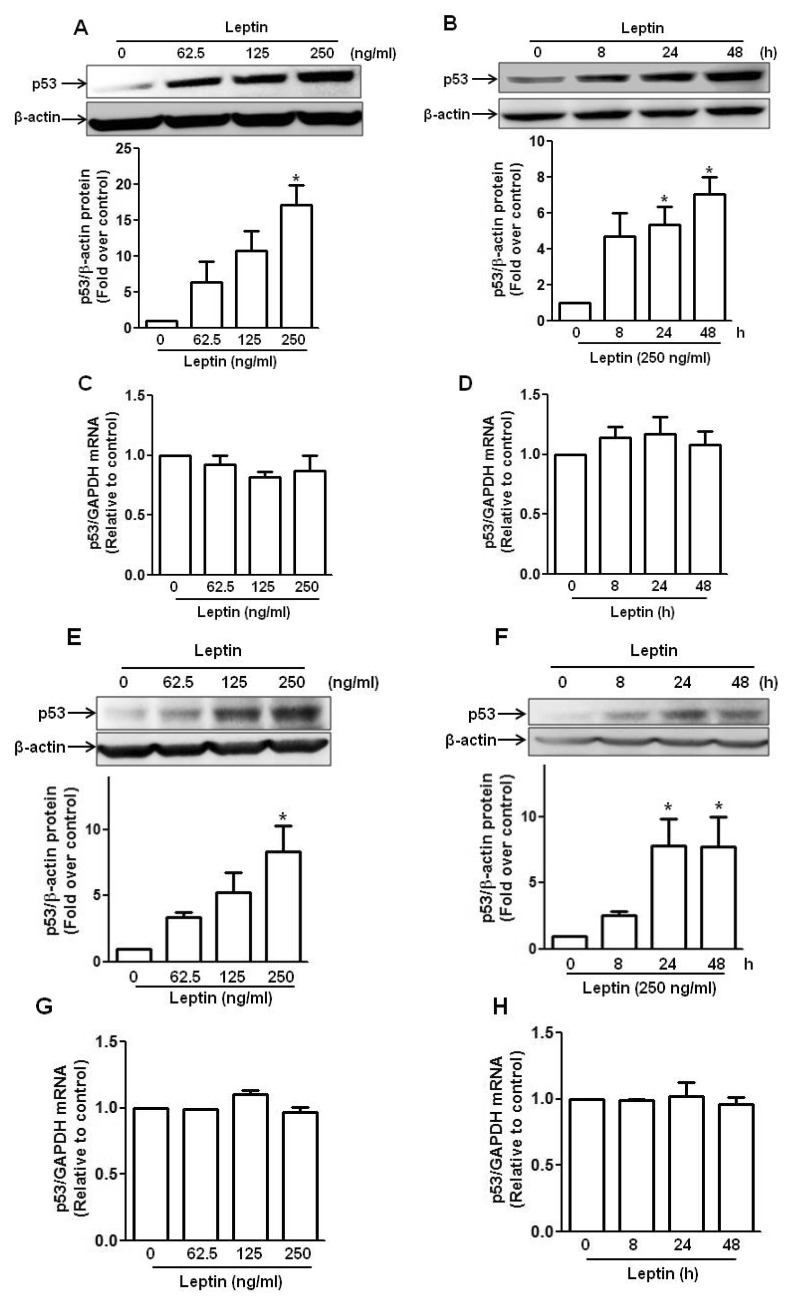
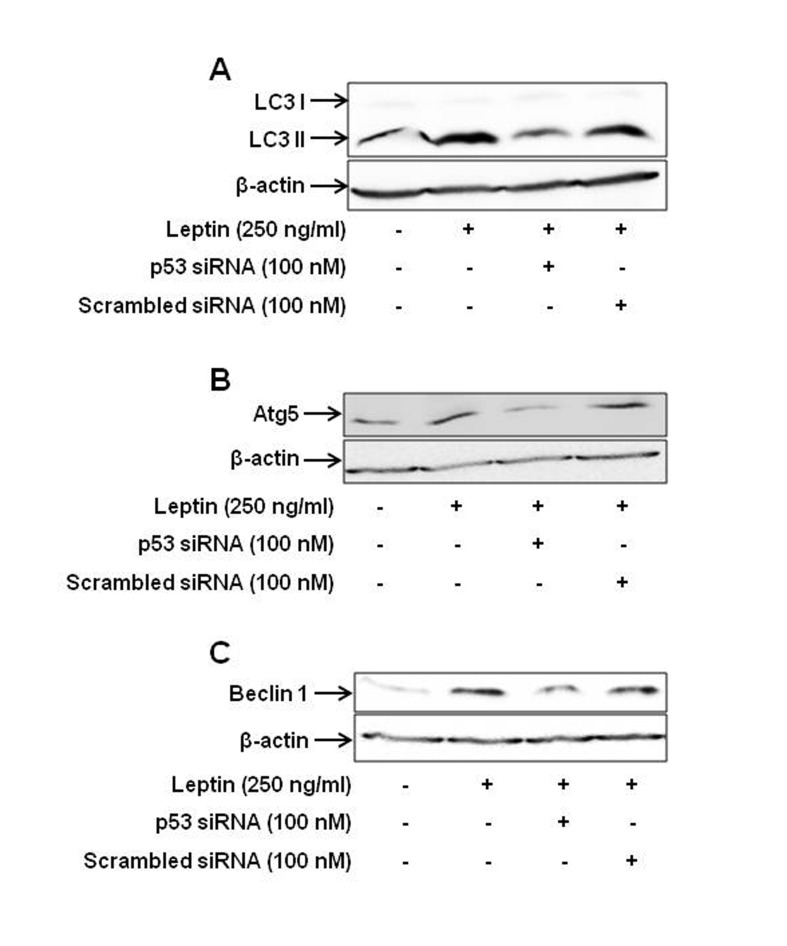
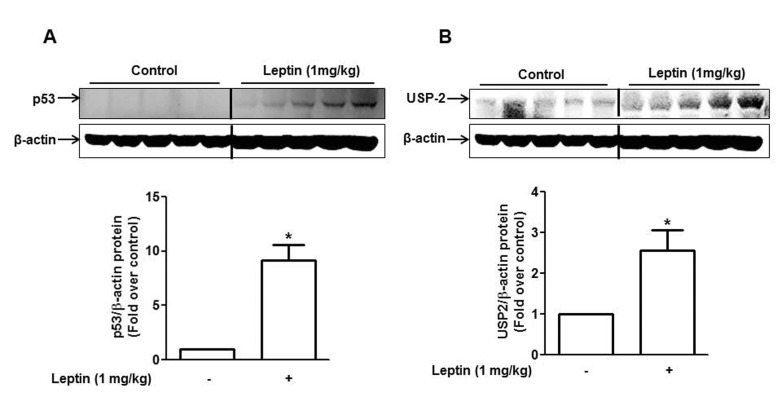
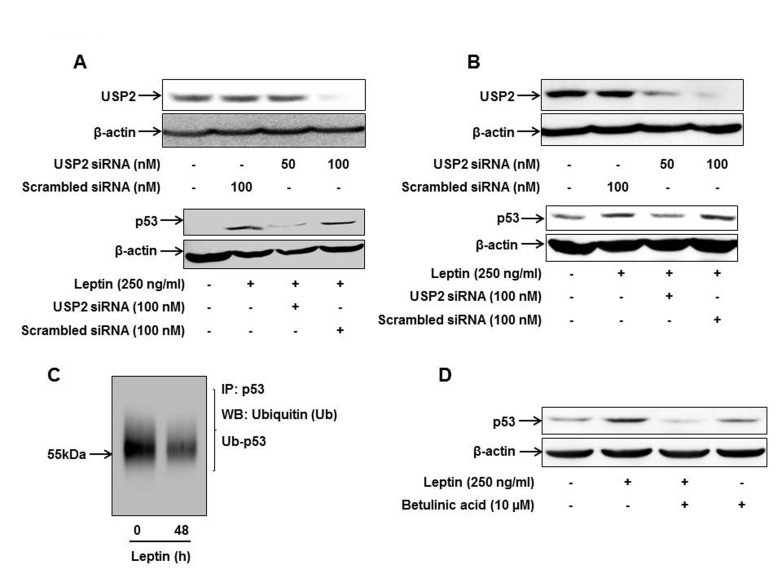
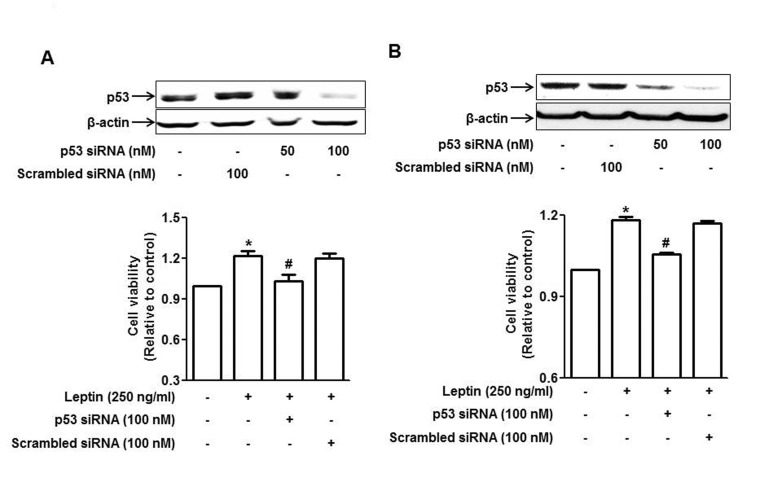
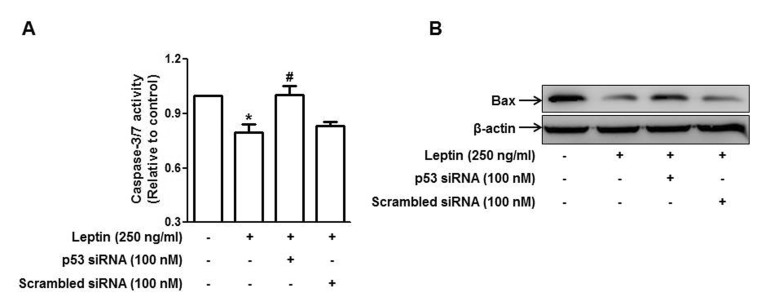
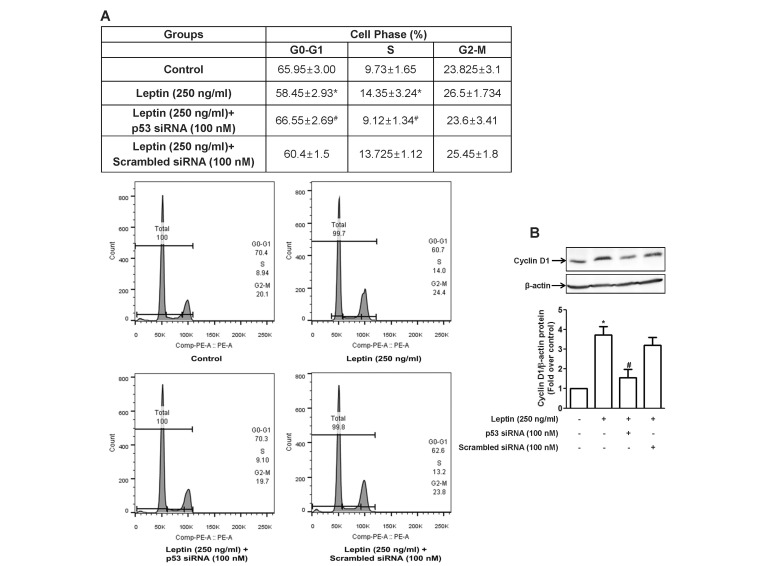
Leptin, an adipokine predominantly produced from adipose tissue, is well known to induce tumor growth. However, underlying molecular mechanisms are not established yet. While p53 has long been well recognized as a potent tumor suppressor gene, accumulating evidence has also indicated its potential role in growth and survival of cancer cells depending on experimental environments. In the present study, we examined if p53 signaling is implicated in leptin-induced growth of cancer cells. Herein, we demonstrated that leptin treatment significantly increased p53 protein expression in both hepatic (HepG2) and breast (MCF-7) cancer cells without significant effect on mRNA expression. Enhanced p53 expression by leptin was mediated via modulation of ubiquitination, in particular ubiquitin specific protease 2 (USP2)-dependent manner. Furthermore, gene silencing of p53 by small interfering RNA (siRNA) suppressed leptin-induced growth of hepatic and breast cancer cells, indicating the role of p53 signaling in tumor growth by leptin. In addition, we also showed that knockdown of p53 restored suppression of caspase-3 activity by leptin through modulating Bax expression and prevented leptin-induced cell cycle progression, implying the involvement of p53 signaling in the regulation of both apoptosis and cell cycle progression in cancer cells treated with leptin. Taken together, the results in the present study demonstrated the potential role of p53 signaling in leptin-induced tumor growth.
瘦素是一种主要由脂肪组织产生的脂肪因子,众所周知它能诱导肿瘤生长。然而,其潜在的分子机制尚未明确。虽然长期以来p53一直被公认为一种强大的肿瘤抑制基因,但越来越多的证据也表明,根据实验环境,它在癌细胞的生长和存活中具有潜在作用。在本研究中,我们检测了p53信号通路是否与瘦素诱导的癌细胞生长有关。在此,我们证明,瘦素处理显著增加了肝癌(HepG2)细胞和乳腺癌(MCF-7)细胞中p53蛋白的表达,而对mRNA表达没有显著影响。瘦素增强p53表达是通过调节泛素化介导的,特别是以泛素特异性蛋白酶2(USP2)依赖的方式。此外,小干扰RNA(siRNA)对p53进行基因沉默抑制了瘦素诱导的肝癌细胞和乳腺癌细胞的生长,表明p53信号通路在瘦素诱导的肿瘤生长中发挥作用。此外,我们还表明,p53的敲低通过调节Bax表达恢复了瘦素对caspase-3活性的抑制,并阻止了瘦素诱导的细胞周期进程,这意味着p53信号通路参与了瘦素处理的癌细胞中细胞凋亡和细胞周期进程的调节。综上所述,本研究结果证明了p53信号通路在瘦素诱导的肿瘤生长中的潜在作用。