Roulston Gary D R, Burt Charlotte L, Kettyle Laura M J, Matchett Kyle B, Keenan Heather L, Mulgrew Nuala M, Ramsey Joanne M, Dougan Caoifa, McKiernan John, Grishagin Ivan V, Mills Ken I, Thompson Alexander
Centre for Cancer Research and Cell Biology, Queen's University Belfast, Belfast, BT9 7AE, Northern Ireland, United Kingdom.
Cambridge University School of Clinical Medicine, Addenbrooke's Hospital, Cambridge, CB2 0SP, United Kingdom.
Oncotarget. 2016 Nov 8;7(45):73448-73461. doi: 10.18632/oncotarget.11866.
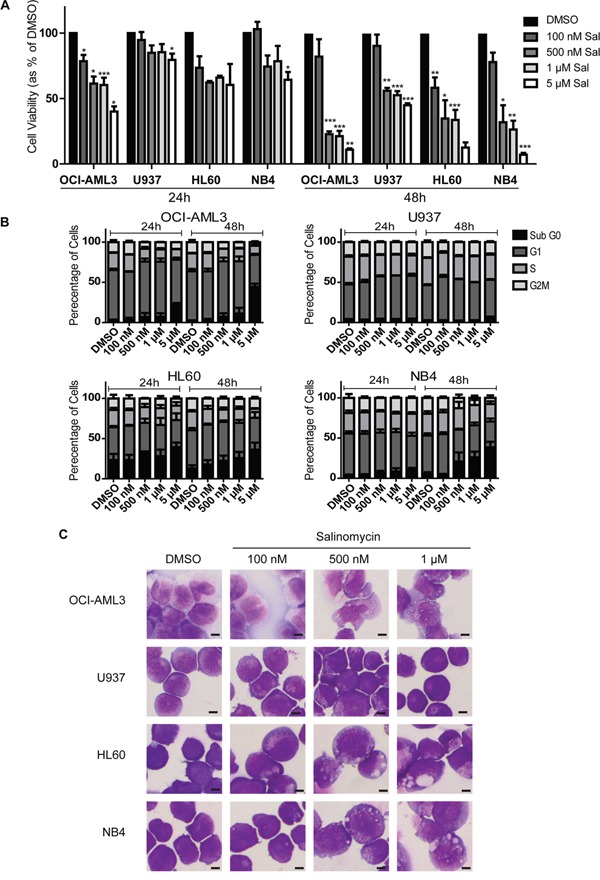
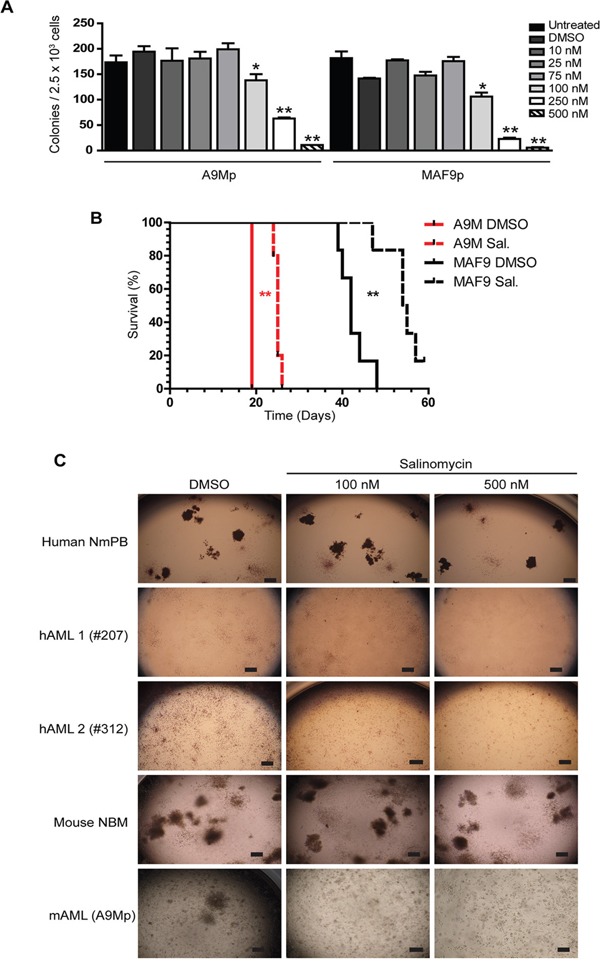
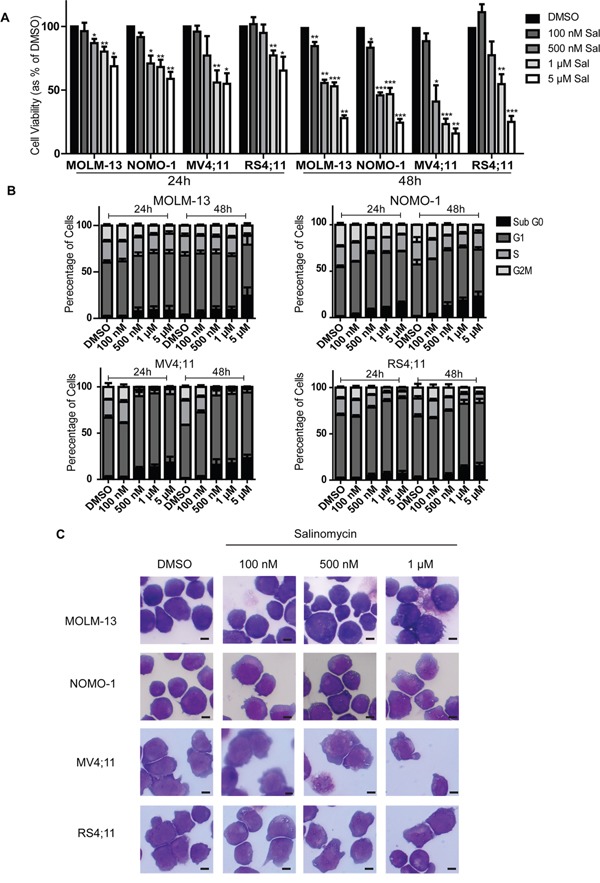
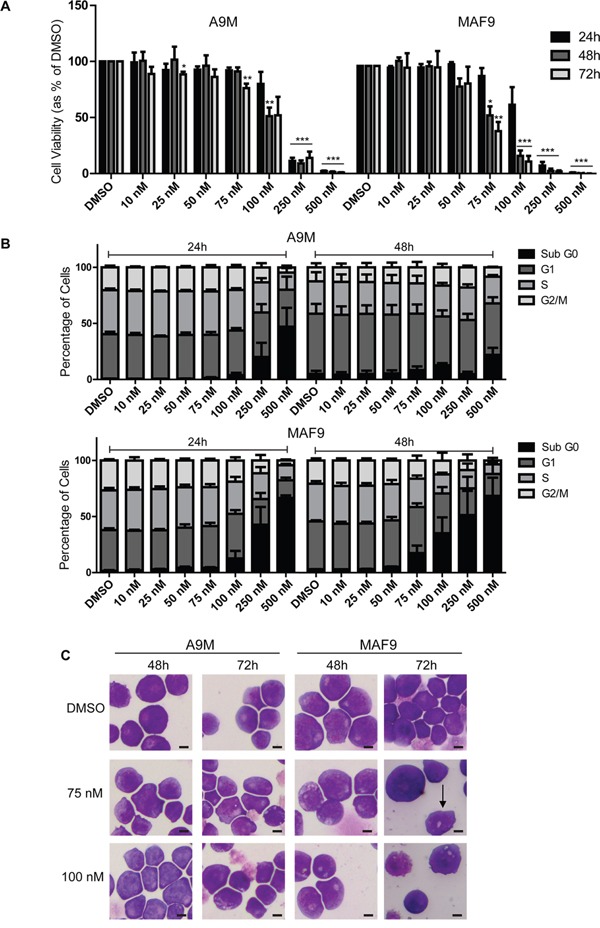
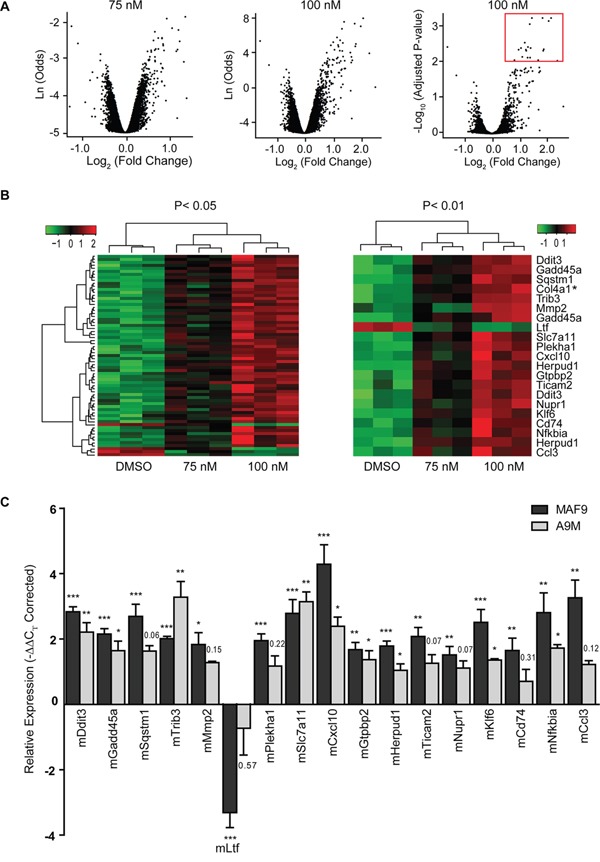
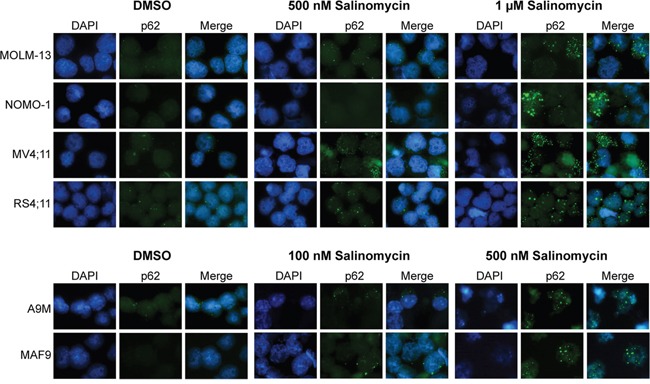
Development of anti-cancer drugs towards clinical application is costly and inefficient. Large screens of drugs, efficacious for non-cancer disease, are currently being used to identify candidates for repurposing based on their anti-cancer properties. Here, we show that low-dose salinomycin, a coccidiostat ionophore previously identified in a breast cancer screen, has anti-leukemic efficacy. AML and MLLr cell lines, primary cells and patient samples were sensitive to submicromolar salinomycin. Most strikingly, colony formation of normal hematopoietic cells was unaffected by salinomycin, demonstrating a lack of hemotoxicity at the effective concentrations. Furthermore, salinomycin treatment of primary cells resulted in loss of leukemia repopulation ability following transplantation, as demonstrated by extended recipient survival compared to controls. Bioinformatic analysis of a 17-gene signature identified and validated in primary MLLr cells, uncovered immunomodulatory pathways, hubs and protein interactions as potential transducers of low dose salinomycin treatment. Additionally, increased protein expression of p62/Sqstm1, encoded for by one of the 17 signature genes, demonstrates a role for salinomycin in aggresome/vesicle formation indicative of an autophagic response.Together, the data support the efficacy of salinomycin as an anti-leukemic at non-hemotoxic concentrations. Further investigation alone or in combination with other therapies is warranted for future clinical trial.
抗癌药物向临床应用的研发成本高昂且效率低下。目前正在对大量对非癌症疾病有效的药物进行筛选,以根据其抗癌特性确定可重新利用的候选药物。在此,我们表明低剂量沙利霉素(一种先前在乳腺癌筛选中发现的抗球虫离子载体)具有抗白血病功效。急性髓系白血病(AML)和混合系白血病(MLLr)细胞系、原代细胞和患者样本对亚微摩尔浓度的沙利霉素敏感。最引人注目的是,正常造血细胞的集落形成不受沙利霉素影响,这表明在有效浓度下不存在血液毒性。此外,与对照组相比,沙利霉素处理原代细胞导致移植后白血病再增殖能力丧失,受体存活期延长证明了这一点。对在原代MLLr细胞中鉴定并验证的17基因特征进行生物信息学分析,发现免疫调节途径、枢纽和蛋白质相互作用是低剂量沙利霉素治疗的潜在转导因子。此外,17个特征基因之一编码的p62/Sqstm1蛋白表达增加,表明沙利霉素在指示自噬反应的聚集体/囊泡形成中发挥作用。总之,这些数据支持沙利霉素在非血液毒性浓度下作为抗白血病药物的功效。未来临床试验有必要单独或与其他疗法联合进行进一步研究。