Wang Zhihua, Zhang Xiao-Jing, Ji Yan-Xiao, Zhang Peng, Deng Ke-Qiong, Gong Jun, Ren Shuxun, Wang Xinghua, Chen Iris, Wang He, Gao Chen, Yokota Tomohiro, Ang Yen Sin, Li Shen, Cass Ashley, Vondriska Thomas M, Li Guangping, Deb Arjun, Srivastava Deepak, Yang Huang-Tian, Xiao Xinshu, Li Hongliang, Wang Yibin
Department of Cardiology, Renmin Hospital of Wuhan University, Wuhan, China.
Animal Experiment Center-Animal Biosafety Level 3 Laboratory, Wuhan University, Wuhan, China.
Nat Med. 2016 Oct;22(10):1131-1139. doi: 10.1038/nm.4179. Epub 2016 Sep 12.
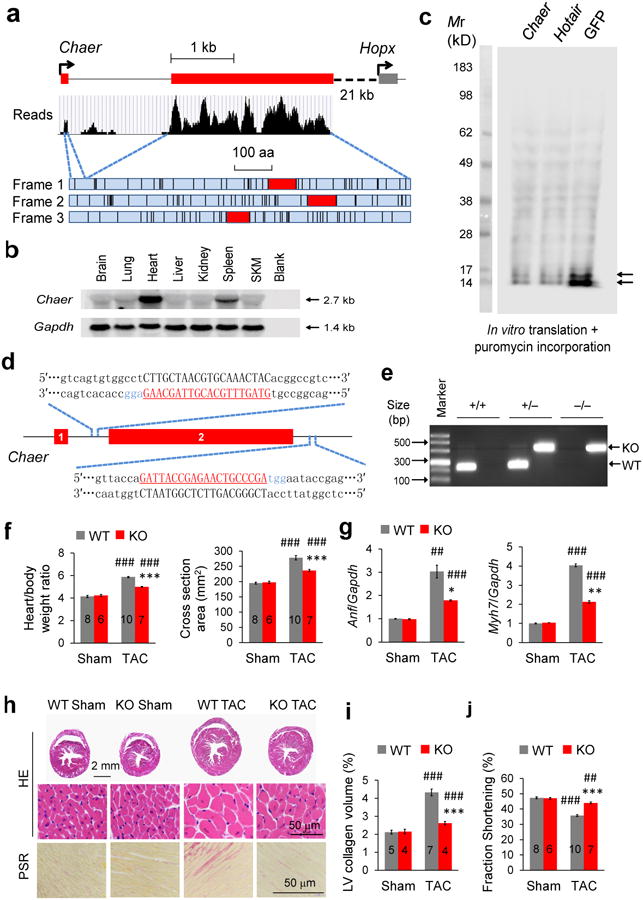
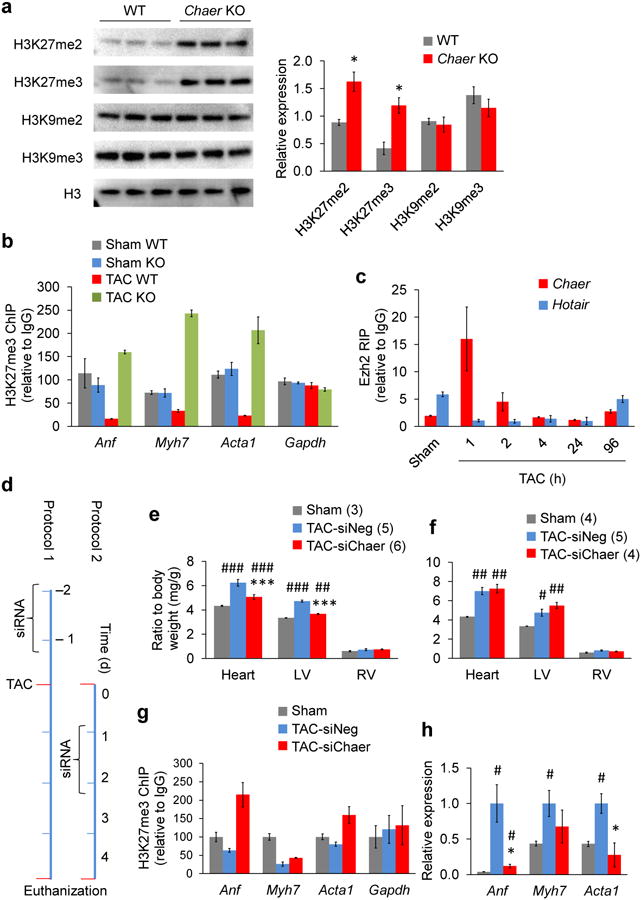
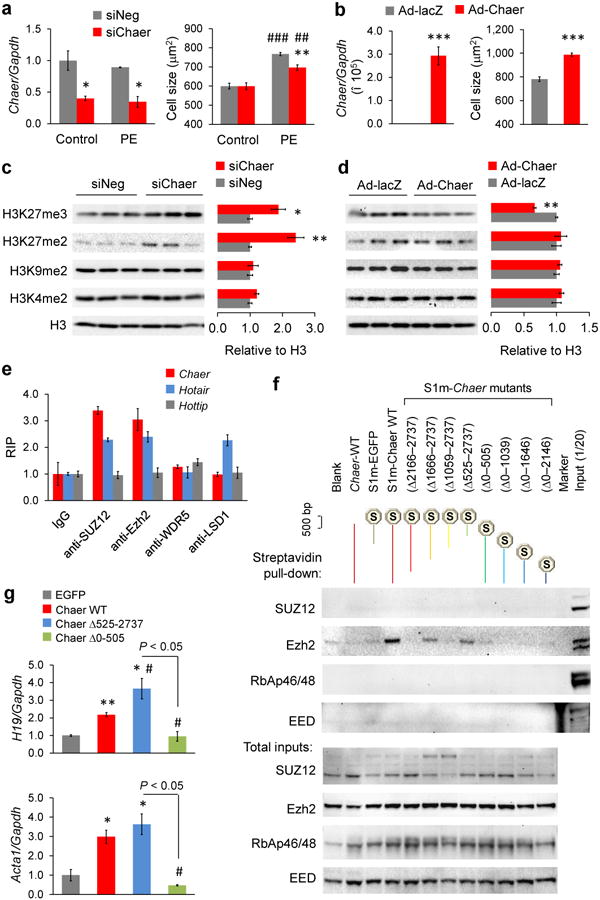
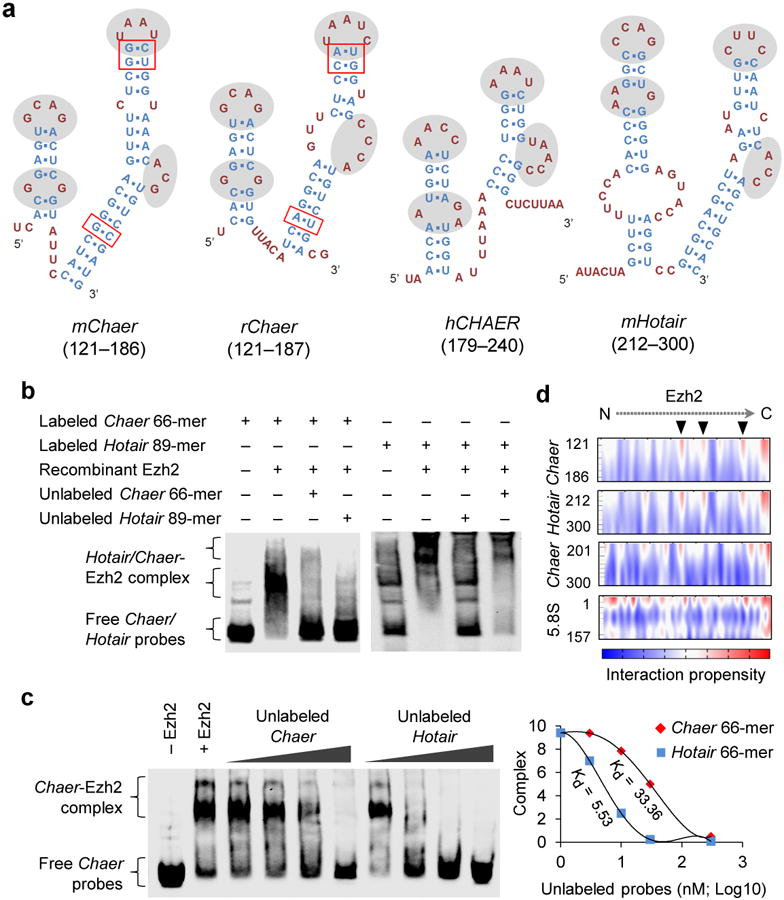
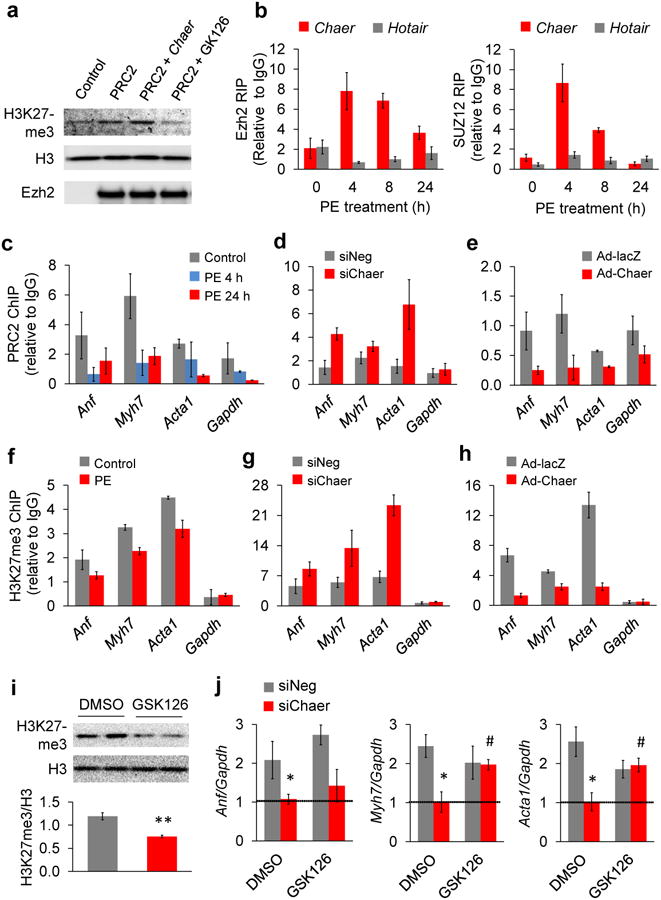
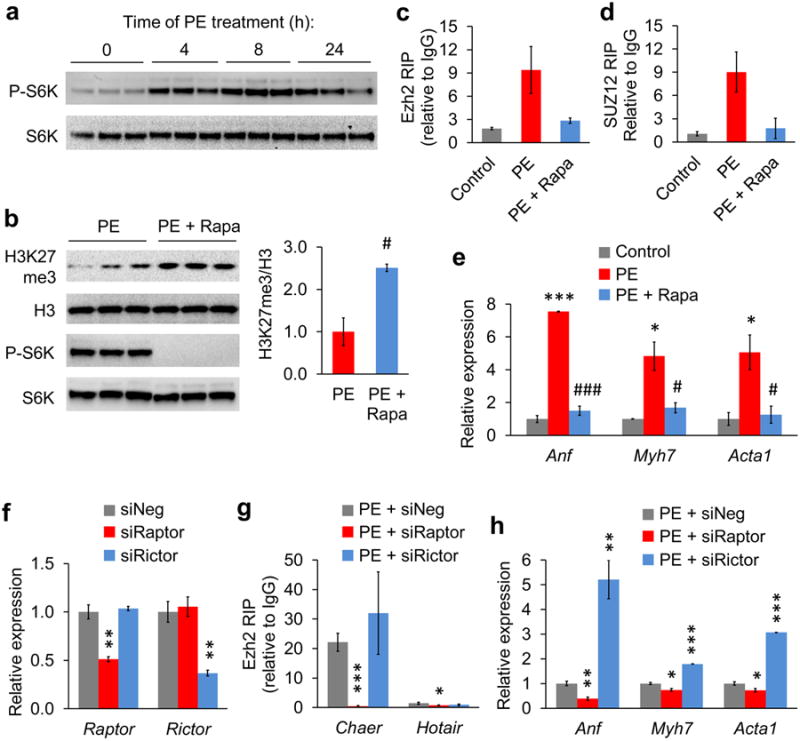
Epigenetic reprogramming is a critical process of pathological gene induction during cardiac hypertrophy and remodeling, but the underlying regulatory mechanisms remain to be elucidated. Here we identified a heart-enriched long noncoding (lnc)RNA, named cardiac-hypertrophy-associated epigenetic regulator (Chaer), which is necessary for the development of cardiac hypertrophy. Mechanistically, Chaer directly interacts with the catalytic subunit of polycomb repressor complex 2 (PRC2). This interaction, which is mediated by a 66-mer motif in Chaer, interferes with PRC2 targeting to genomic loci, thereby inhibiting histone H3 lysine 27 methylation at the promoter regions of genes involved in cardiac hypertrophy. The interaction between Chaer and PRC2 is transiently induced after hormone or stress stimulation in a process involving mammalian target of rapamycin complex 1, and this interaction is a prerequisite for epigenetic reprogramming and induction of genes involved in hypertrophy. Inhibition of Chaer expression in the heart before, but not after, the onset of pressure overload substantially attenuates cardiac hypertrophy and dysfunction. Our study reveals that stress-induced pathological gene activation in the heart requires a previously uncharacterized lncRNA-dependent epigenetic checkpoint.
表观遗传重编程是心脏肥大和重塑过程中病理性基因诱导的关键过程,但其潜在的调控机制仍有待阐明。在此,我们鉴定出一种心脏富集的长链非编码(lnc)RNA,命名为心脏肥大相关表观遗传调节因子(Chaer),它是心脏肥大发展所必需的。从机制上讲,Chaer直接与多梳抑制复合物2(PRC2)的催化亚基相互作用。这种相互作用由Chaer中的一个66聚体基序介导,干扰PRC2靶向基因组位点,从而抑制参与心脏肥大的基因启动子区域的组蛋白H3赖氨酸27甲基化。Chaer与PRC2之间的相互作用在激素或应激刺激后通过涉及雷帕霉素复合物1的哺乳动物靶点的过程被短暂诱导,并且这种相互作用是表观遗传重编程和肥大相关基因诱导的先决条件。在压力过载开始之前而非之后抑制心脏中的Chaer表达,可显著减轻心脏肥大和功能障碍。我们的研究表明,心脏中应激诱导的病理性基因激活需要一个以前未被表征的lncRNA依赖性表观遗传检查点。