Dominick Graham, Bowman Jacqueline, Li Xinna, Miller Richard A, Garcia Gonzalo G
Department of Molecular, Cellular, and Developmental Biology, University of Michigan College of Literature, Science and the Arts, Ann Arbor, MI, USA.
Department of Pathology, University of Michigan School of Medicine, Ann Arbor, MI, USA.
Aging Cell. 2017 Feb;16(1):52-60. doi: 10.1111/acel.12525. Epub 2016 Sep 13.
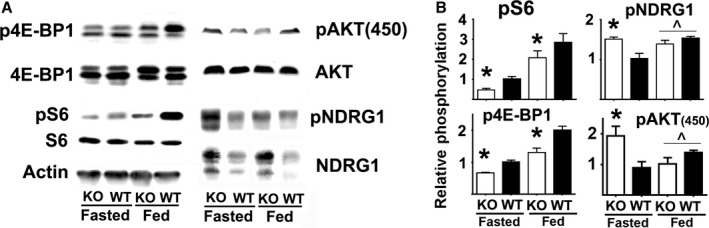
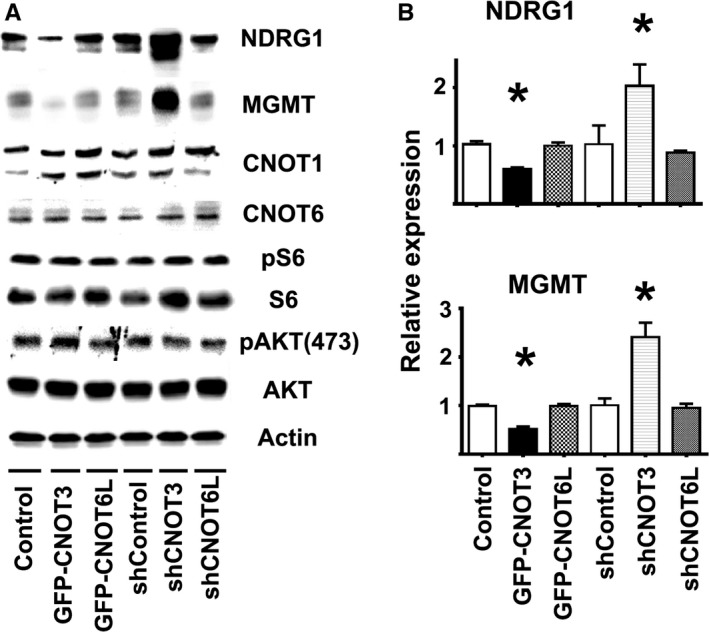
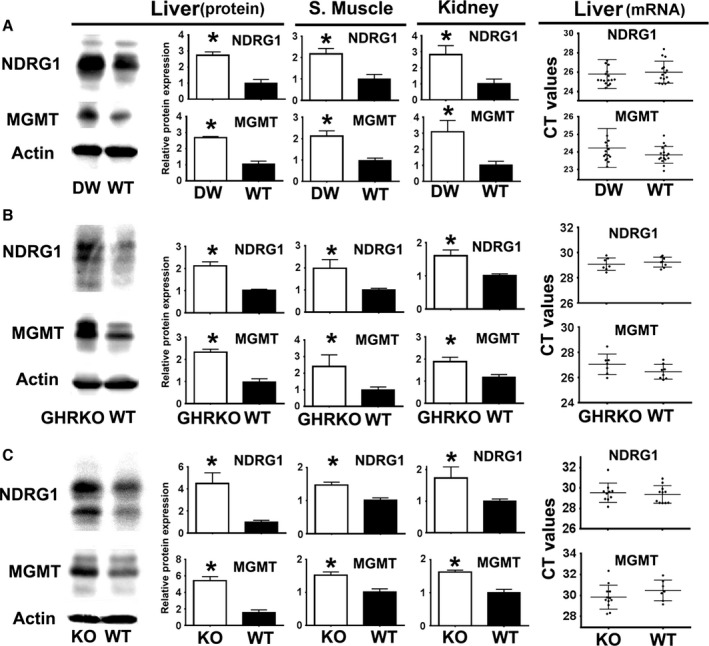
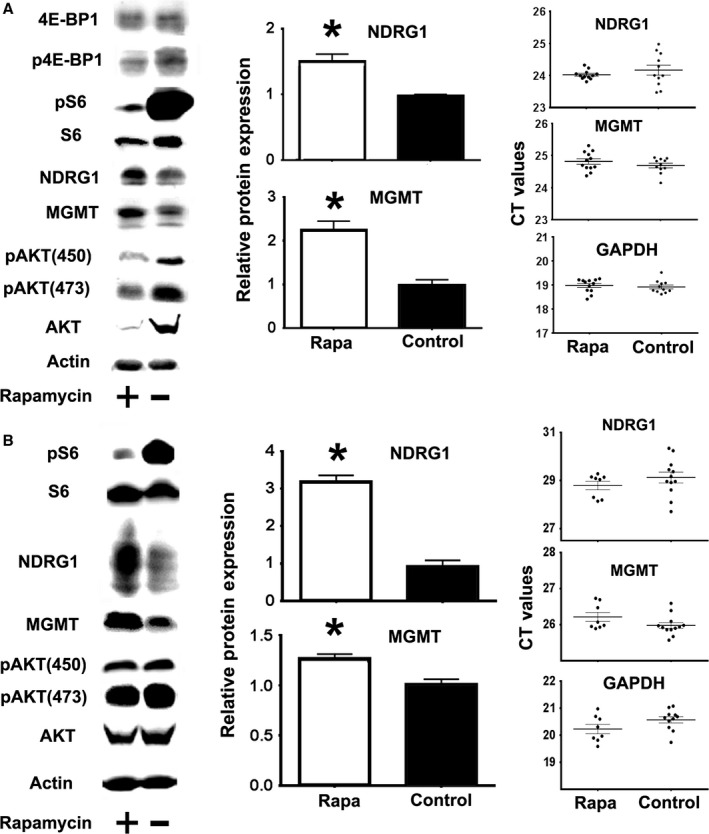
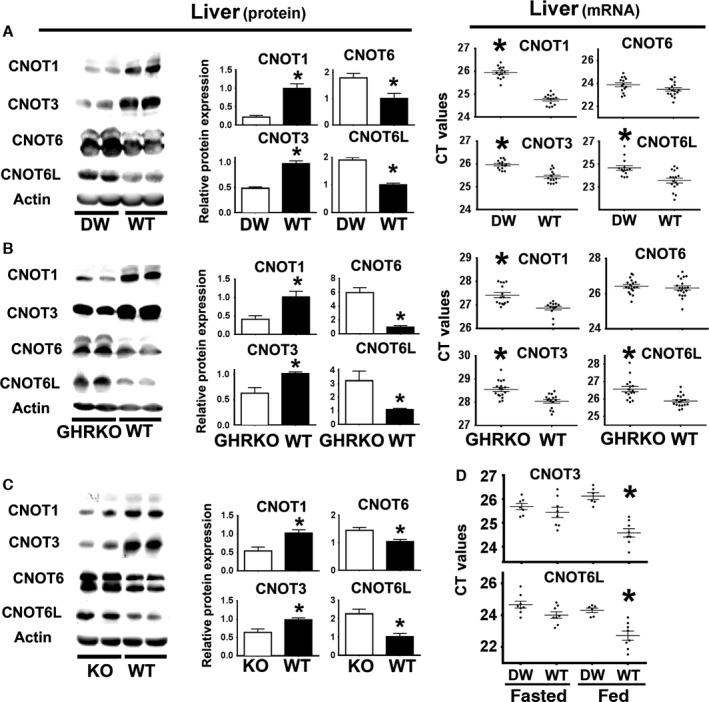
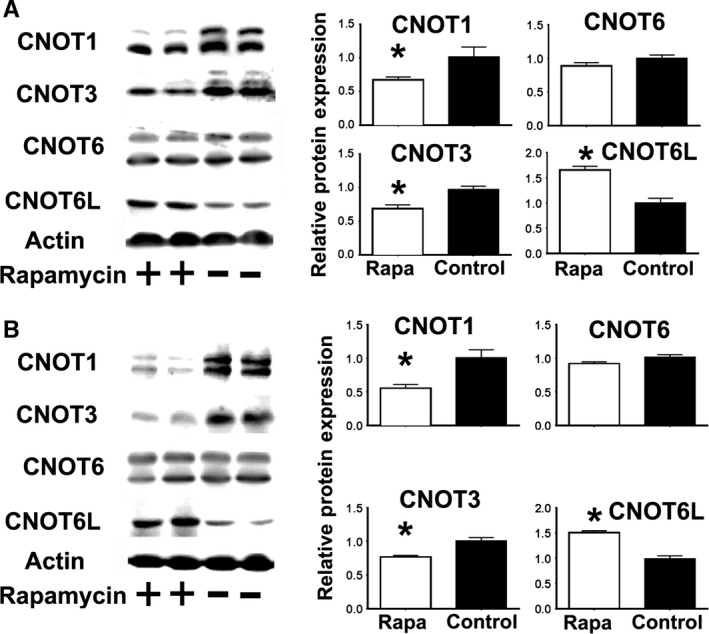
Studies of the mTOR pathway have prompted speculation that diminished mTOR complex-1 (mTORC1) function may be involved in controlling the aging process. Our previous studies have shown diminished mTORC1 activity in tissues of three long-lived mutant mice: Snell dwarf mice, growth hormone receptor gene disrupted mice (GHRKO), and in this article, mice deficient in the pregnancy-associated protein-A (PAPPA-KO). The ways in which lower mTOR signals slow aging and age-related diseases are, however, not well characterized. Here, we show that Snell, GHKRO, and PAPPA-KO mice express high levels of two proteins involved in DNA repair, O-6-methylguanine-DNA methyltransferase (MGMT) and N-myc downstream-regulated gene 1 (NDRG1). Furthermore, we report that lowering mTOR enhances MGMT and NDRG1 protein expression via post-transcriptional mechanisms. We show that the CCR4-NOT complex, a post-transcriptional regulator of gene expression, is downstream of the mTORC1 pathway and may be responsible for the upregulation of MGMT and NDRG1 in all three varieties of long-lived mice. Our data thus suggest a novel link between DNA repair and mTOR signaling via post-transcriptional regulation involving specific alteration in the CCR4-NOT complex, whose modulation could control multiple aspects of the aging process.
对mTOR信号通路的研究引发了一种推测,即mTOR复合物1(mTORC1)功能的减弱可能参与了衰老过程的调控。我们之前的研究表明,在三种长寿突变小鼠的组织中,mTORC1活性降低:斯内尔侏儒小鼠、生长激素受体基因敲除小鼠(GHRKO),以及在本文中提到的妊娠相关蛋白A缺陷小鼠(PAPPA-KO)。然而,较低的mTOR信号减缓衰老及与年龄相关疾病的具体方式尚未得到充分表征。在这里,我们表明,斯内尔小鼠、GHKRO小鼠和PAPPA-KO小鼠表达高水平的两种参与DNA修复的蛋白质,即O-6-甲基鸟嘌呤-DNA甲基转移酶(MGMT)和N-myc下游调控基因1(NDRG1)。此外,我们报告称,降低mTOR通过转录后机制增强了MGMT和NDRG1蛋白的表达。我们表明,CCR4-NOT复合物作为基因表达的转录后调节因子,位于mTORC1信号通路的下游,可能是所有三种长寿小鼠中MGMT和NDRG1上调的原因。因此,我们的数据表明,通过涉及CCR4-NOT复合物特定改变的转录后调控,DNA修复与mTOR信号之间存在一种新的联系,对其进行调节可能会控制衰老过程的多个方面。