Kell Loren, Simon Anna Katharina, Alsaleh Ghada, Cox Lynne S
Department of Biochemistry, University of Oxford, Oxford, United Kingdom.
Botnar Institute for Musculoskeletal Sciences, Nuffield Department of Orthopaedics, Rheumatology and Musculoskeletal Sciences (NDORMS), University of Oxford, Oxford, United Kingdom.
Front Aging. 2023 Jul 3;4:1202152. doi: 10.3389/fragi.2023.1202152. eCollection 2023.
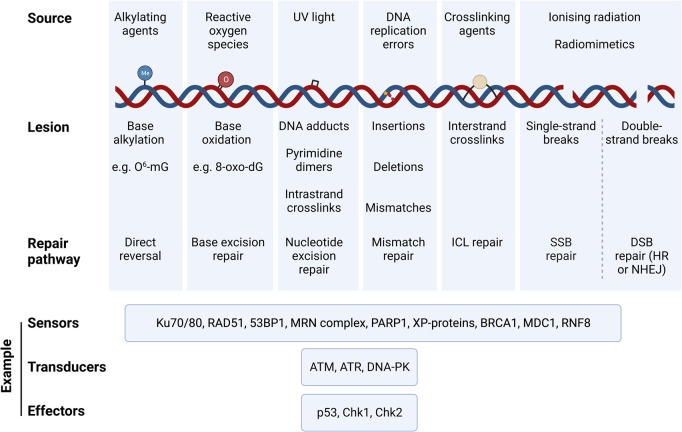
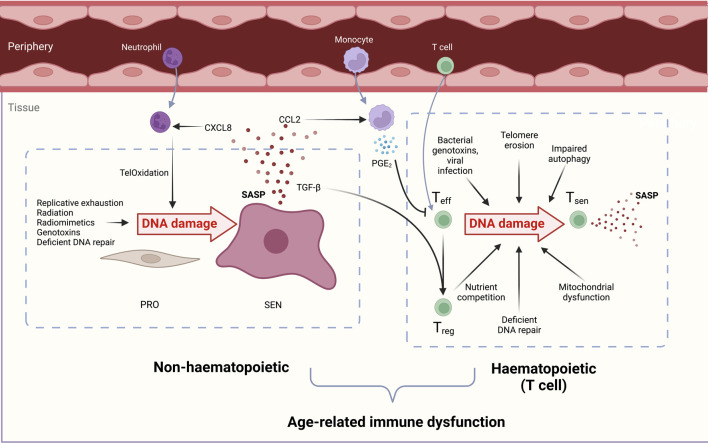
Ageing is the biggest risk factor for the development of multiple chronic diseases as well as increased infection susceptibility and severity of diseases such as influenza and COVID-19. This increased disease risk is linked to changes in immune function during ageing termed immunosenescence. Age-related loss of immune function, particularly in adaptive responses against pathogens and immunosurveillance against cancer, is accompanied by a paradoxical gain of function of some aspects of immunity such as elevated inflammation and increased incidence of autoimmunity. Of the many factors that contribute to immunosenescence, DNA damage is emerging as a key candidate. In this review, we discuss the evidence supporting the hypothesis that DNA damage may be a central driver of immunosenescence through senescence of both immune cells and cells of non-haematopoietic lineages. We explore why DNA damage accumulates during ageing in a major cell type, T cells, and how this may drive age-related immune dysfunction. We further propose that existing immunosenescence interventions may act, at least in part, by mitigating DNA damage and restoring DNA repair processes (which we term "genoprotection"). As such, we propose additional treatments on the basis of their evidence for genoprotection, and further suggest that this approach may provide a viable therapeutic strategy for improving immunity in older people.
衰老既是多种慢性疾病发生的最大风险因素,也是感染易感性增加以及诸如流感和新冠病毒疾病严重程度上升的原因。这种疾病风险增加与衰老过程中免疫功能的变化(称为免疫衰老)有关。与年龄相关的免疫功能丧失,尤其是在针对病原体的适应性反应和针对癌症的免疫监视方面,同时伴随着免疫某些方面功能的反常增强,如炎症加剧和自身免疫发病率增加。在导致免疫衰老的众多因素中,DNA损伤正成为一个关键因素。在本综述中,我们讨论了支持以下假设的证据:DNA损伤可能通过免疫细胞和非造血谱系细胞的衰老,成为免疫衰老的核心驱动因素。我们探讨了为何在主要细胞类型T细胞中,DNA损伤会在衰老过程中积累,以及这如何导致与年龄相关的免疫功能障碍。我们进一步提出,现有的免疫衰老干预措施可能至少部分是通过减轻DNA损伤和恢复DNA修复过程(我们称之为“基因保护”)来发挥作用的。因此,我们基于其基因保护证据提出了额外的治疗方法,并进一步表明这种方法可能为改善老年人的免疫力提供一种可行的治疗策略。