Chen Ruochan, Xie Yangchun, Zhong Xiao, Fu Yongmin, Huang Yan, Zhen Yixiang, Pan Pinhua, Wang Haichao, Bartlett David L, Billiar Timothy R, Lotze Michael T, Zeh Herbert J, Fan Xue-Gong, Tang Daolin, Kang Rui
Department of Infectious Diseases and State Key Laboratory of Viral Hepatitis, Xiangya Hospital, Central South University, Changsha, Hunan 410008, China.
Department of Surgery, University of Pittsburgh, Pittsburgh, Pennsylvania 15213, USA.
Oncotarget. 2016 Sep 20;7(38):61728-61740. doi: 10.18632/oncotarget.11226.
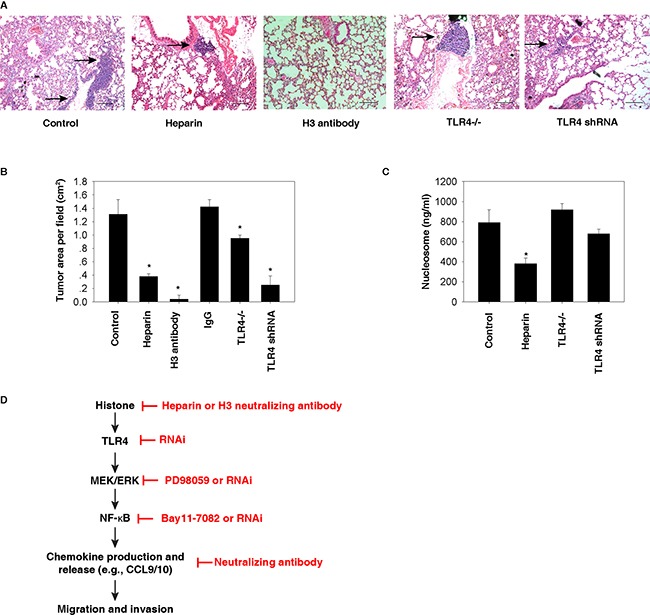
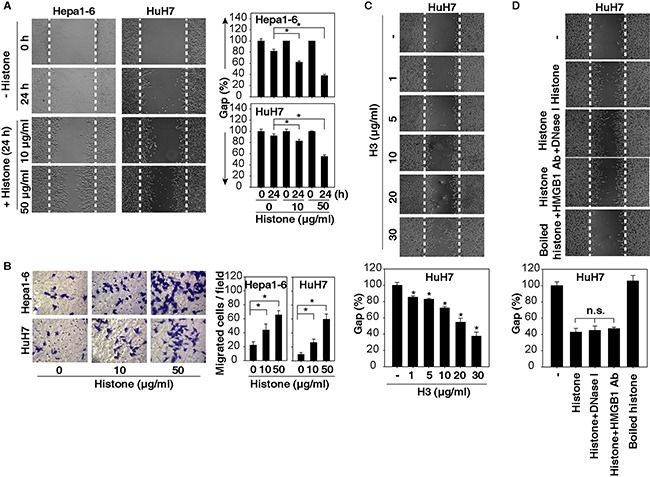
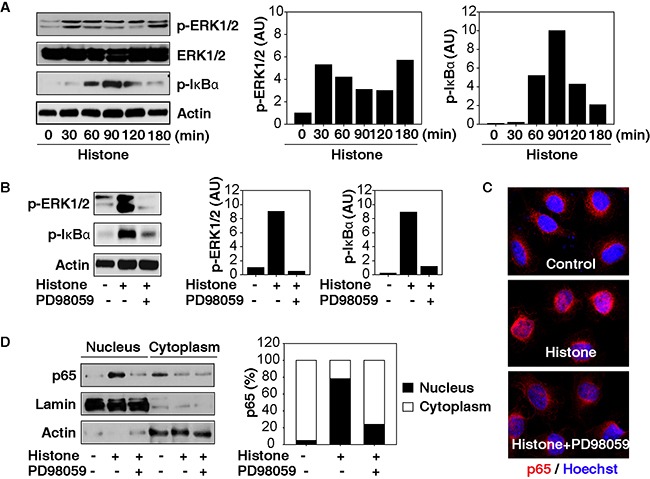
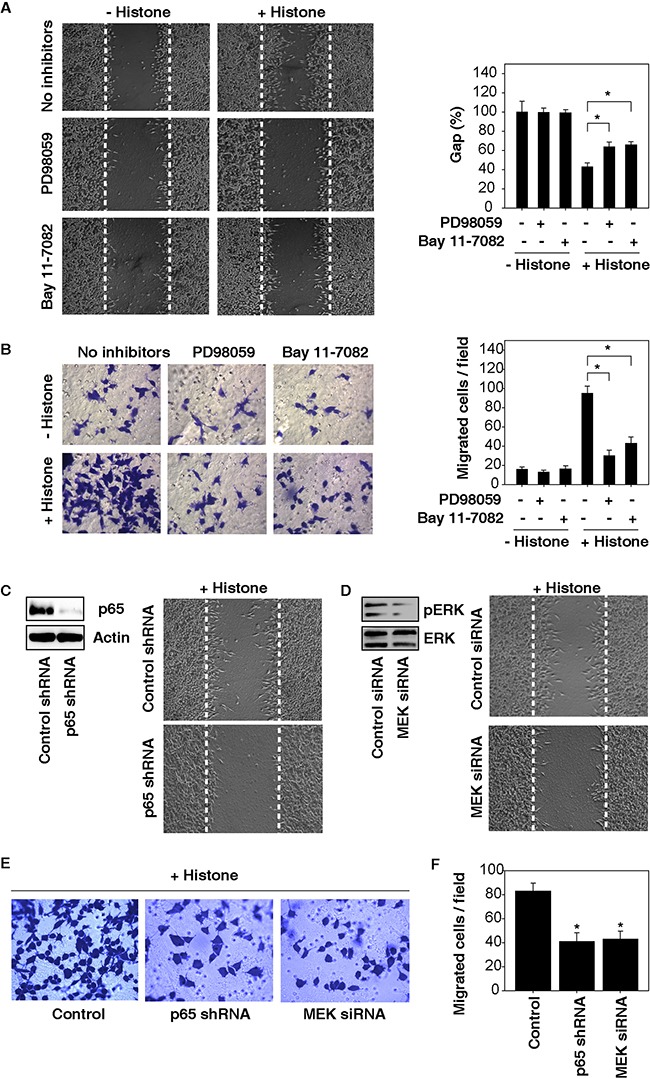
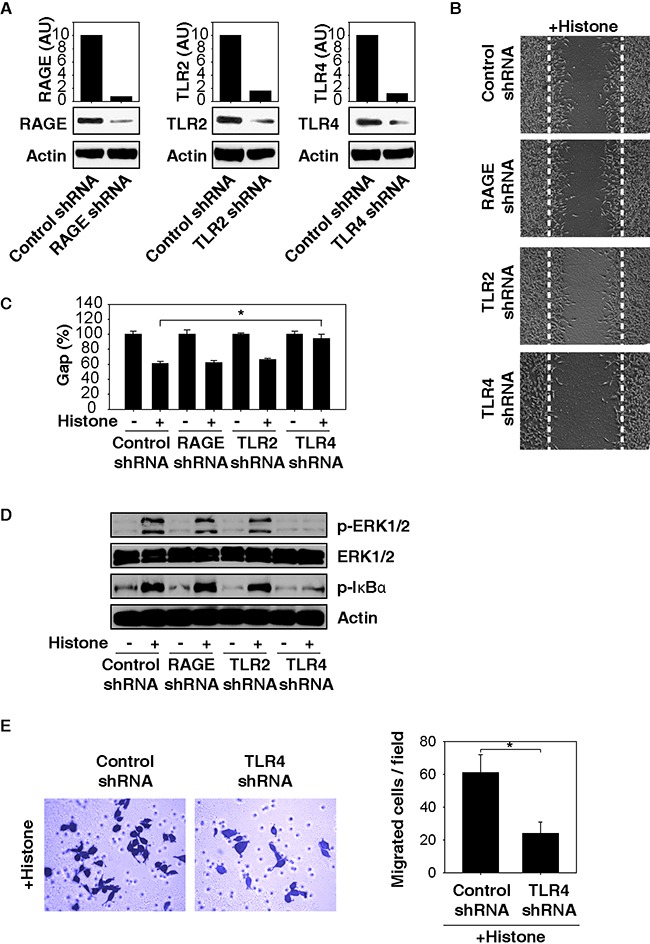
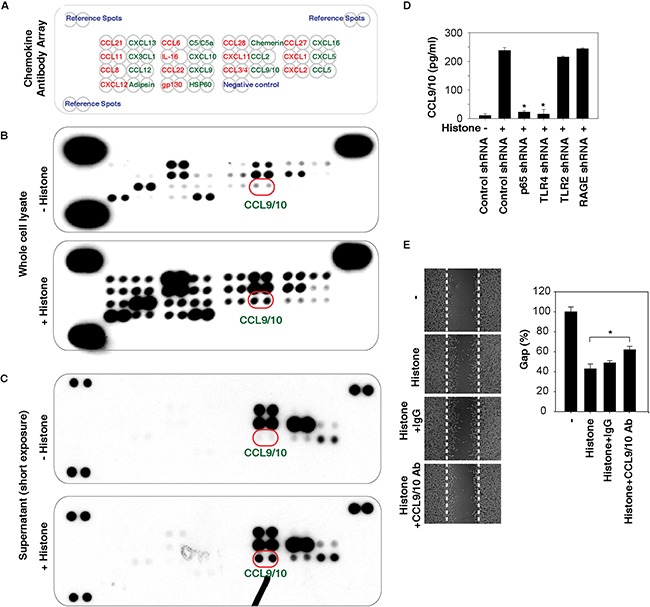
Histones are intracellular nucleosomal components and extracellular damage-associated molecular pattern molecules that modulate chromatin remodeling, as well as the immune response. However, their extracellular roles in cell migration and invasion remain undefined. Here, we demonstrate that histones are novel regulators of tumor metastasis with chemokine-like activities. Indeed, exogenous histones promote both hepatocellular carcinoma (HCC) cell migration and invasion through toll-like receptor (TLR)4, but not TLR2 or the receptor for advanced glycosylation end product. TLR4-mediated activation of nuclear factor-κB (NF-κB) by extracellular signal-regulated kinase (ERK) is required for histone-induced chemokine (e.g., C-C motif ligand 9/10) production. Pharmacological and genetic inhibition of TLR4-ERK-NF-κB signaling impairs histone-induced chemokine production and HCC cell migration. Additionally, TLR4 depletion (by using TLR4-/- mice and TLR4-shRNA) or inhibition of histone release/activity (by administration of heparin and H3 neutralizing antibody) attenuates lung metastasis of HCC cells injected via the tail vein of mice. Thus, histones promote tumor metastasis of HCC cells through the TLR4-NF-κB pathway and represent novel targets for treating patients with HCC.
组蛋白是细胞内核小体的组成成分,也是细胞外与损伤相关的分子模式分子,可调节染色质重塑以及免疫反应。然而,它们在细胞迁移和侵袭中的细胞外作用仍不明确。在此,我们证明组蛋白是具有趋化因子样活性的肿瘤转移新调节因子。事实上,外源性组蛋白通过Toll样受体(TLR)4促进肝细胞癌(HCC)细胞迁移和侵袭,但不通过TLR2或晚期糖基化终产物受体。组蛋白诱导趋化因子(如C-C基序配体9/10)产生需要细胞外信号调节激酶(ERK)通过TLR4介导激活核因子-κB(NF-κB)。对TLR4-ERK-NF-κB信号通路的药理抑制和基因抑制会损害组蛋白诱导的趋化因子产生及HCC细胞迁移。此外,TLR4缺失(通过使用TLR4-/-小鼠和TLR4-shRNA)或组蛋白释放/活性抑制(通过给予肝素和H3中和抗体)可减弱经小鼠尾静脉注射的HCC细胞的肺转移。因此,组蛋白通过TLR4-NF-κB途径促进HCC细胞的肿瘤转移,并代表了治疗HCC患者的新靶点。