Mei Nan, Postec Anne, Monnin Christophe, Pelletier Bernard, Payri Claude E, Ménez Bénédicte, Frouin Eléonore, Ollivier Bernard, Erauso Gaël, Quéméneur Marianne
Aix Marseille Univ, Université de Toulon, CNRS, IRD, MIO Marseille, France.
GET UMR5563 (Centre National de la Recherche Scientifique/UPS/IRD/CNES), Géosciences Environnement Toulouse Toulouse, France.
Front Microbiol. 2016 Aug 30;7:1301. doi: 10.3389/fmicb.2016.01301. eCollection 2016.
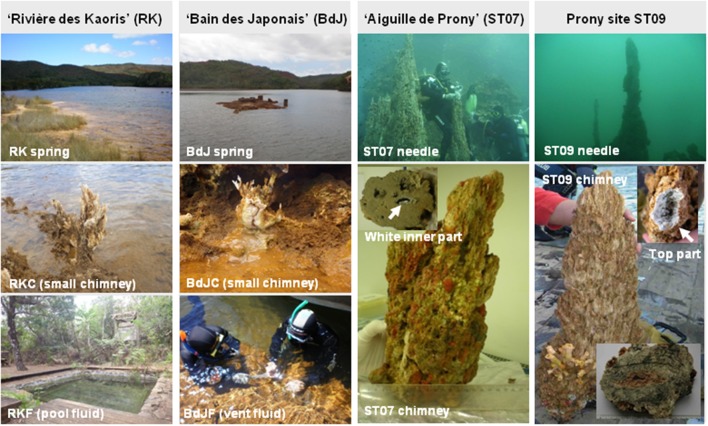
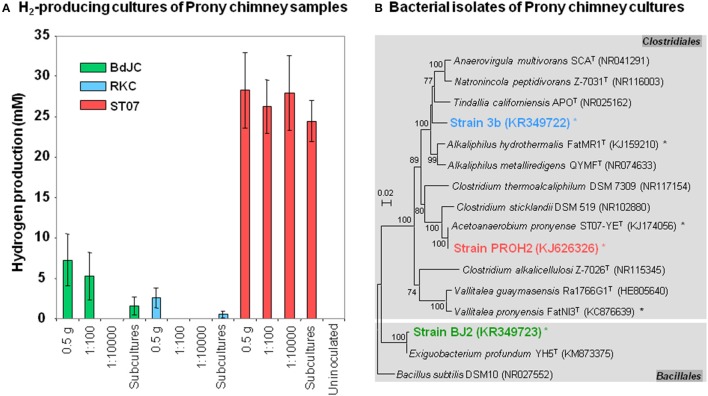
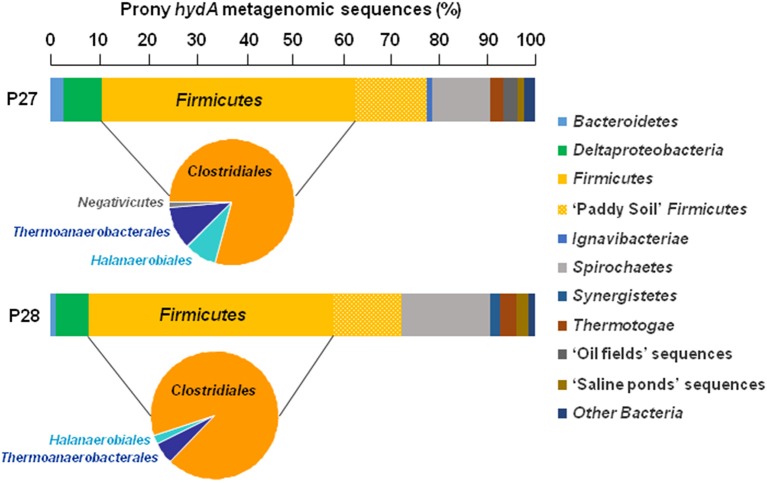
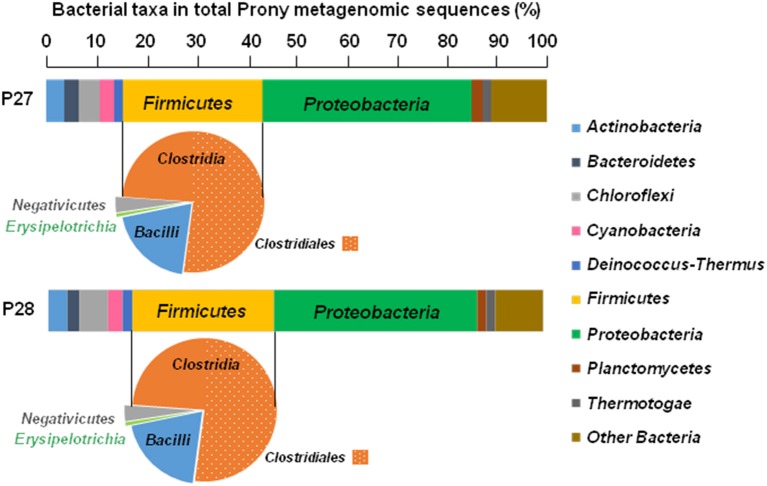
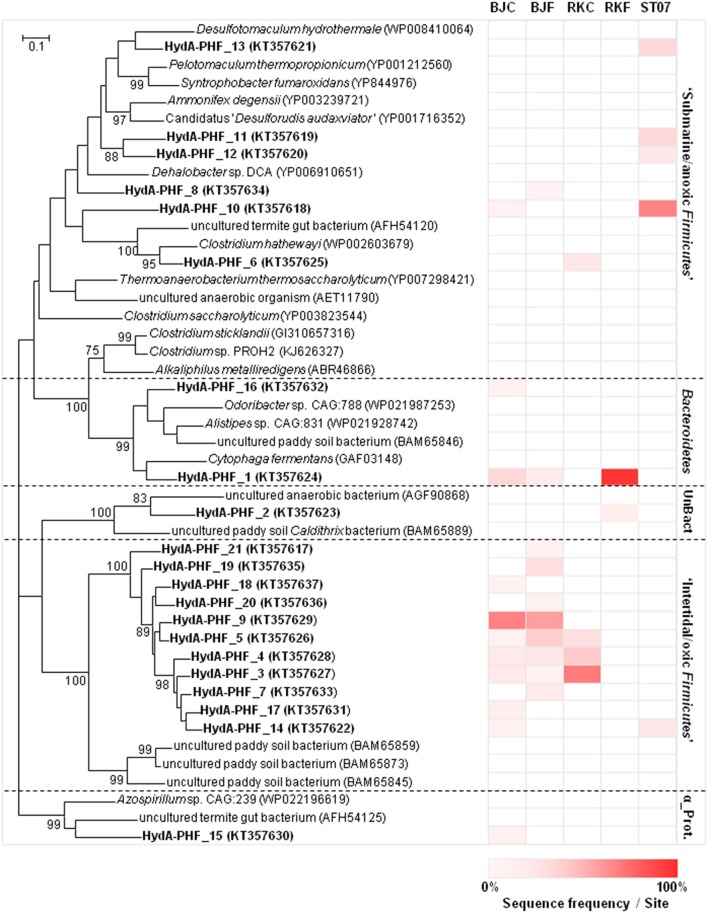
High amounts of hydrogen are emitted in the serpentinite-hosted hydrothermal field of the Prony Bay (PHF, New Caledonia), where high-pH (~11), low-temperature (< 40°C), and low-salinity fluids are discharged in both intertidal and shallow submarine environments. In this study, we investigated the diversity and distribution of potentially hydrogen-producing bacteria in Prony hyperalkaline springs by using metagenomic analyses and different PCR-amplified DNA sequencing methods. The retrieved sequences of hydA genes, encoding the catalytic subunit of [FeFe]-hydrogenases and, used as a molecular marker of hydrogen-producing bacteria, were mainly related to those of Firmicutes and clustered into two distinct groups depending on sampling locations. Intertidal samples were dominated by new hydA sequences related to uncultured Firmicutes retrieved from paddy soils, while submarine samples were dominated by diverse hydA sequences affiliated with anaerobic and/or thermophilic submarine Firmicutes pertaining to the orders Thermoanaerobacterales or Clostridiales. The novelty and diversity of these [FeFe]-hydrogenases may reflect the unique environmental conditions prevailing in the PHF (i.e., high-pH, low-salt, mesothermic fluids). In addition, novel alkaliphilic hydrogen-producing Firmicutes (Clostridiales and Bacillales) were successfully isolated from both intertidal and submarine PHF chimney samples. Both molecular and cultivation-based data demonstrated the ability of Firmicutes originating from serpentinite-hosted environments to produce hydrogen by fermentation, potentially contributing to the molecular hydrogen balance in situ.
在新喀里多尼亚普洛尼湾的蛇纹岩热液区(PHF),会释放出大量氢气,在潮间带和浅海海底环境中,都会排放高pH值(约11)、低温(<40°C)和低盐度的流体。在本研究中,我们通过宏基因组分析和不同的PCR扩增DNA测序方法,研究了普洛尼高碱性泉水中潜在产氢细菌的多样性和分布。编码[FeFe]氢化酶催化亚基的hydA基因的检索序列,用作产氢细菌的分子标记,主要与厚壁菌门的序列相关,并根据采样地点聚为两个不同的组。潮间带样本以与从稻田土壤中检索到的未培养厚壁菌门相关的新hydA序列为主,而海底样本则以与属于热厌氧杆菌目或梭菌目的厌氧和/或嗜热海底厚壁菌门相关的各种hydA序列为主。这些[FeFe]氢化酶的新颖性和多样性可能反映了PHF中普遍存在的独特环境条件(即高pH值、低盐度、中温流体)。此外,还从潮间带和海底PHF烟囱样本中成功分离出了新型嗜碱产氢厚壁菌门(梭菌目和芽孢杆菌目)。基于分子和培养的数据都表明,源自蛇纹岩环境的厚壁菌门能够通过发酵产生氢气,这可能有助于原位分子氢平衡。