Jiang Haoqin, Chen Mingliang, Li Tianming, Liu Hong, Gong Ye, Li Min
Department of Laboratory Medicine, Shanghai Medical College, Huashan Hospital, Fudan University Shanghai, China.
Shanghai Municipal Center for Disease Control and PreventionShanghai, China; Shanghai Institutes of Preventive MedicineShanghai, China.
Front Microbiol. 2016 Aug 30;7:1308. doi: 10.3389/fmicb.2016.01308. eCollection 2016.
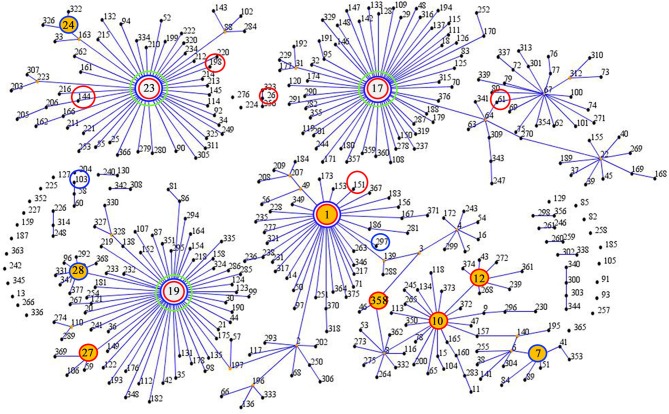
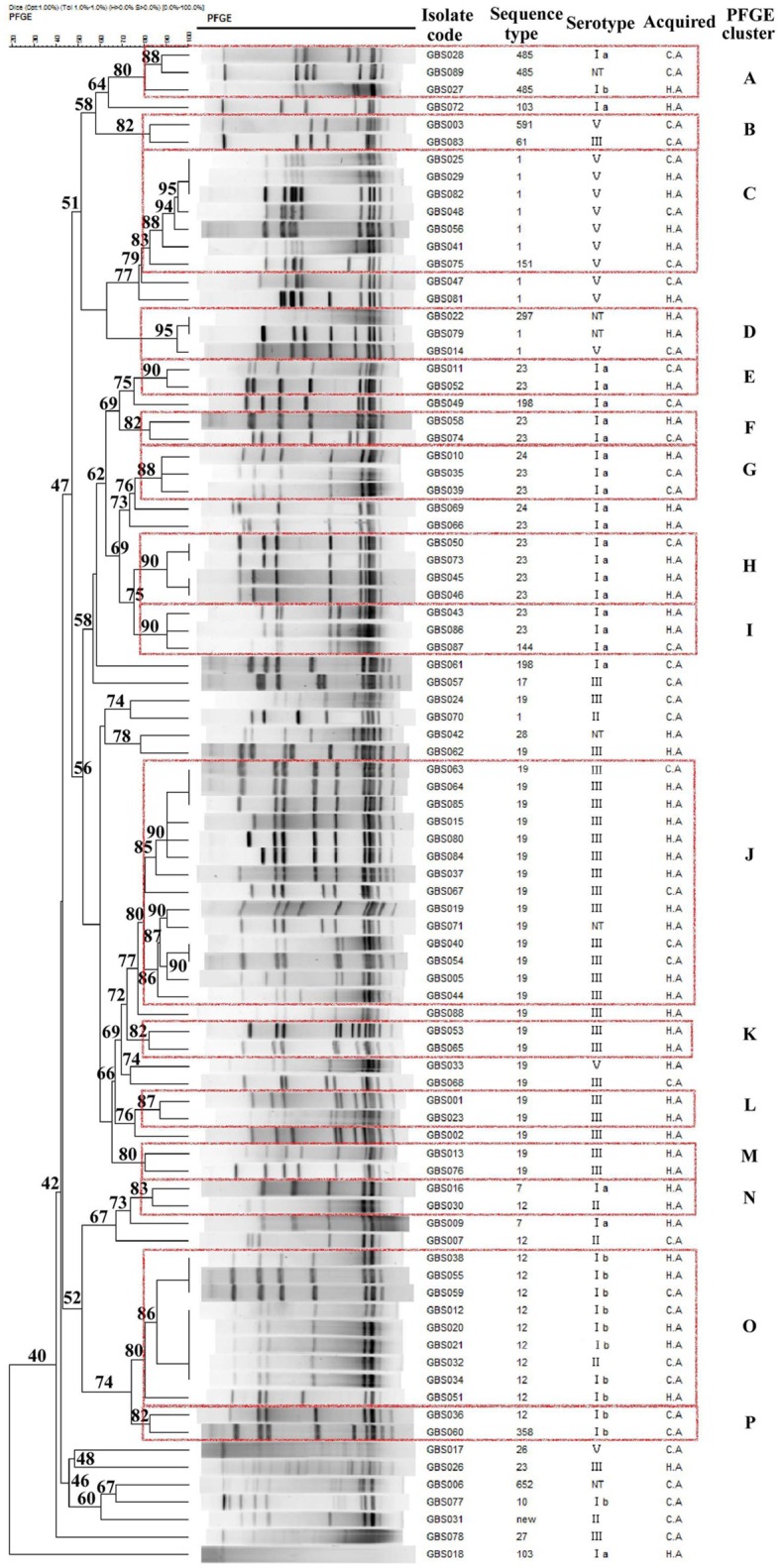
Streptococcus agalactiae, a colonizing agent in pregnant women and the main cause of neonatal sepsis and meningitis, has been increasingly associated with invasive disease in nonpregnant adults. We collected a total of 87 non-repetitive S. agalactiae isolates causing community-acquired (CA) and hospital-acquired (HA) infections in nonpregnant adults from a teaching hospital in Shanghai between 2009 and 2013. We identified and characterized their antibiotic resistance, sequence type (ST), serotype, virulence, and biofilm formation. The most frequent STs were ST19 (29.9%), ST23 (16.1%), ST12 (13.8%), and ST1 (12.6%). ST19 had significantly different distributions between CA- and HA-group B Streptococci (GBS) isolates. The most frequent serotypes were III (32.2%), Ia (26.4%), V (14.9%), Ib (13.8%), and II (5.7%). Serotype III/ST19 was significantly associated with levofloxacin resistance in all isoates. The HA-GBS multidrug resistant rate was much higher than that of CA-GBS. Virulence genes pavA, cfb were found in all isolates. Strong correlations exist between serotype Ib (CA and HA) and surface protein genes spb1 and bac, serotype III (HA) and surface protein gene cps and GBS pilus cluster. The serotype, epidemic clone, PFGE-based genotype, and virulence gene are closely related between CA-GBS and HA-GBS, and certain serotypes and clone types were significantly associated with antibiotic resistance. However, CA-GBS and HA-GBS still had significant differences in their distribution of clone types, antibiotic resistance, and specific virulence genes, which may provide a basis for infection control.
无乳链球菌是孕妇的定植菌,也是新生儿败血症和脑膜炎的主要病因,它与非妊娠成人的侵袭性疾病的关联日益增加。2009年至2013年期间,我们从上海一家教学医院收集了总共87株非重复的无乳链球菌分离株,这些菌株在非妊娠成人中引起社区获得性(CA)和医院获得性(HA)感染。我们鉴定并表征了它们的抗生素耐药性、序列类型(ST)、血清型、毒力和生物膜形成情况。最常见的STs是ST19(29.9%)、ST23(16.1%)、ST12(13.8%)和ST1(12.6%)。ST19在CA组和HA组B族链球菌(GBS)分离株中的分布有显著差异。最常见的血清型是III(32.2%)、Ia(26.4%)、V(14.9%)、Ib(13.8%)和II(5.7%)。血清型III/ST19在所有分离株中与左氧氟沙星耐药性显著相关。HA-GBS的多重耐药率远高于CA-GBS。在所有分离株中均发现了毒力基因pavA、cfb。血清型Ib(CA和HA)与表面蛋白基因spb1和bac、血清型III(HA)与表面蛋白基因cps和GBS菌毛簇之间存在强相关性。CA-GBS和HA-GBS之间的血清型、流行克隆、基于PFGE的基因型和毒力基因密切相关,某些血清型和克隆类型与抗生素耐药性显著相关。然而,CA-GBS和HA-GBS在克隆类型分布、抗生素耐药性和特定毒力基因方面仍存在显著差异,这可能为感染控制提供依据。