Jaacks Lindsay M, Boyd Barr Dana, Sundaram Rajeshwari, Grewal Jagteshwar, Zhang Cuilin, Buck Louis Germaine M
Department of Global Health and Population, Harvard T.H. Chan School of Public Health, Harvard University, Boston, MA 02115, USA.
Department of Environmental Health, Rollins School of Public Health, Emory University, Atlanta, GA 30322, USA.
Int J Environ Res Public Health. 2016 Sep 12;13(9):905. doi: 10.3390/ijerph13090905.
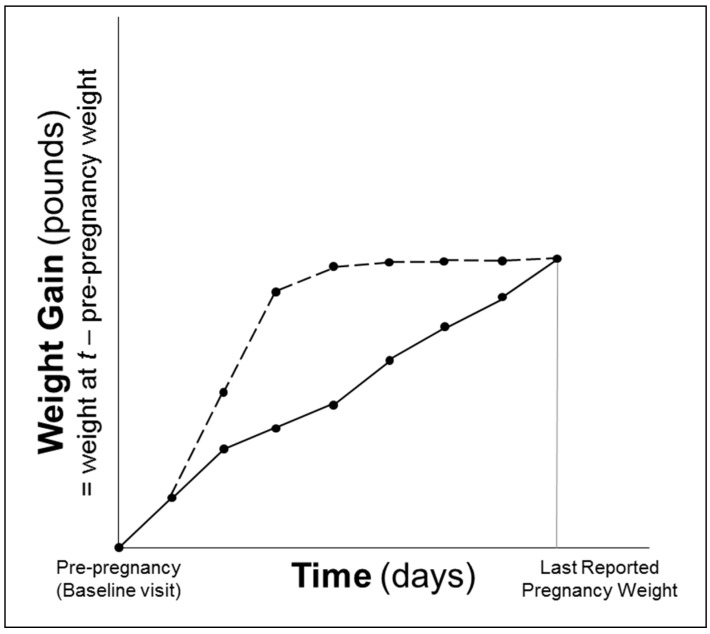
Persistent organic pollutants (POPs) have been implicated in the development of obesity in non-pregnant adults. However, few studies have explored the association of POPs with gestational weight gain (GWG), an important predictor of future risk of obesity in both the mother and offspring. We estimated the association of maternal pre-pregnancy levels of 63 POPs with GWG. Data are from women (18-40 years; n = 218) participating in a prospective cohort study. POPs were assessed using established protocols in pre-pregnancy, non-fasting blood samples. GWG was assessed using three techniques: (1) total GWG (difference between measured pre-pregnancy weight and final self-reported pre-delivery weight); (2) category based on pre-pregnancy body mass index (BMI)-specific Institute of Medicine (IOM) recommendations; and (3) area under the GWG curve (AUC). In an exploratory analysis, effects were estimated separately for women with BMI < 25 kg/m² versus BMI ≥ 25 kg/m². Multivariable polytomous logistic regression and linear regression were used to estimate the association between each chemical or congener and the three GWG outcomes. p,p'-dichlorodiphenyl trichloroethane (p,p'-DDT) was significantly inversely associated with AUC after adjustment for lipids and pre-pregnancy BMI: beta {95% confidence interval (CI)}, -378.03 (-724.02, -32.05). Perfluorooctane sulfonate (PFOS) was significantly positively associated with AUC after adjustment for lipids among women with a BMI < 25 kg/m² {beta (95% CI), 280.29 (13.71, 546.86)}, but not among women with a BMI ≥ 25 kg/m² {beta (95% CI), 56.99 (-328.36, 442.34)}. In summary, pre-pregnancy levels of select POPs, namely, p,p'-DDT and PFOS, were moderately associated with GWG. The association between POPs and weight gain during pregnancy may be more complex than previously thought, and adiposity prior to pregnancy may be an important effect modifier.
持久性有机污染物(POPs)与非孕期成年人肥胖的发生有关。然而,很少有研究探讨POPs与孕期体重增加(GWG)之间的关联,而GWG是母亲和后代未来肥胖风险的重要预测指标。我们估计了孕妇孕前63种POPs水平与GWG之间的关联。数据来自参与一项前瞻性队列研究的女性(18 - 40岁;n = 218)。使用既定方案在孕前非空腹血样中评估POPs。使用三种技术评估GWG:(1)总GWG(测量的孕前体重与最终自我报告的分娩前体重之差);(2)基于孕前体重指数(BMI)的特定医学研究所(IOM)建议的类别;(3)GWG曲线下面积(AUC)。在探索性分析中,分别对BMI < 25 kg/m²和BMI≥25 kg/m²的女性估计效应。使用多变量多分类逻辑回归和线性回归来估计每种化学物质或同系物与三种GWG结果之间的关联。在调整脂质和孕前BMI后,p,p'-二氯二苯三氯乙烷(p,p'-DDT)与AUC显著负相关:β{95%置信区间(CI)},-378.03(-724.02,-32.05)。在BMI < 25 kg/m²的女性中,全氟辛烷磺酸(PFOS)在调整脂质后与AUC显著正相关{β(95%CI),280.29(13.71,546.86)},但在BMI≥25 kg/m²的女性中并非如此{β(95%CI),56.99(-328.36,442.34)}。总之,特定POPs(即p,p'-DDT和PFOS)的孕前水平与GWG中度相关。POPs与孕期体重增加之间的关联可能比以前认为的更复杂,孕前肥胖可能是一个重要的效应修饰因素。