Kretzschmar Christin, Roolf Catrin, Timmer Katrin, Sekora Anett, Knübel Gudrun, Murua Escobar Hugo, Fuellen Georg, Ibrahim Saleh M, Tiedge Markus, Baltrusch Simone, Jaster Robert, Köhling Rüdiger, Junghanss Christian
Department of Medicine III - Hematology/Oncology/Palliative Care, Rostock University Medical Center, Rostock, Germany.
Institute for Biostatistics and Informatics in Medicine and Ageing Research, Rostock University Medical Center, Rostock, Germany.
Oncotarget. 2016 Nov 15;7(46):74460-74472. doi: 10.18632/oncotarget.11952.
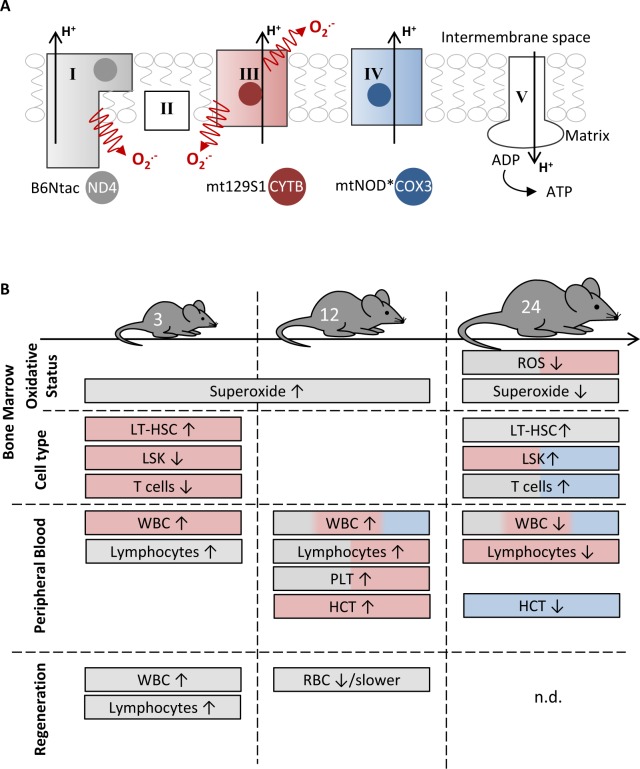
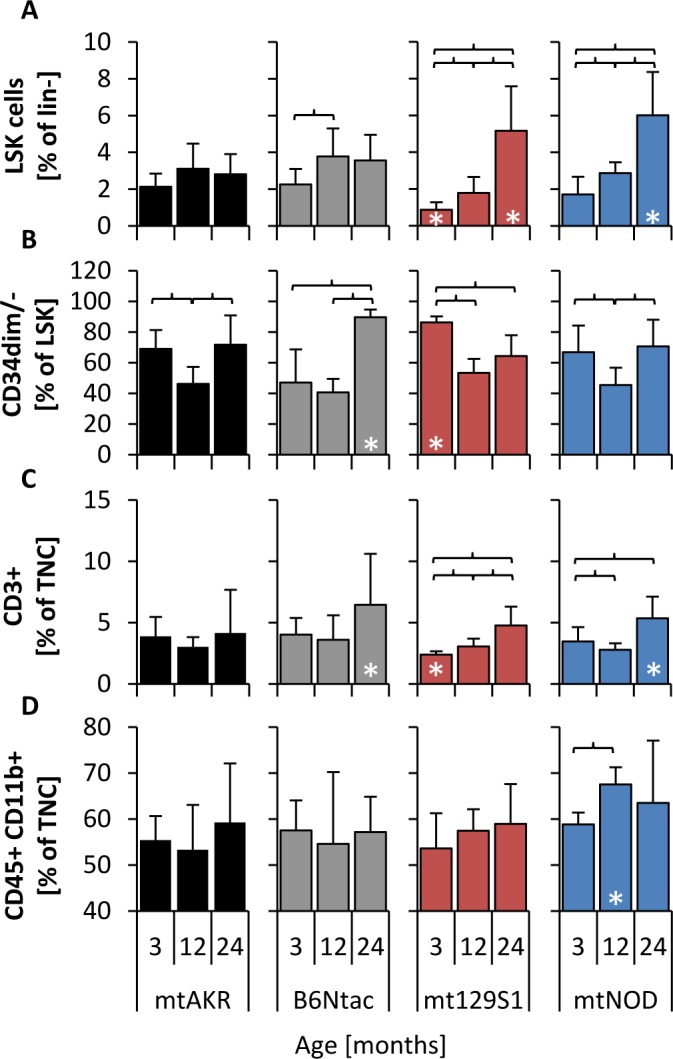
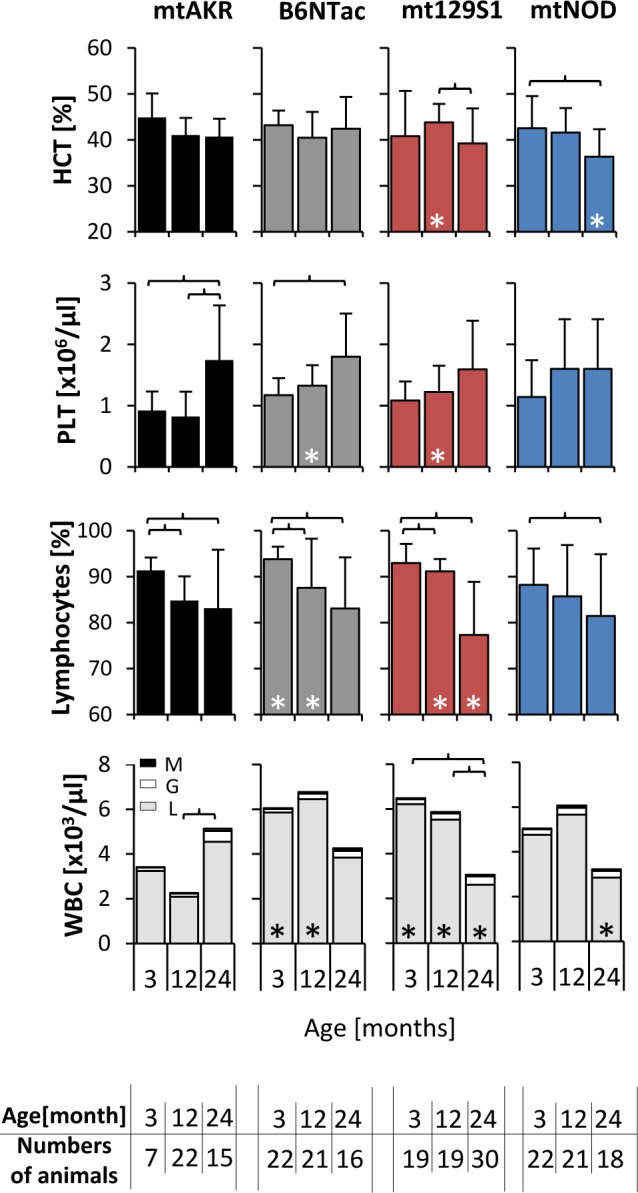
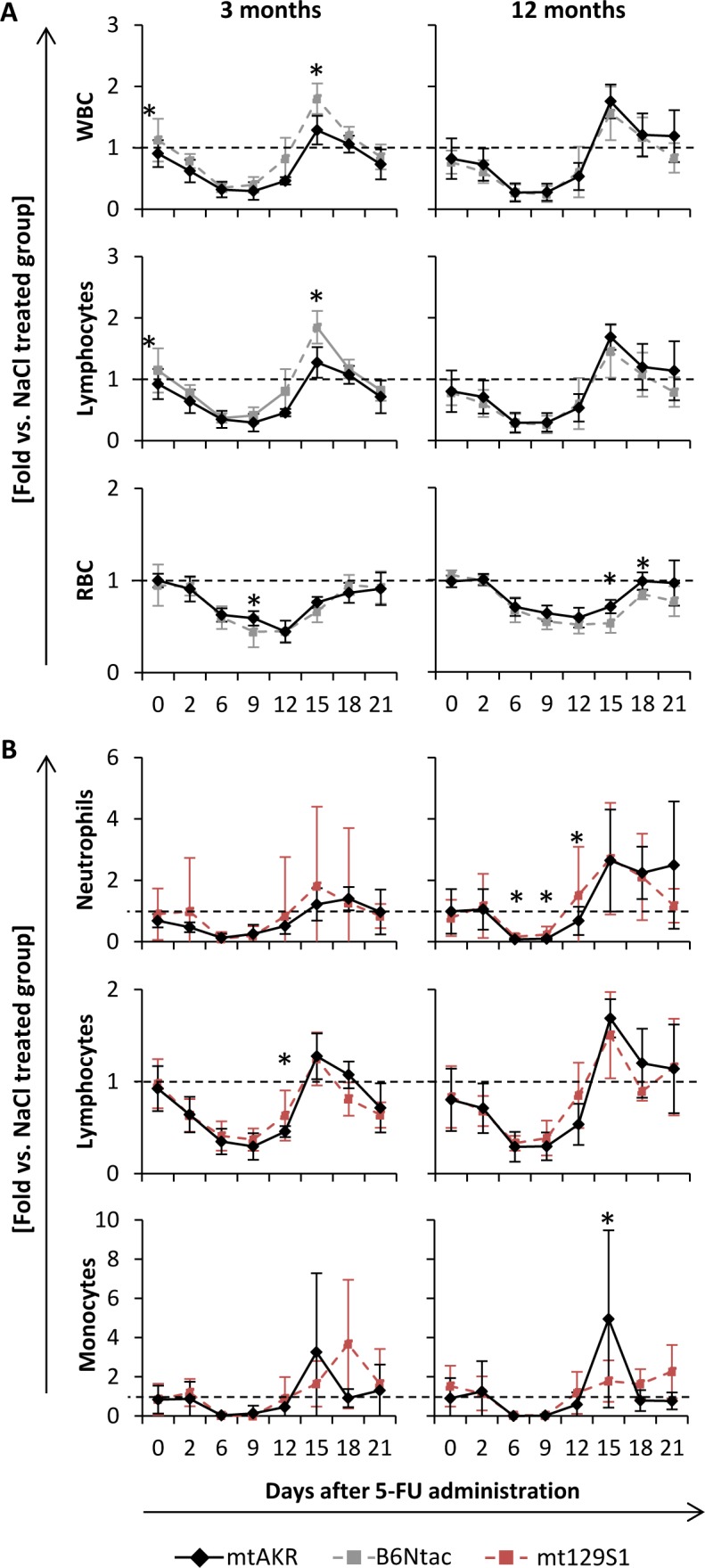
During aging, mitochondrial DNA (mtDNA) can accumulate mutations leading to increasing levels of reactive oxygen species (ROS). Increased ROS were described to activate formerly quiescent hematopoietic stem cells (HSC). Mutations in mtDNA were shown to enhance the risk for myelodysplastic syndrome and leukemia. However, the complex relationship between mtDNA variations, ROS and aging of the hematopoietic system is not fully understood.Herein, three mouse strains with mtDNA polymorphisms in genes of respiratory chain complexes I (ND4), III (CYTB) and IV (COX3) were compared to a reference strain during aging. Analysis focused on ROS and ATP levels, bone marrow composition and blood counts. Additionally, hematopoietic restoration capacity following cytotoxic stress was tested.Mice with polymorphisms in ND4 and CYTB gene had significantly decreasing ROS levels in bone marrow cells during aging, without effecting ATP levels. In addition, the frequency of stem and progenitor cells increased during aging but the amount of lymphocytes in the peripheral blood decreased during aging.In summary, the presence of mtDNA polymorphisms affecting the respiratory chain complexes I, III and IV was associated with altered ROS levels as well as changes in BM and peripheral blood composition during aging.
在衰老过程中,线粒体DNA(mtDNA)会积累突变,导致活性氧(ROS)水平升高。研究表明,ROS增加会激活先前静止的造血干细胞(HSC)。mtDNA突变会增加骨髓增生异常综合征和白血病的风险。然而,mtDNA变异、ROS与造血系统衰老之间的复杂关系尚未完全明确。在此,将呼吸链复合物I(ND4)、III(CYTB)和IV(COX3)基因存在mtDNA多态性的三种小鼠品系与一种对照品系在衰老过程中进行比较。分析重点在于ROS和ATP水平、骨髓组成及血细胞计数。此外,还测试了细胞毒性应激后的造血恢复能力。ND4和CYTB基因存在多态性的小鼠在衰老过程中骨髓细胞中的ROS水平显著降低,而ATP水平不受影响。此外,衰老过程中干细胞和祖细胞的频率增加,但外周血中的淋巴细胞数量减少。总之,影响呼吸链复合物I、III和IV的mtDNA多态性的存在与衰老过程中ROS水平的改变以及骨髓和外周血组成的变化有关。