Wong Ruth G, Wu Jia R, Gloor Gregory B
Department of Biochemistry, University of Western Ontario, London, Ontario, Canada.
PLoS One. 2016 Sep 15;11(9):e0161196. doi: 10.1371/journal.pone.0161196. eCollection 2016.
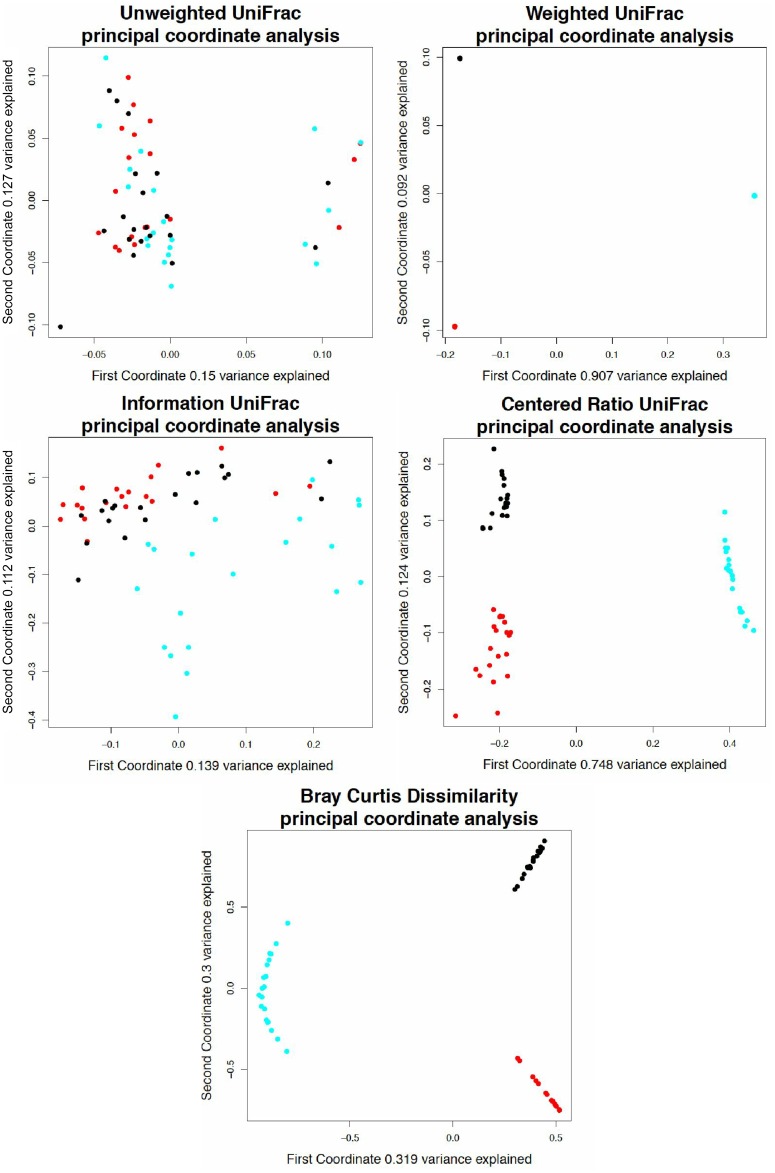
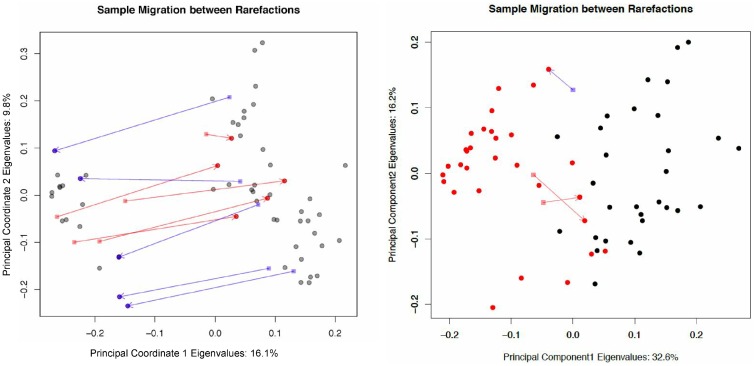
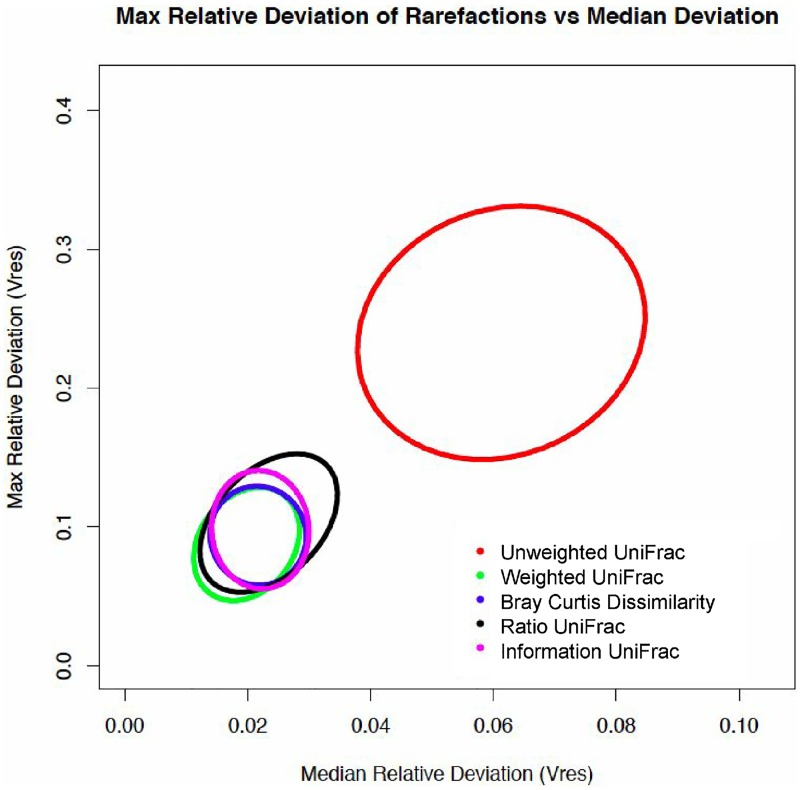
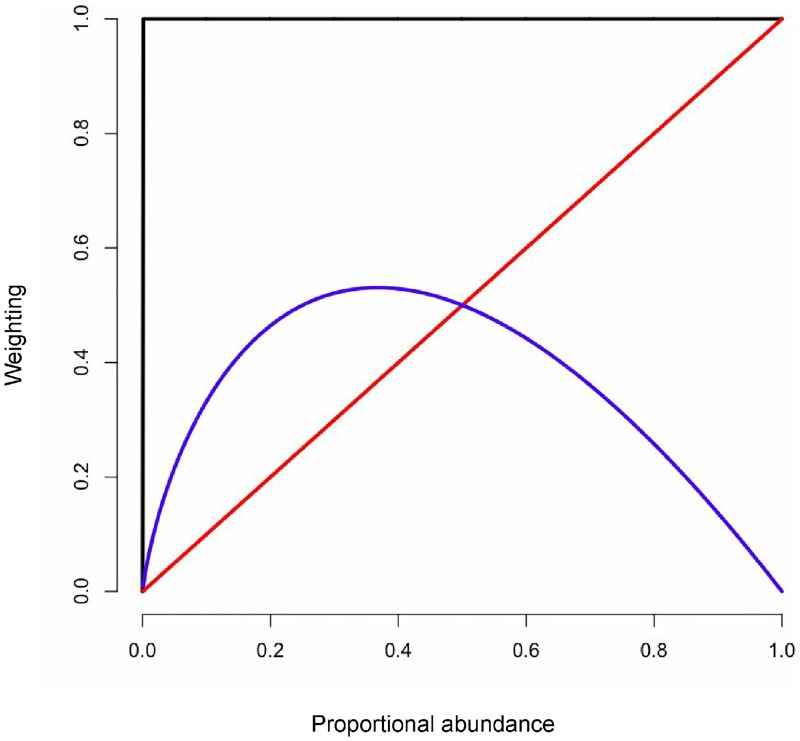
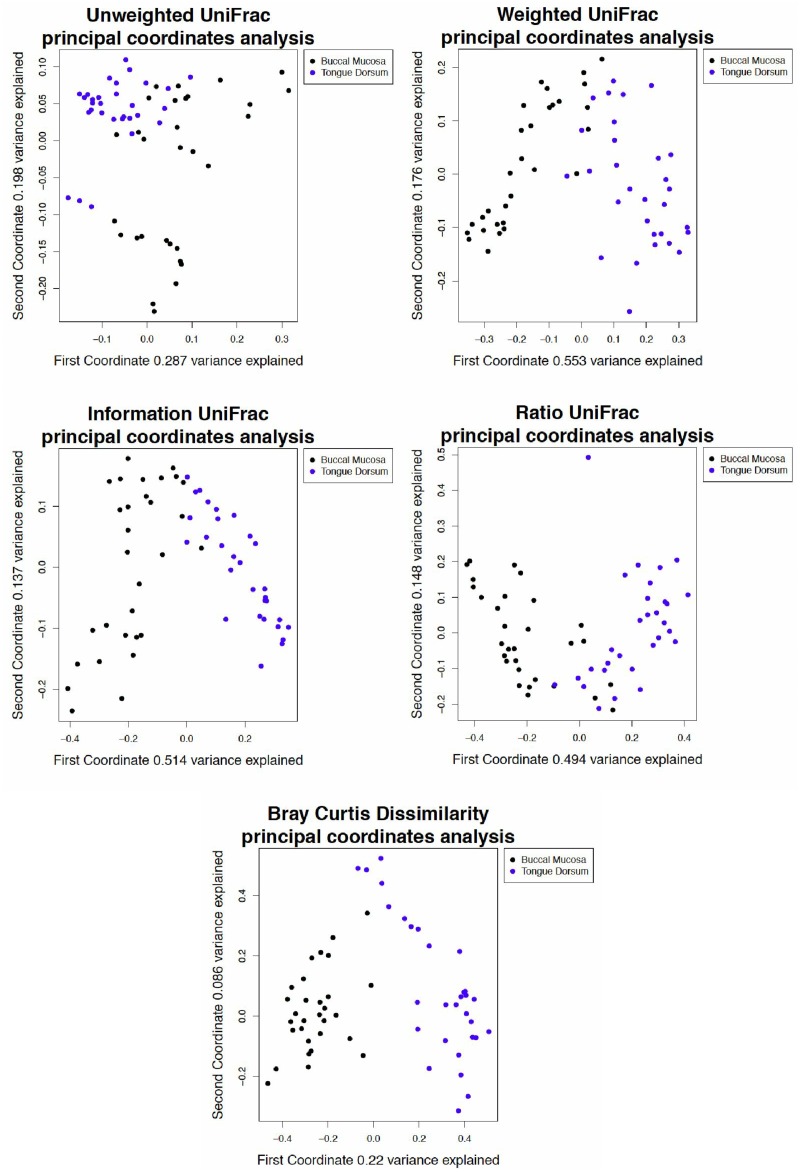
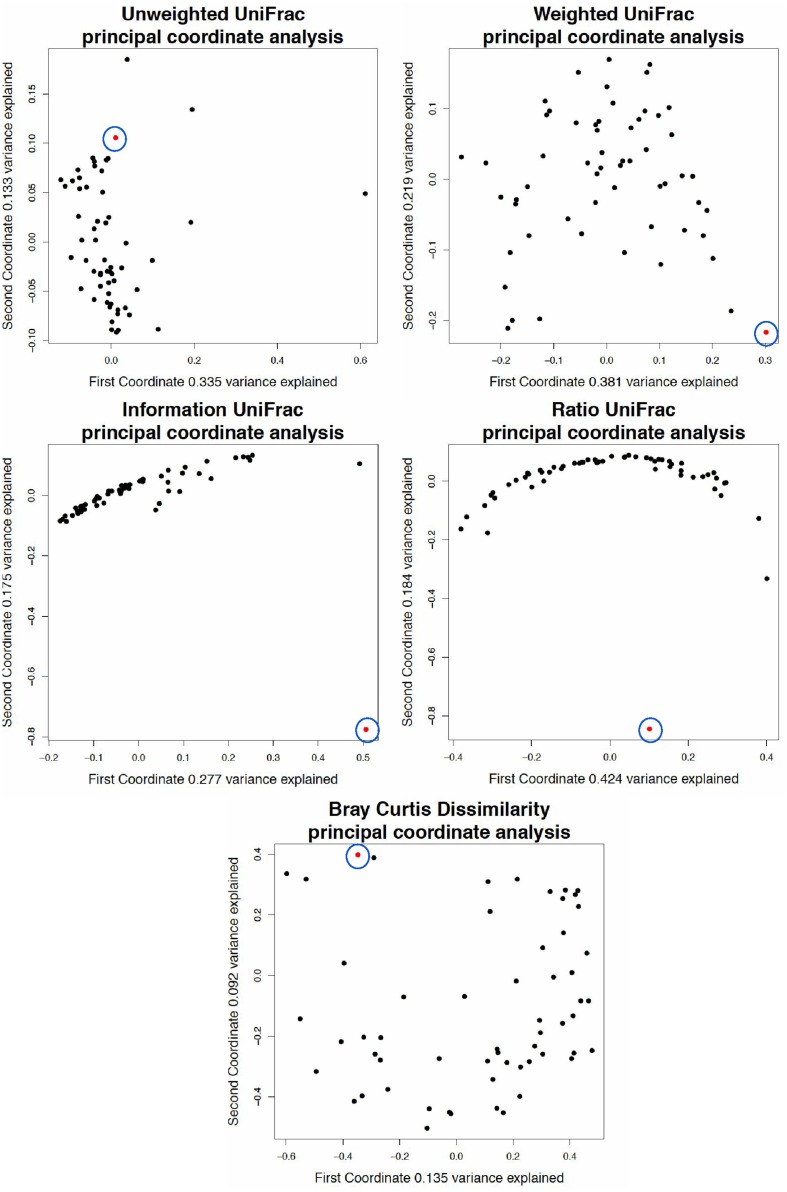
The UniFrac distance metric is often used to separate groups in microbiome analysis, but requires a constant sequencing depth to work properly. Here we demonstrate that unweighted UniFrac is highly sensitive to rarefaction instance and to sequencing depth in uniform data sets with no clear structure or separation between groups. We show that this arises because of subcompositional effects. We introduce information UniFrac and ratio UniFrac, two new weightings that are not as sensitive to rarefaction and allow greater separation of outliers than classic unweighted and weighted UniFrac. With this expansion of the UniFrac toolbox, we hope to empower researchers to extract more varied information from their data.
在微生物组分析中,UniFrac距离度量常用于区分不同组,但需要恒定的测序深度才能正常工作。在此,我们证明在没有明显结构或组间区分的均匀数据集中,未加权的UniFrac对重抽样实例和测序深度高度敏感。我们表明,这是由于子成分效应导致的。我们引入了信息UniFrac和比率UniFrac这两种新的加权方法,它们比重抽样的敏感性更低,并且与经典的未加权和加权UniFrac相比,能够更好地分离异常值。通过扩展UniFrac工具箱,我们希望使研究人员能够从数据中提取更多样化的信息。