State Key Laboratory of Optoelectronic Materials and Technologies, School of Physics, Sun-Yat Sen University, Guangzhou, 510275, China.
Department of Physics, University of York, York, YO10 5DD, UK.
Sci Rep. 2016 Sep 16;6:32945. doi: 10.1038/srep32945.
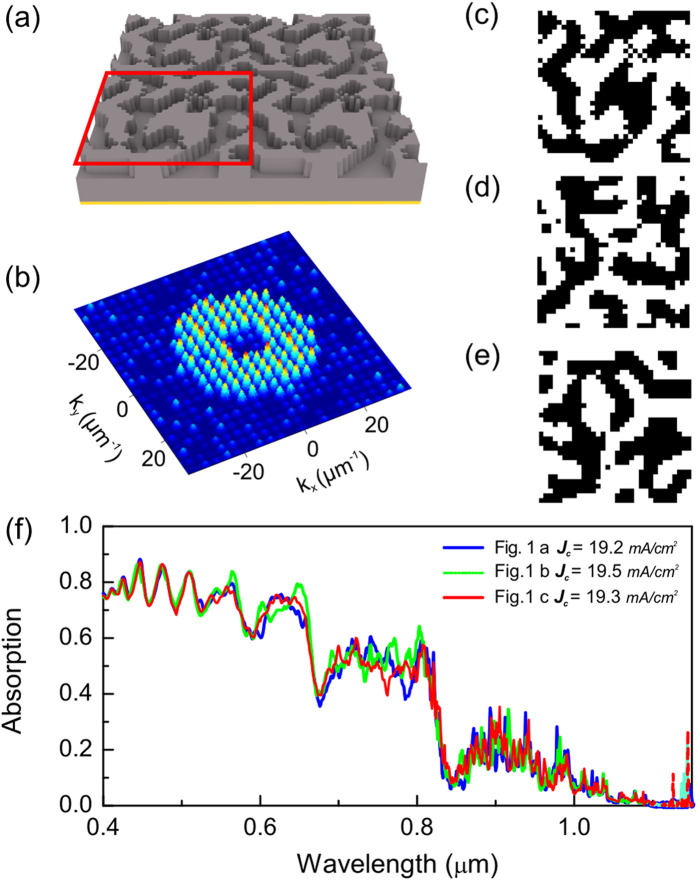
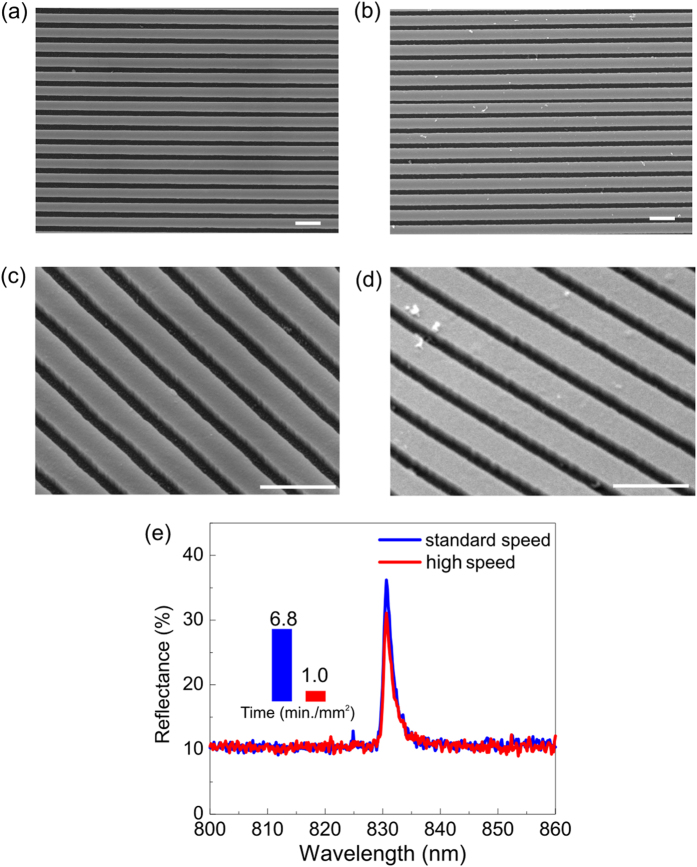
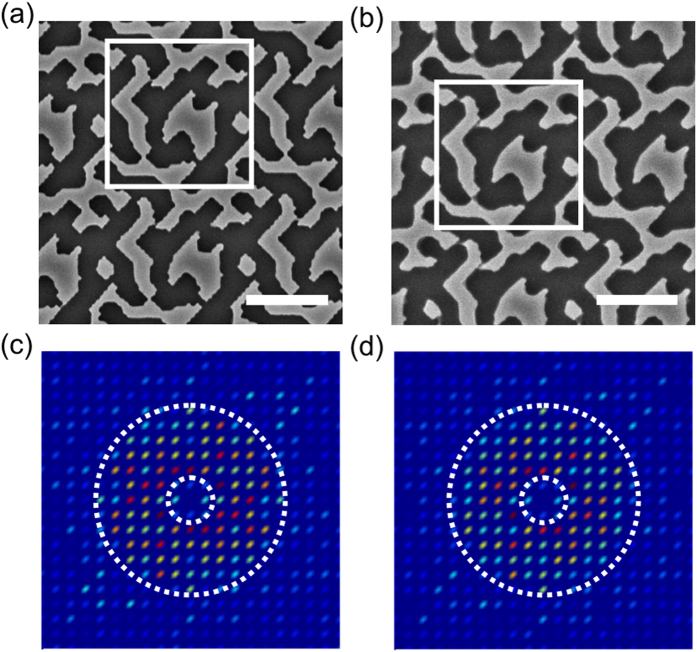
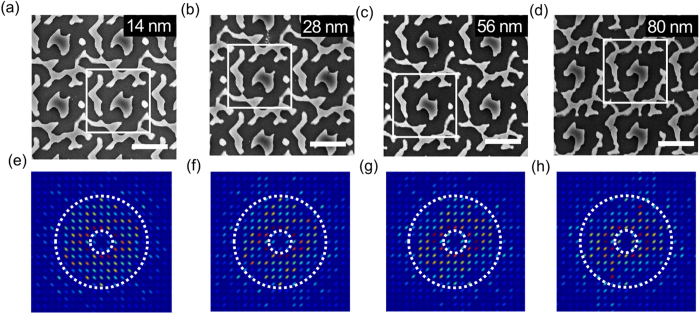
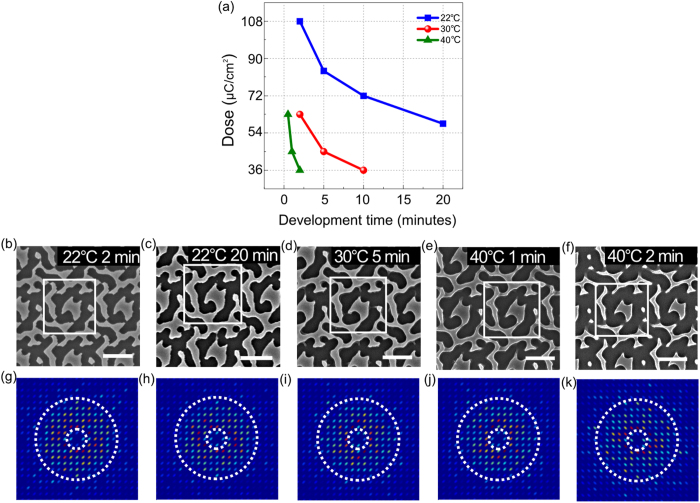
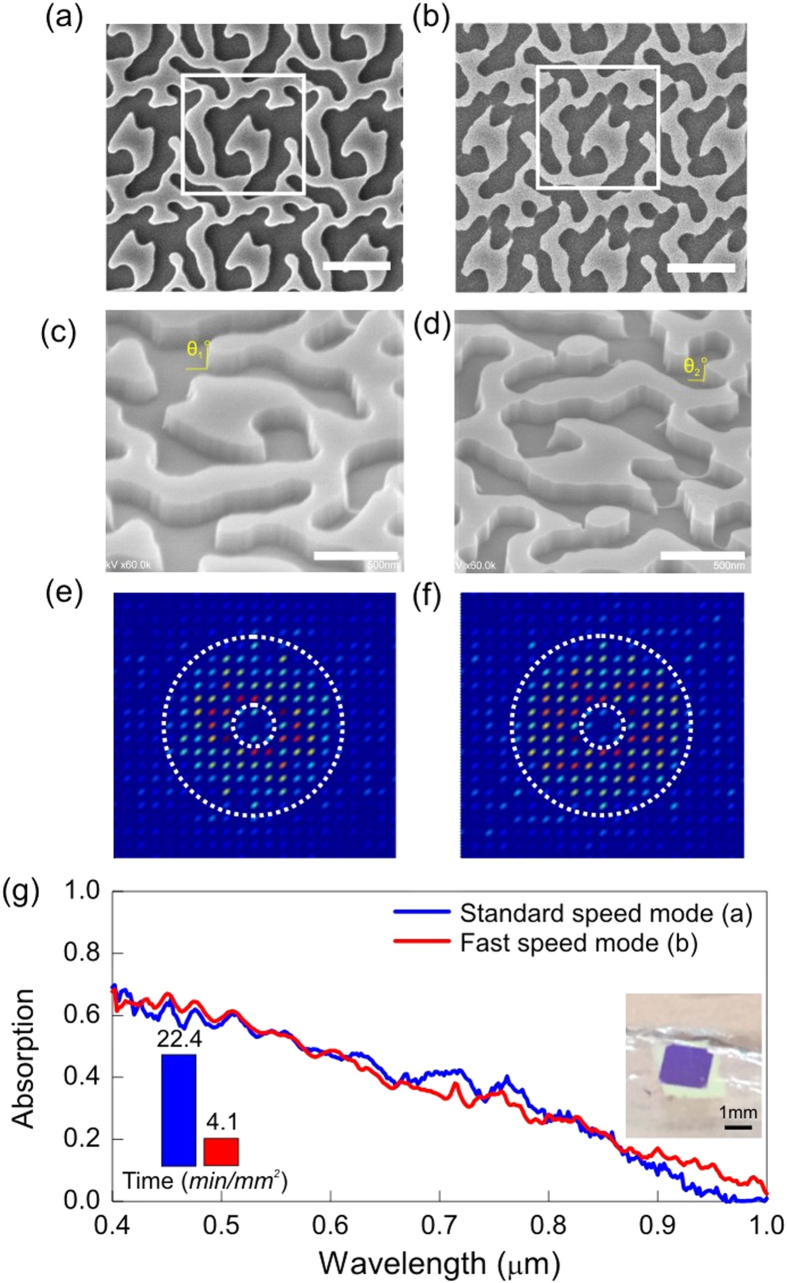
Photonic nanostructures are used for many optical systems and applications. However, some high-end applications require the use of electron-beam lithography (EBL) to generate such nanostructures. An important technological bottleneck is the exposure time of the EBL systems, which can exceed 24 hours per 1 cm(2). Here, we have developed a method based on a target function to systematically increase the writing speed of EBL. As an example, we use as the target function the fidelity of the Fourier Transform spectra of nanostructures that are designed for thin film light trapping applications, and optimize the full parameter space of the lithography process. Finally, we are able to reduce the exposure time by a factor of 5.5 without loss of photonic performance. We show that the performances of the fastest written structures are identical to the original ones within experimental error. As the target function can be varied according to different purposes, the method is also applicable to guided mode resonant grating and many other areas. These findings contribute to the advancement of EBL and point towards making the technology more attractive for commercial applications.
光子纳米结构被广泛应用于各种光学系统和领域。然而,一些高端应用需要使用电子束光刻(EBL)来生成这些纳米结构。其中一个重要的技术瓶颈是 EBL 系统的曝光时间,每 1cm² 可能需要超过 24 小时。在这里,我们基于目标函数开发了一种方法,可以系统地提高 EBL 的写入速度。例如,我们将薄膜光捕获应用设计的纳米结构傅里叶变换光谱的保真度作为目标函数,并优化光刻过程的全参数空间。最终,我们能够将曝光时间缩短 5.5 倍,而不会损失光子性能。我们证明,在实验误差范围内,最快写入结构的性能与原始结构完全相同。由于目标函数可以根据不同的目的进行调整,因此该方法也适用于导模共振光栅和许多其他领域。这些发现推动了 EBL 的发展,并使得该技术在商业应用中更具吸引力。