Hohwieler Meike, Illing Anett, Hermann Patrick C, Mayer Tobias, Stockmann Marianne, Perkhofer Lukas, Eiseler Tim, Antony Justin S, Müller Martin, Renz Susanne, Kuo Chao-Chung, Lin Qiong, Sendler Matthias, Breunig Markus, Kleiderman Susanne M, Lechel André, Zenker Martin, Leichsenring Michael, Rosendahl Jonas, Zenke Martin, Sainz Bruno, Mayerle Julia, Costa Ivan G, Seufferlein Thomas, Kormann Michael, Wagner Martin, Liebau Stefan, Kleger Alexander
Department of Internal Medicine I, University Medical Center Ulm, Ulm, Germany.
Department of Pediatrics I, Pediatric Infectiology and Immunology, Translational Genomics and Gene Therapy in Pediatrics, University of Tuebingen, Tuebingen, Germany.
Gut. 2017 Mar;66(3):473-486. doi: 10.1136/gutjnl-2016-312423. Epub 2016 Sep 15.
The generation of acinar and ductal cells from human pluripotent stem cells (PSCs) is a poorly studied process, although various diseases arise from this compartment.
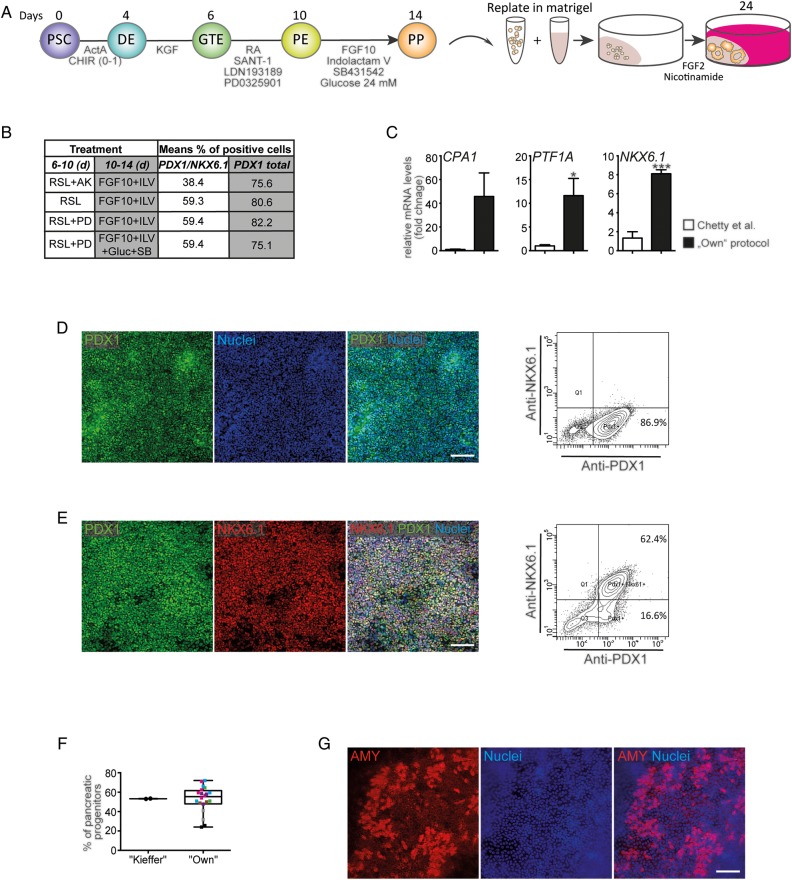
We designed a straightforward approach to direct human PSCs towards pancreatic organoids resembling acinar and ductal progeny.
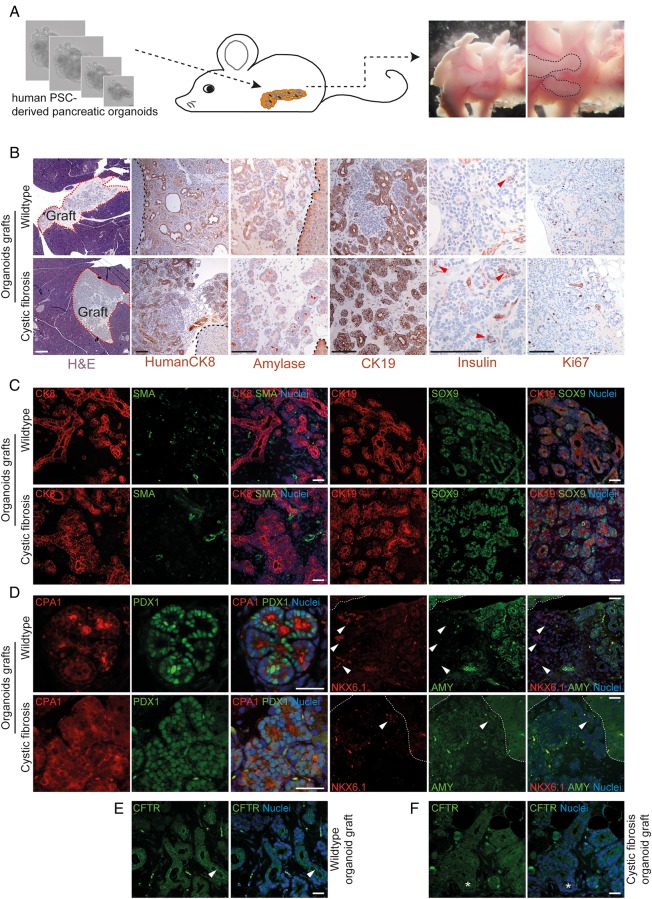
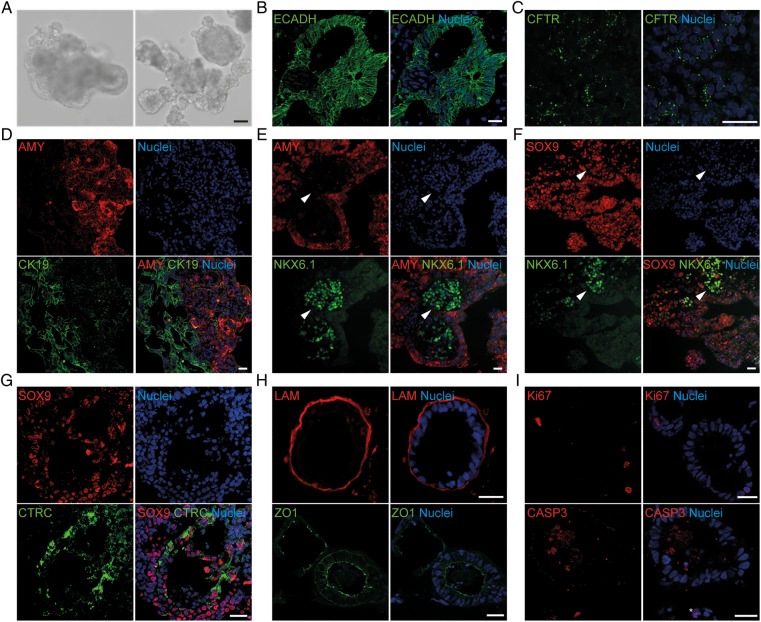
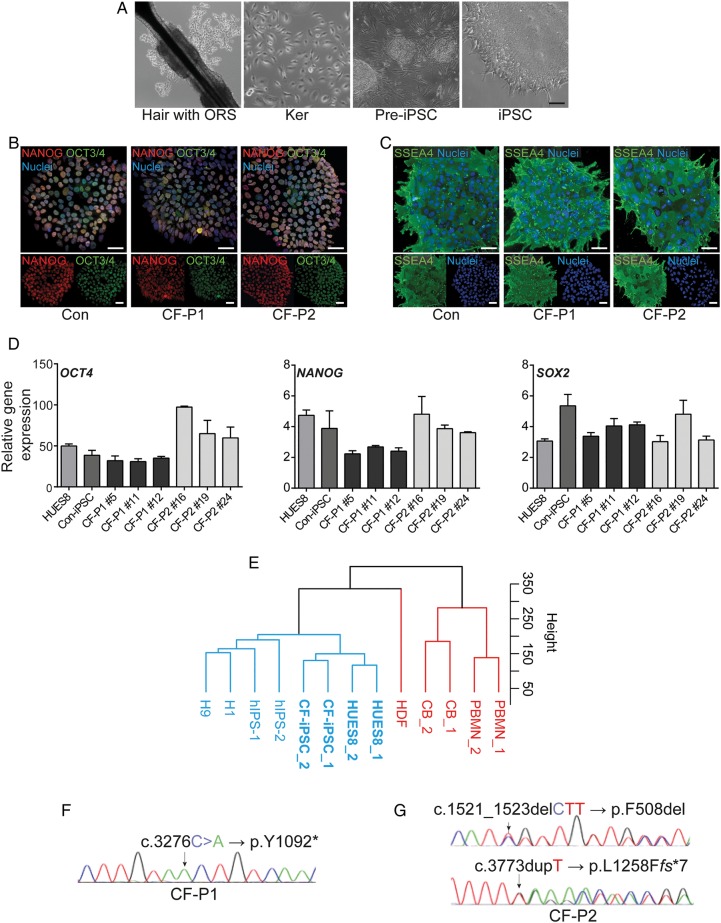
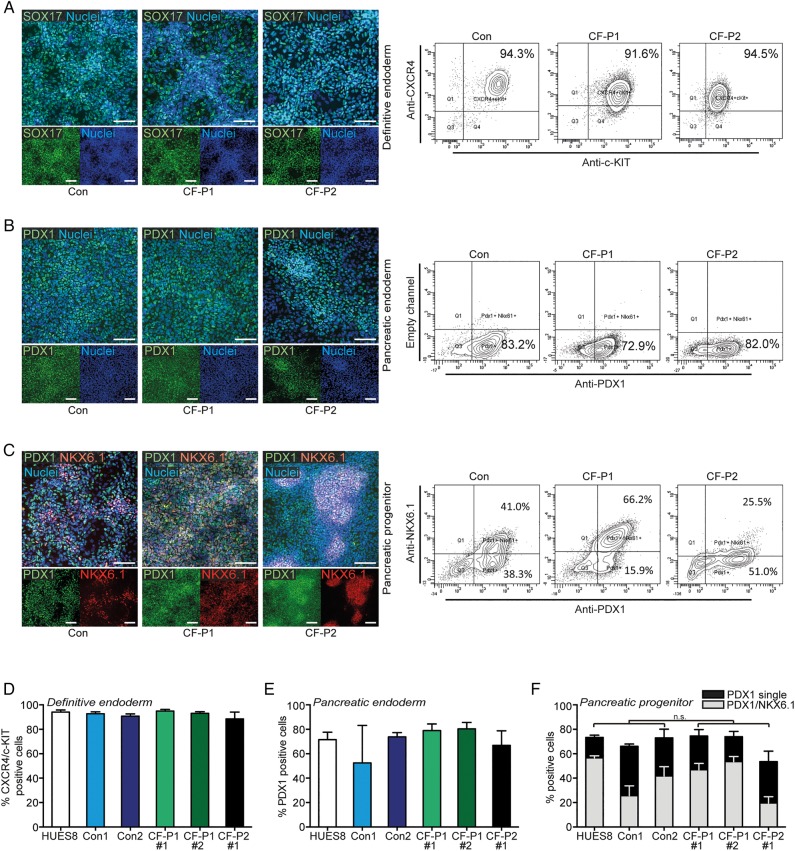
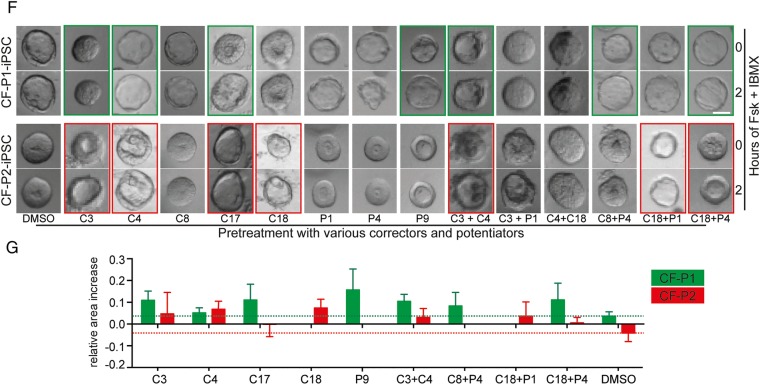
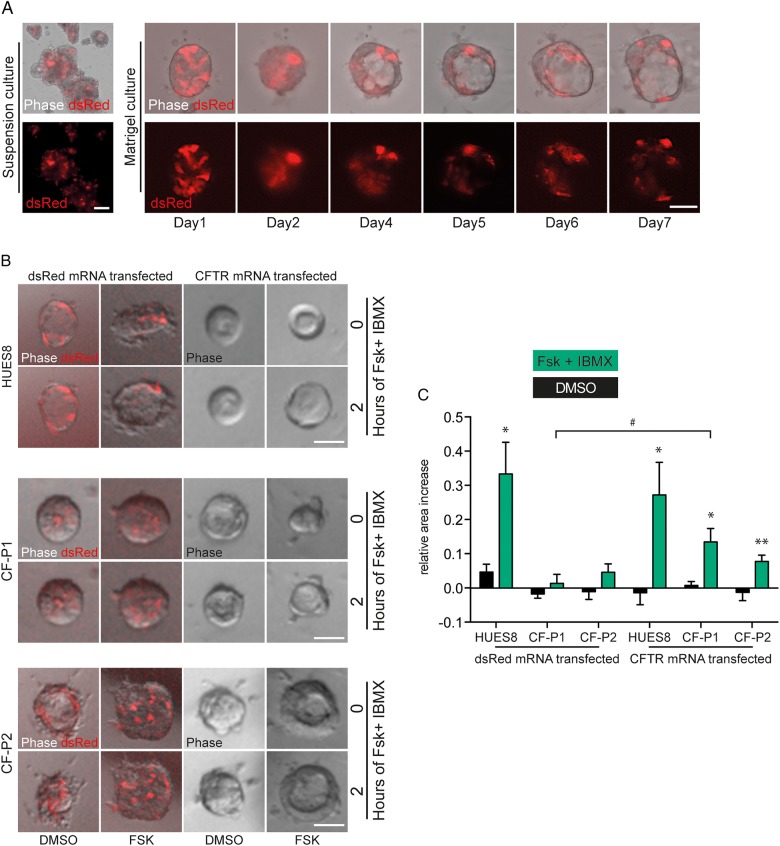
Extensive phenotyping of the organoids not only shows the appropriate marker profile but also ultrastructural, global gene expression and functional hallmarks of the human pancreas in the dish. Upon orthotopic transplantation into immunodeficient mice, these organoids form normal pancreatic ducts and acinar tissue resembling fetal human pancreas without evidence of tumour formation or transformation. Finally, we implemented this unique phenotyping tool as a model to study the pancreatic facets of cystic fibrosis (CF). For the first time, we provide evidence that in vitro but also in our xenograft transplantation assay, pancreatic commitment occurs generally unhindered in CF. Importantly, cystic fibrosis transmembrane conductance regulator (CFTR) activation in mutated pancreatic organoids not only mirrors the CF phenotype in functional assays but also at a global expression level. We also conducted a scalable proof-of-concept screen in CF pancreatic organoids using a set of CFTR correctors and activators, and established an mRNA-mediated gene therapy approach in CF organoids.
Taken together, our platform provides novel opportunities to model pancreatic disease and development, screen for disease-rescuing agents and to test therapeutic procedures.
尽管多种疾病源于腺泡和导管细胞,但从人类多能干细胞(PSC)生成腺泡和导管细胞的过程研究较少。
我们设计了一种直接的方法,引导人类PSC生成类似腺泡和导管后代的胰腺类器官。
对类器官进行广泛的表型分析不仅显示出合适的标志物谱,还显示出培养皿中人类胰腺的超微结构、整体基因表达和功能特征。将这些类器官原位移植到免疫缺陷小鼠体内后,它们形成了类似胎儿人类胰腺的正常胰管和腺泡组织,没有肿瘤形成或转化的迹象。最后,我们将这种独特的表型分析工具作为研究囊性纤维化(CF)胰腺方面的模型。我们首次提供证据表明,在体外以及在我们的异种移植试验中,CF患者的胰腺定向分化通常不受阻碍。重要的是,在突变的胰腺类器官中激活囊性纤维化跨膜传导调节因子(CFTR)不仅在功能试验中反映了CF表型,而且在整体表达水平上也是如此。我们还使用一组CFTR校正剂和激活剂在CF胰腺类器官中进行了可扩展的概念验证筛选,并在CF类器官中建立了mRNA介导的基因治疗方法。
总之,我们的平台为模拟胰腺疾病和发育、筛选疾病挽救药物以及测试治疗程序提供了新的机会。