LoCurto Jamie, Berg Gina M
Department of Family and Community Medicine, KU School of Medicine-Wichita, University of Kansas, Wichita, KS, USA.
SAGE Open Med. 2016 Sep 1;4:2050312116664224. doi: 10.1177/2050312116664224. eCollection 2016.
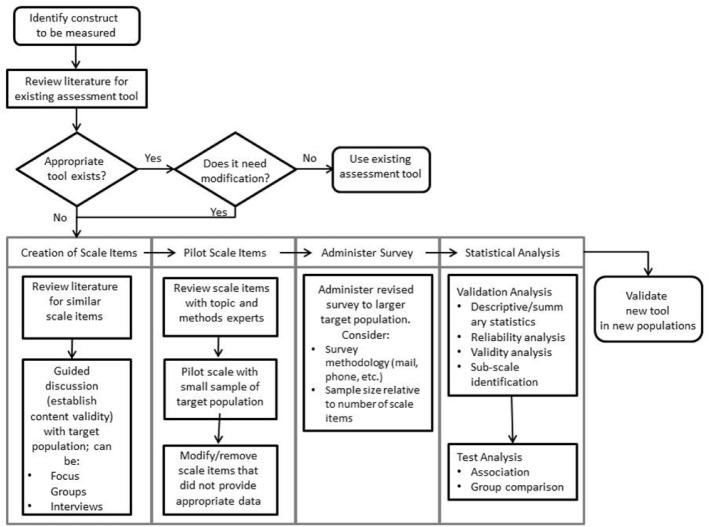
The literature contains research regarding how trust is formed in healthcare settings but rarely discusses trust formation in an emergent care population. A literature review was conducted to determine which of the trust determinants are important for this process as well as how to develop a scale to measure trust. A search generated a total of 155 articles, 65 of which met eligibility criteria. Determinants that were important included the following: honesty, confidentiality, dependability, communication, competency, fiduciary responsibility, fidelity, and agency. The process of developing a scale includes the following: a literature review, qualitative analysis, piloting, and survey validation. Results suggest that physician behaviors are important in influencing trust in patients and should be included in scales measuring trust. Next steps consist of interviewing emergent care patients to commence the process of developing a scale.
文献中有关于在医疗环境中信任如何形成的研究,但很少讨论在急诊患者群体中信任的形成。进行了一项文献综述,以确定哪些信任决定因素对这一过程很重要,以及如何开发一个衡量信任的量表。检索共产生155篇文章,其中65篇符合纳入标准。重要的决定因素包括:诚实、保密、可靠、沟通、能力、受托责任、忠诚和代理。开发量表的过程包括:文献综述、定性分析、预试验和调查验证。结果表明,医生行为在影响患者信任方面很重要,应纳入衡量信任的量表中。下一步是采访急诊患者,以开始开发量表的过程。