Institut de Pharmacologie et de Biologie Structurale, Université de Toulouse, CNRS, UPS, 31077 Toulouse, France.
Equipe labellisée Ligue Nationale Contre le Cancer.
Nat Commun. 2016 Sep 19;7:12889. doi: 10.1038/ncomms12889.
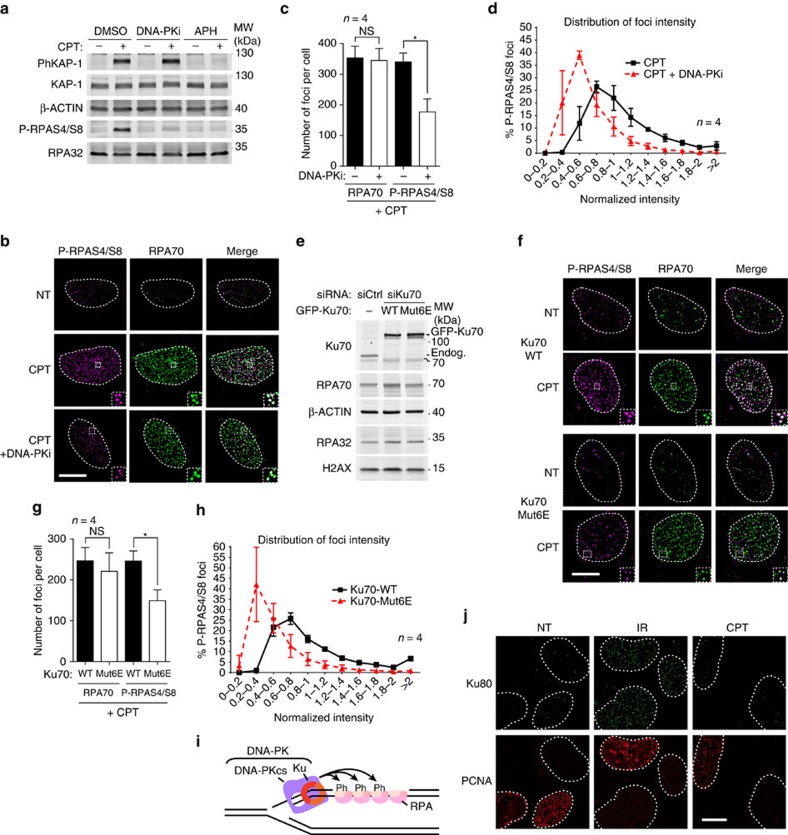
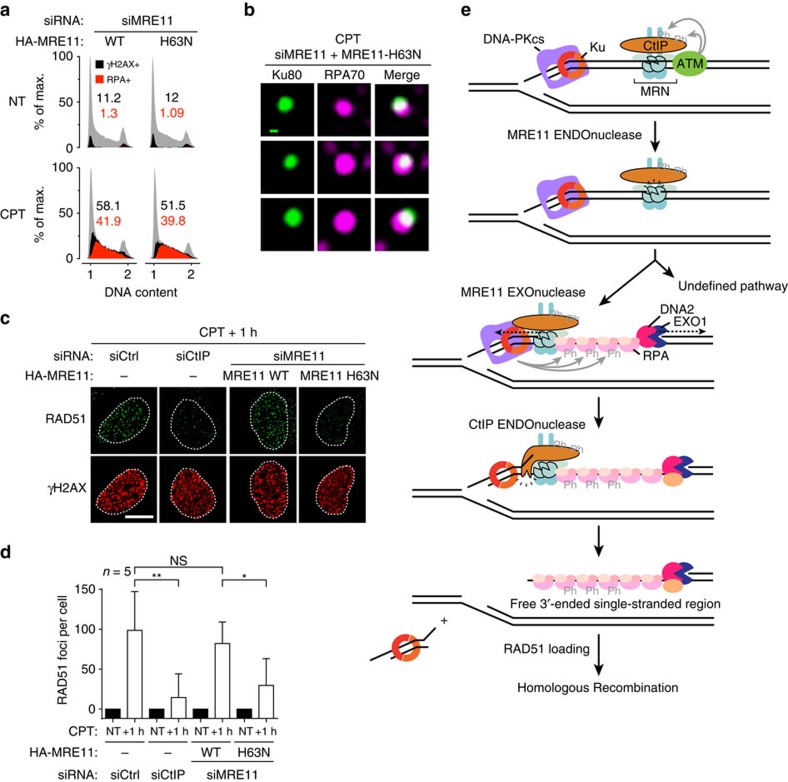
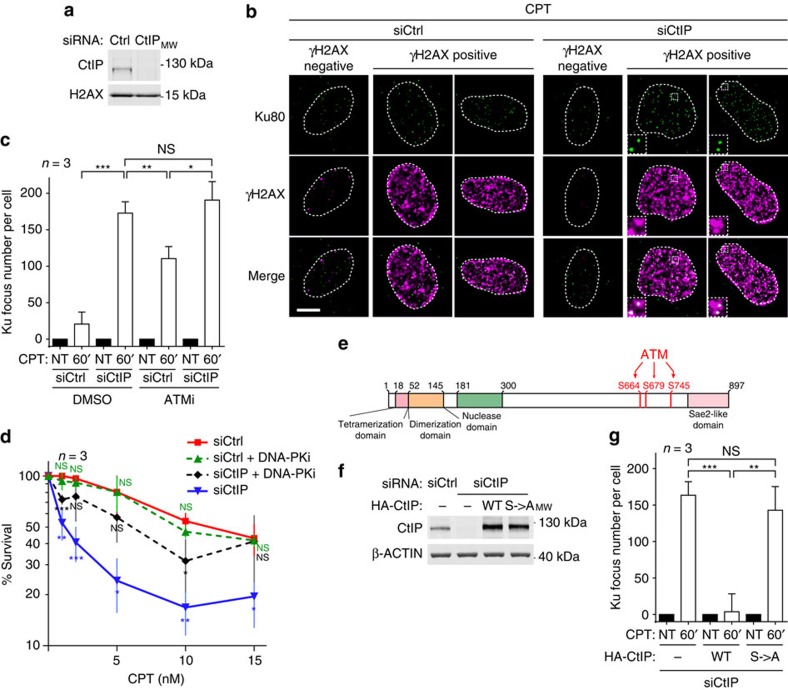
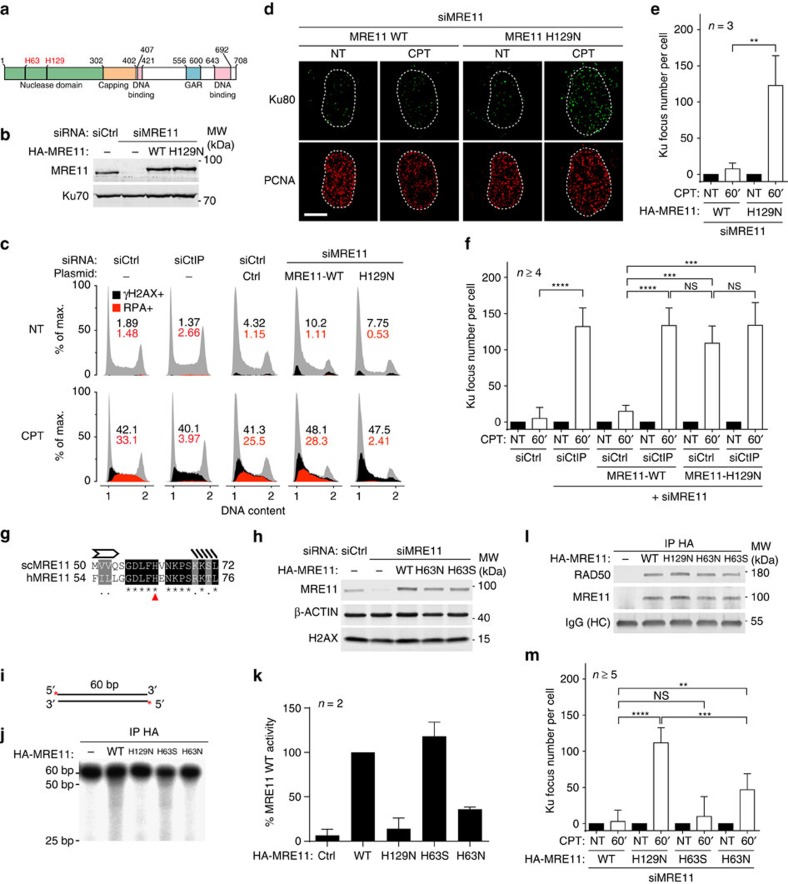
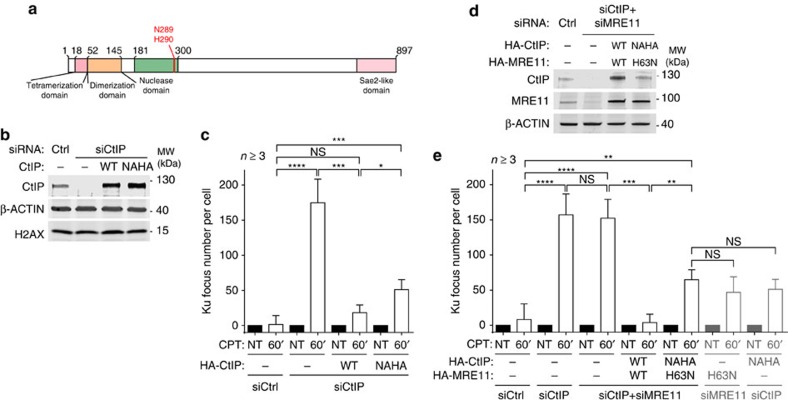
Repair of single-ended DNA double-strand breaks (seDSBs) by homologous recombination (HR) requires the generation of a 3' single-strand DNA overhang by exonuclease activities in a process called DNA resection. However, it is anticipated that the highly abundant DNA end-binding protein Ku sequesters seDSBs and shields them from exonuclease activities. Despite pioneering works in yeast, it is unclear how mammalian cells counteract Ku at seDSBs to allow HR to proceed. Here we show that in human cells, ATM-dependent phosphorylation of CtIP and the epistatic and coordinated actions of MRE11 and CtIP nuclease activities are required to limit the stable loading of Ku on seDSBs. We also provide evidence for a hitherto unsuspected additional mechanism that contributes to prevent Ku accumulation at seDSBs, acting downstream of MRE11 endonuclease activity and in parallel with MRE11 exonuclease activity. Finally, we show that Ku persistence at seDSBs compromises Rad51 focus assembly but not DNA resection.
单链 DNA 双链断裂 (seDSB) 的同源重组 (HR) 修复需要通过核酸外切酶活性产生 3'单链 DNA 突出端,这一过程称为 DNA 切除。然而,预计丰富的 DNA 末端结合蛋白 Ku 会将 seDSB 隔离并使其免受核酸外切酶活性的影响。尽管在酵母中进行了开创性的研究,但尚不清楚哺乳动物细胞如何对抗 Ku 以允许 HR 进行。在这里,我们表明在人细胞中,ATM 依赖性的 CtIP 磷酸化以及 MRE11 和 CtIP 核酸酶活性的上位性和协同作用对于限制 Ku 在 seDSB 上的稳定加载是必需的。我们还提供了证据表明存在一个以前未被怀疑的额外机制,该机制有助于防止 Ku 在 seDSB 处积累,该机制作用于 MRE11 内切酶活性的下游,并与 MRE11 核酸外切酶活性平行。最后,我们表明 Ku 在 seDSB 处的持续存在会损害 Rad51 焦点组装,但不会影响 DNA 切除。