Hall-Mendelin Sonja, Pyke Alyssa T, Moore Peter R, Mackay Ian M, McMahon Jamie L, Ritchie Scott A, Taylor Carmel T, Moore Frederick A J, van den Hurk Andrew F
Public Health Virology, Forensic and Scientific Services, Department of Health, Queensland Government, Coopers Plains, Australia.
College of Public Health, Medical and Veterinary Sciences, James Cook University, Cairns, Australia.
PLoS Negl Trop Dis. 2016 Sep 19;10(9):e0004959. doi: 10.1371/journal.pntd.0004959. eCollection 2016 Sep.
Within the last 10 years Zika virus (ZIKV) has caused unprecedented epidemics of human disease in the nations and territories of the western Pacific and South America, and continues to escalate in both endemic and non-endemic regions. We evaluated the vector competence of Australian mosquitoes for ZIKV to assess their potential role in virus transmission.
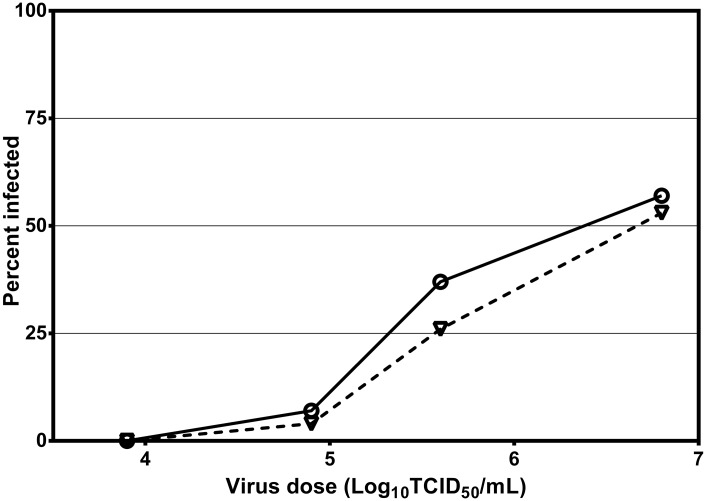
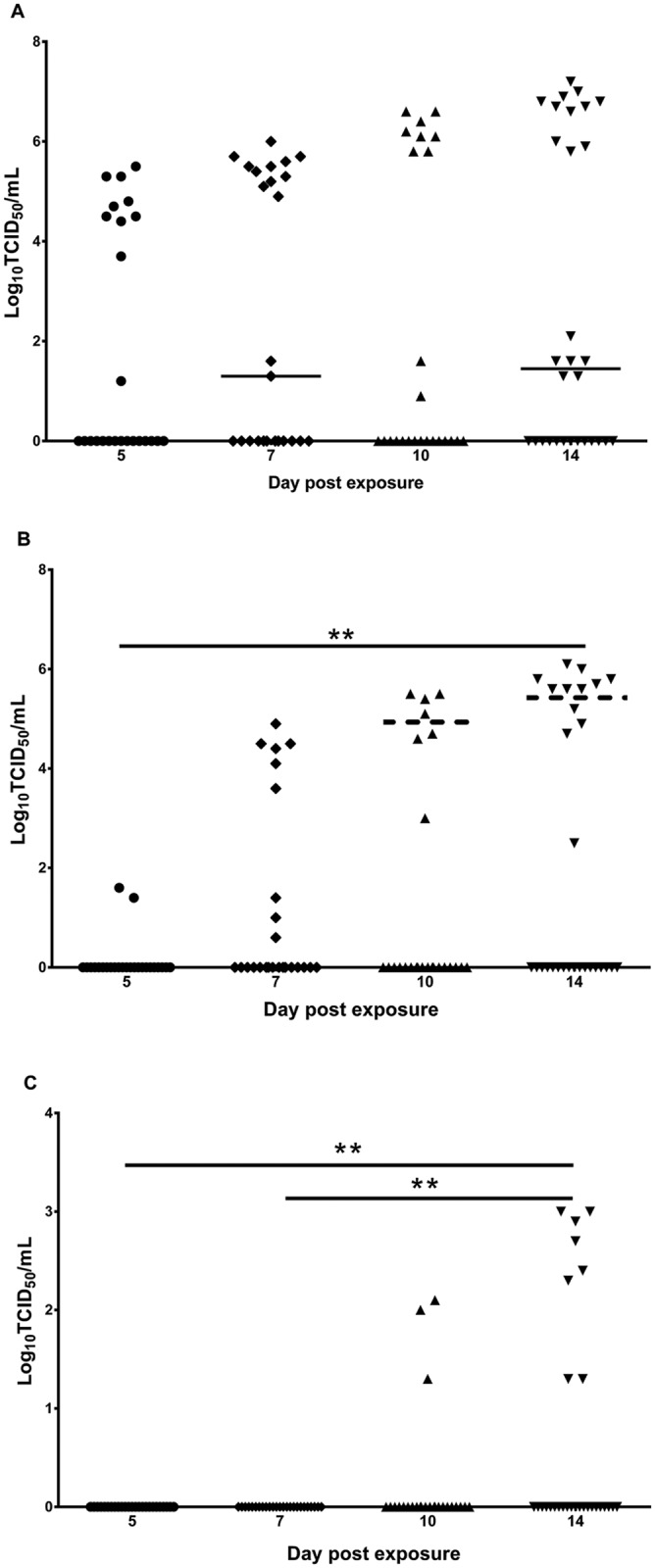
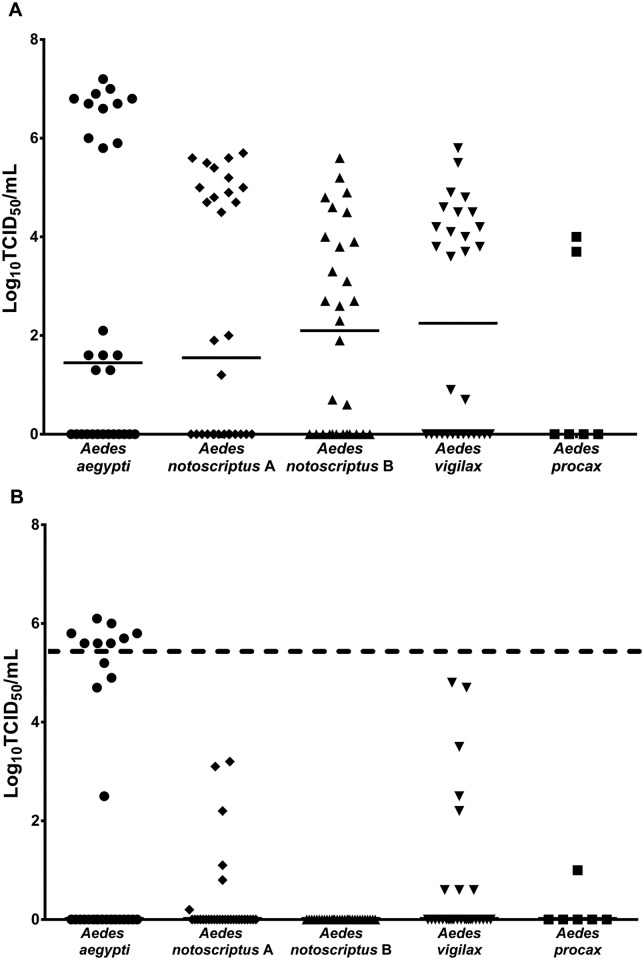
METHODOLOGY/PRINCIPAL FINDINGS: Mosquitoes were exposed to infectious blood meals containing the prototype African ZIKV strain. After 14 days incubation at 28°C and high relative humidity, infection, dissemination and transmission rates were assessed. Infection in Culex annulirostris and Cx. sitiens could not be detected. 8% of Cx. quinquefasciatus were infected, but the virus did not disseminate in this species. Despite having infection rates > 50%, Aedes notoscriptus and Ae. vigilax did not transmit ZIKV. In contrast, Ae. aegypti had infection and transmission rates of 57% and 27%, respectively. In susceptibility trials, the virus dose required to infect 50% (ID50) of Ae. aegypti was106.4 tissue culture infectious dose50 (TCID50)/mL. Additionally, a threshold viral load within the mosquito of at least 105.1 TCID50 equivalents/mL had to be reached before virus transmission occurred.
CONCLUSIONS/SIGNIFICANCE: We confirmed Ae. aegypti to be the most likely mosquito vector of ZIKV in Australia, although the restricted distribution of this species will limit the receptive zone to northern Queensland where this species occurs. Importantly, the role in ZIKV transmission of Culex and other Aedes spp. tested will be negligible. Despite being the implicated vector, the relatively high ID50 and need for a high titer disseminated infection in Ae. aegypti suggest that high mosquito population densities will be required to facilitate epidemic ZIKV transmission among the currently immunologically naïve human population in Australia.
在过去10年里,寨卡病毒(ZIKV)在西太平洋和南美洲的国家和地区引发了前所未有的人类疾病流行,并且在流行地区和非流行地区都持续升级。我们评估了澳大利亚蚊子对寨卡病毒的媒介能力,以评估它们在病毒传播中的潜在作用。
方法/主要发现:将蚊子暴露于含有原型非洲寨卡病毒株的感染性血餐中。在28°C和高相对湿度下孵育14天后,评估感染、传播和传播率。未检测到环纹库蚊和海滨库蚊感染。8%的致倦库蚊被感染,但病毒未在该物种中传播。尽管感染率>50%,白纹伊蚊和威氏伊蚊并未传播寨卡病毒。相比之下,埃及伊蚊的感染率和传播率分别为57%和27%。在易感性试验中,感染50%(ID50)埃及伊蚊所需的病毒剂量为106.4组织培养感染剂量50(TCID50)/mL。此外,在病毒传播发生之前,蚊子体内的病毒载量必须至少达到105.1 TCID50当量/mL的阈值。
结论/意义:我们确认埃及伊蚊是澳大利亚寨卡病毒最有可能的蚊媒,尽管该物种分布受限,将使易感区域局限于昆士兰州北部该物种存在的地方。重要的是,所测试的库蚊和其他伊蚊属物种在寨卡病毒传播中的作用将微不足道。尽管埃及伊蚊是被认为的媒介,但相对较高的ID50以及在埃及伊蚊中需要高滴度的传播性感染表明,需要高蚊虫种群密度才能促进寨卡病毒在澳大利亚目前缺乏免疫力的人群中流行传播。