Buzurovic Ivan M, Hansen Jorgen L, Bhagwat Mandar S, O'Farrell Desmond A, Friesen Scott, Harris Thomas C, Damato Antonio L, Cormack Robert A, Martin Neil E, Devlin Phillip M
Department of Radiation Oncology, Dana Farber/Brigham and Women's Cancer Center, Harvard Medical School, Boston, MA, USA.
J Contemp Brachytherapy. 2016 Aug;8(4):319-25. doi: 10.5114/jcb.2016.61933. Epub 2016 Aug 23.
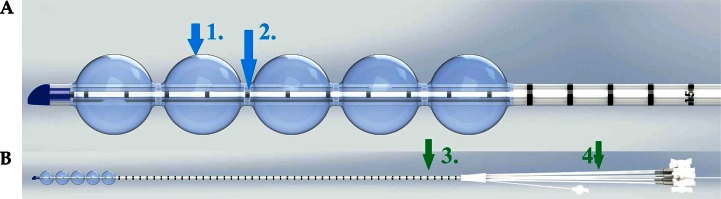
In this study, we present the clinical implementation of a novel transoral balloon centering esophageal applicator (BCEA) and the initial clinical experience in high-dose-rate (HDR) brachytherapy treatment of esophageal cancer, using this applicator.
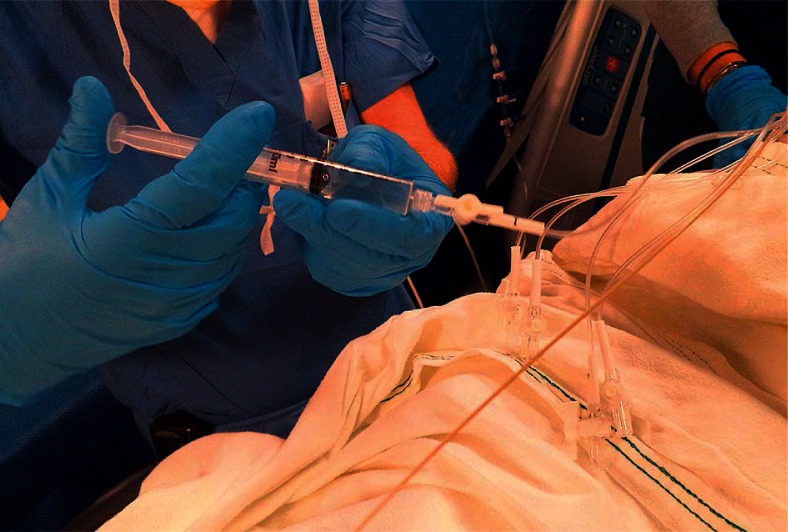
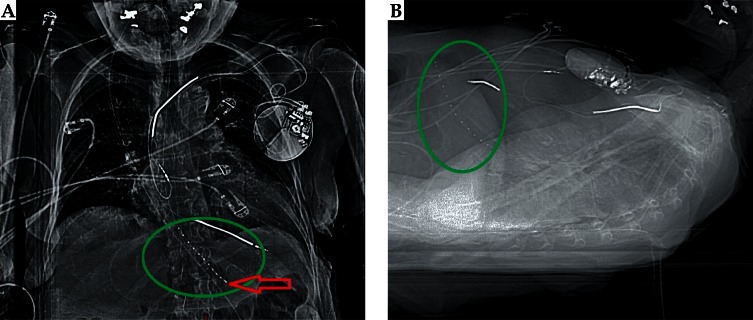
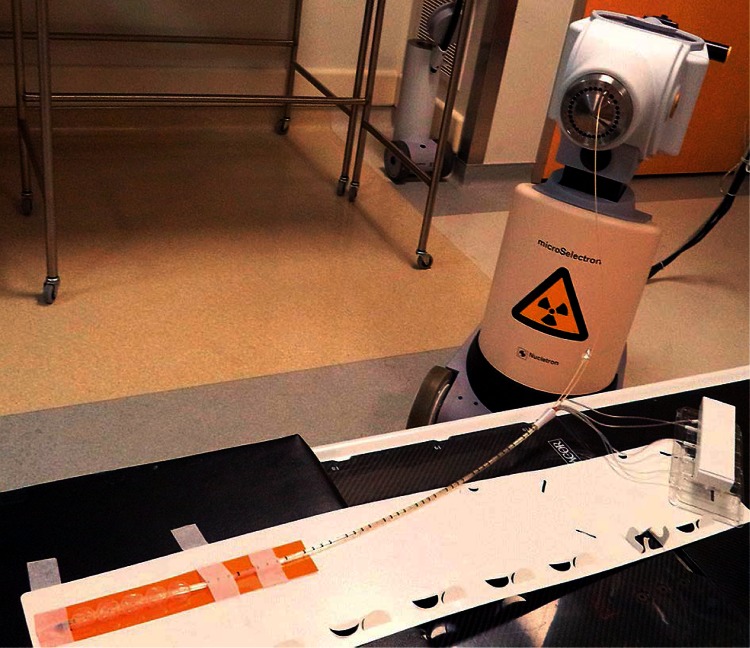
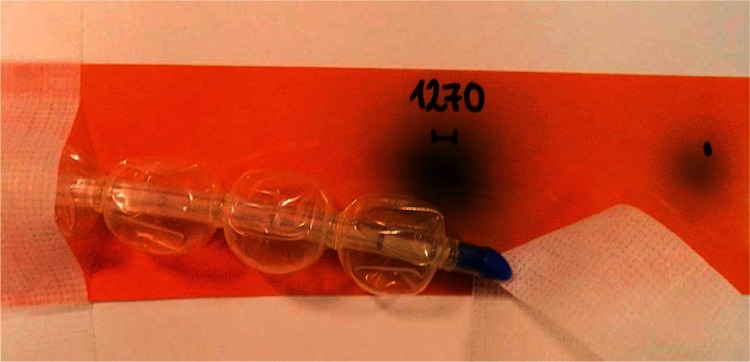
Acceptance testing and commissioning of the BCEA were performed prior to clinical use. Full performance testing was conducted including measurements of the dimensions and the catheter diameter, evaluation of the inflatable balloon consistency, visibility of the radio-opaque markers, congruence of the markers, absolute and relative accuracy of the HDR source in the applicator using the radiochromic film and source position simulator, visibility and digitization of the applicator on the computed tomography (CT) images under the clinical conditions, and reproducibility of the offset. Clinical placement of the applicator, treatment planning, treatment delivery, and patient's response to the treatment were elaborated as well.
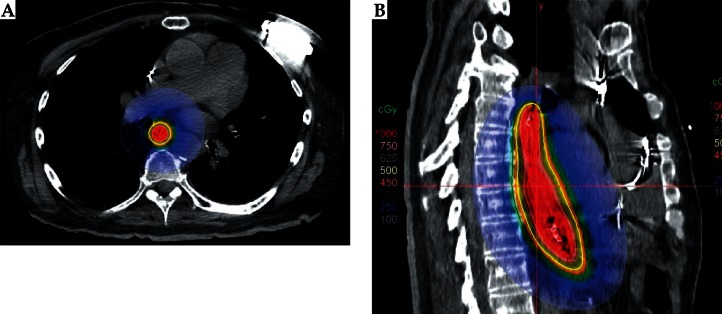
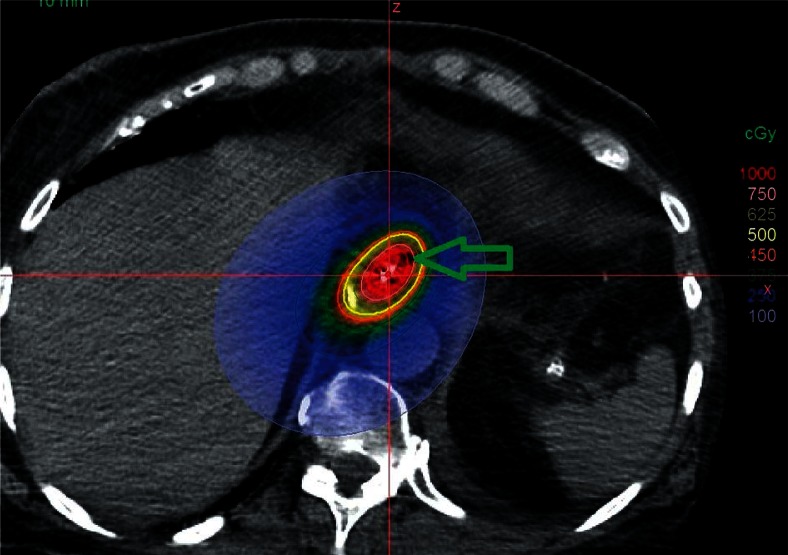
The experiments showed sub-millimeter accuracy in the source positioning with distal position at 1270 mm. The digitization (catheter reconstruction) was uncomplicated due to the good visibility of markers. The treatment planning resulted in a favorable dose distribution. This finding was pronounced for the treatment of the curvy anatomy of the lesion due to the improved repeatability and consistency of the delivered fractional dose to the patient, since the radioactive source was placed centrally within the lumen with respect to the clinical target due to the five inflatable balloons.
The consistency of the BCEA positioning resulted in the possibility to deliver optimized non-uniform dose along the catheter, which resulted in an increase of the dose to the cancerous tissue and lower doses to healthy tissue. A larger number of patients and long-term follow-up will be required to investigate if the delivered optimized treatment can lead to improved clinical outcomes.
在本研究中,我们展示了一种新型经口球囊定位食管施源器(BCEA)的临床应用,以及使用该施源器进行食管癌高剂量率(HDR)近距离放射治疗的初步临床经验。
在临床使用前对BCEA进行验收测试和调试。进行了全面性能测试,包括测量尺寸和导管直径、评估可充气球囊的一致性、不透射线标记物的可视性、标记物的一致性、使用放射变色胶片和源位置模拟器评估施源器中HDR源的绝对和相对精度、在临床条件下计算机断层扫描(CT)图像上施源器的可视性和数字化以及偏移的可重复性。还阐述了施源器的临床放置、治疗计划、治疗实施以及患者对治疗的反应。
实验表明,源定位精度在亚毫米级别,远端位置为1270毫米。由于标记物可视性良好,数字化(导管重建)并不复杂。治疗计划产生了良好的剂量分布。由于五个可充气球囊使放射源相对于临床靶区位于管腔内中心位置,提高了向患者输送分次剂量的可重复性和一致性,这一发现对于治疗病变的弯曲解剖结构尤为明显。
BCEA定位的一致性使得能够沿导管输送优化的非均匀剂量,从而增加了癌组织的剂量并降低了健康组织的剂量。需要更多患者和长期随访来研究所输送的优化治疗是否能带来更好的临床结果。