Chen Shengdong, Sun Xinyang, Niu Wei, Kong Lingming, He Mingjun, Li Wanshuai, Zhong Aifang, Lu Jim, Zhang Liyi
Department of Psychiatry and Psychology, Second Military Medical University, Shanghai, China (mainland).
Department of Psychiatry and Psychology, PingAn Health Cloud Company Ltd. of China, Shanghai, China (mainland).
Med Sci Monit. 2016 Sep 21;22:3340-51. doi: 10.12659/msm.896927.
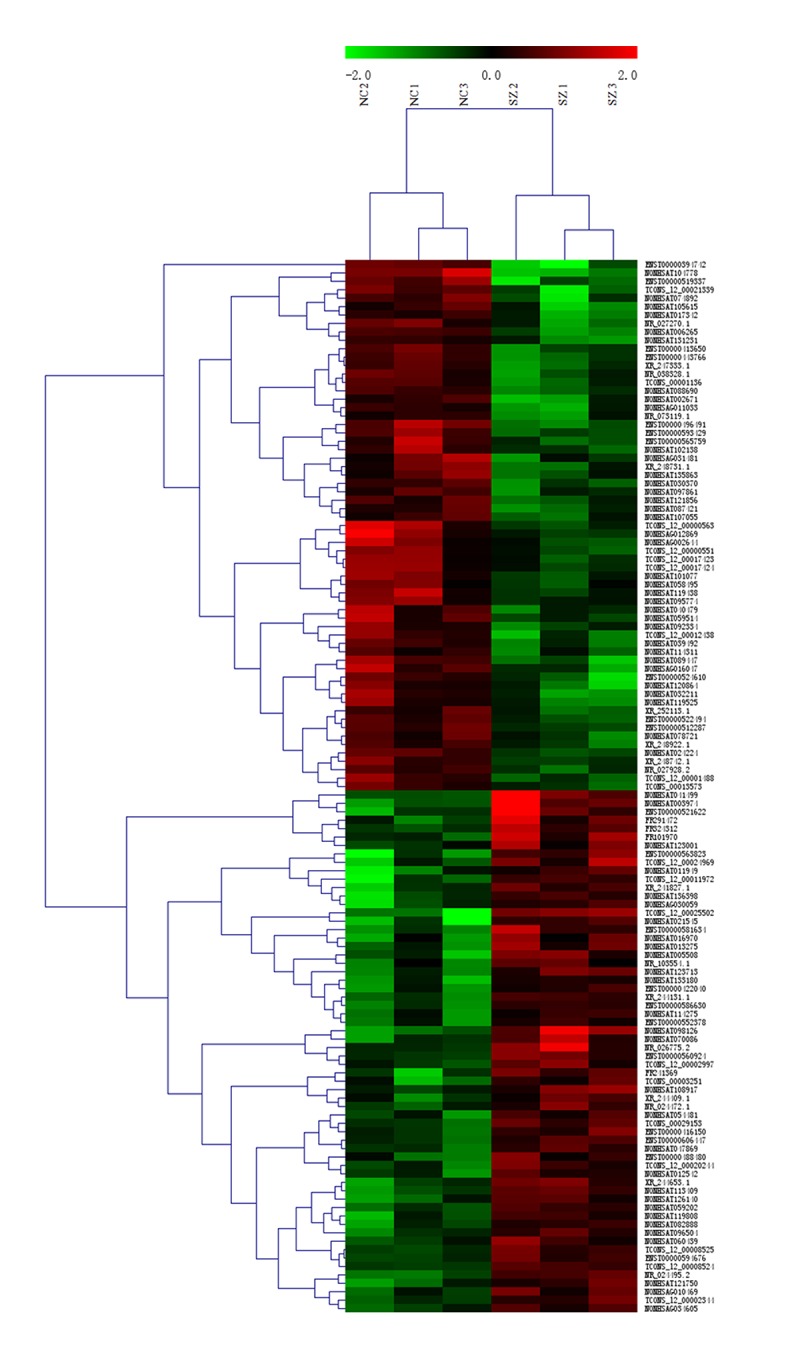
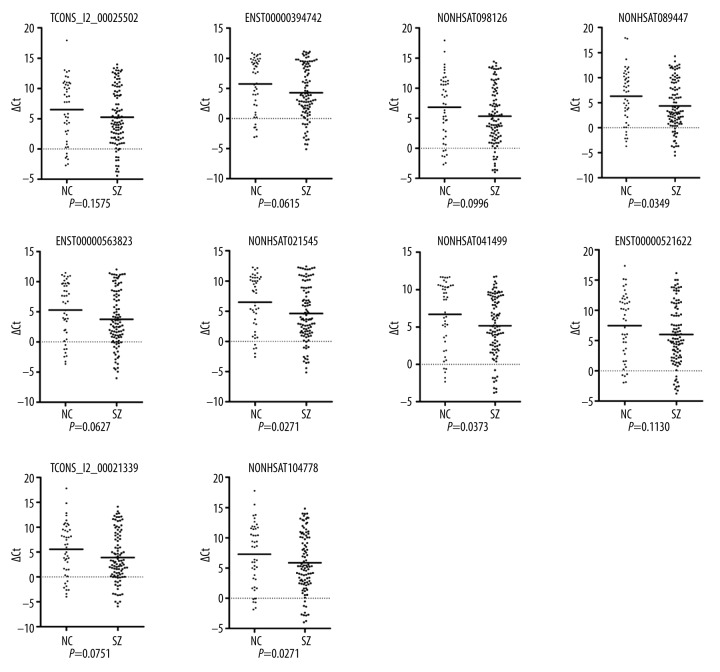
BACKGROUND Dysfunction of long non-coding RNAs (lncRNAs) has been demonstrated to be involved in psychiatric diseases. However, the expression patterns and functions of the regulatory lncRNAs in schizophrenia (SZ) patients have rarely been systematically reported. MATERIAL AND METHODS The lncRNAs in peripheral blood mononuclear cells (PBMCs) were screened and compared between the SZ patients and demographically-matched healthy controls using microarray analysis, and then were validated by quantitative real-time reverse transcription polymerase chain reaction (qRT-PCR) method. Three verified significantly dysregulated lncRNAs of PBMCs were selected and then measured in SZ patients before and after the antipsychotic treatment. SZ symptomatology improvement was measured by Positive And Negative Syndrome Scale (PANSS) scores. RESULTS One hundred and twenty-five lncRNAs were significantly differentially expressed in SZ patients compared with healthy controls, of which 62 were up-regulated and 63 were down-regulated. Concurrent with the significant decrease of the PANSS scores of patients after the treatment, the PBMC levels of lncRNA NONHSAT089447 and NONHSAT041499 were strikingly decreased (P<0.05). Down-regulation of PBMC expression of NONHSAT041499 was significantly correlated to the improvement of positive and activity symptoms of patients (r=-0.444 and -0.423, respectively, P<0.05, accounting for 16.9% and 15.1%, respectively), and was also significantly associated with better outcomes (odds ratio 2.325 for positive symptom and 12.340 for activity symptom). CONCLUSIONS LncRNA NONHSAT089447 and NONHSAT041499 might be involved in the pathogenesis and development of SZ, and the PBMC level of NONHSAT041499 is significantly associated with the treatment outcomes of SZ.
背景 长链非编码RNA(lncRNA)功能失调已被证明与精神疾病有关。然而,精神分裂症(SZ)患者中调控性lncRNA的表达模式和功能鲜有系统报道。
材料与方法 使用微阵列分析筛选SZ患者与人口统计学匹配的健康对照外周血单个核细胞(PBMC)中的lncRNA并进行比较,然后通过定量实时逆转录聚合酶链反应(qRT-PCR)方法进行验证。选择三个经证实的PBMC中显著失调的lncRNA,然后在SZ患者抗精神病治疗前后进行检测。通过阳性和阴性症状量表(PANSS)评分评估SZ症状改善情况。
结果 与健康对照相比,125个lncRNA在SZ患者中显著差异表达,其中62个上调,63个下调。随着治疗后患者PANSS评分显著降低,lncRNA NONHSAT089447和NONHSAT041499的PBMC水平显著下降(P<0.05)。PBMC中NONHSAT041499表达下调与患者阳性和活动症状的改善显著相关(分别为r=-0.444和-0.423,P<0.05,分别占16.9%和15.1%),并且也与更好的治疗结果显著相关(阳性症状的优势比为2.325,活动症状为12.340)。
结论 LncRNA NONHSAT089447和NONHSAT041499可能参与SZ的发病机制和发展,且NONHSAT041499的PBMC水平与SZ的治疗结果显著相关。