Sievert Martin, Zwir Igor, Cloninger Kevin M, Lester Nigel, Rozsa Sandor, Cloninger C Robert
Department of Psychiatry, Washington University in St. Louis , Saint Louis , MO , United States.
Anthropedia Foundation , Saint Louis , MO , United States.
PeerJ. 2016 Sep 6;4:e2319. doi: 10.7717/peerj.2319. eCollection 2016.
Multiple factors influence the decision to enter a career in medicine and choose a specialty. Previous studies have looked at personality differences in medicine but often were unable to describe the heterogeneity that exists within each specialty. Our study used a person-centered approach to characterize the complex relations between the personality profiles of resident physicians and their choice of specialty.
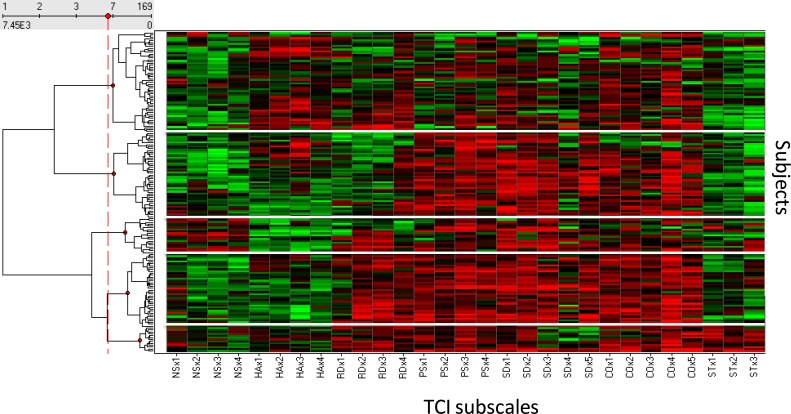
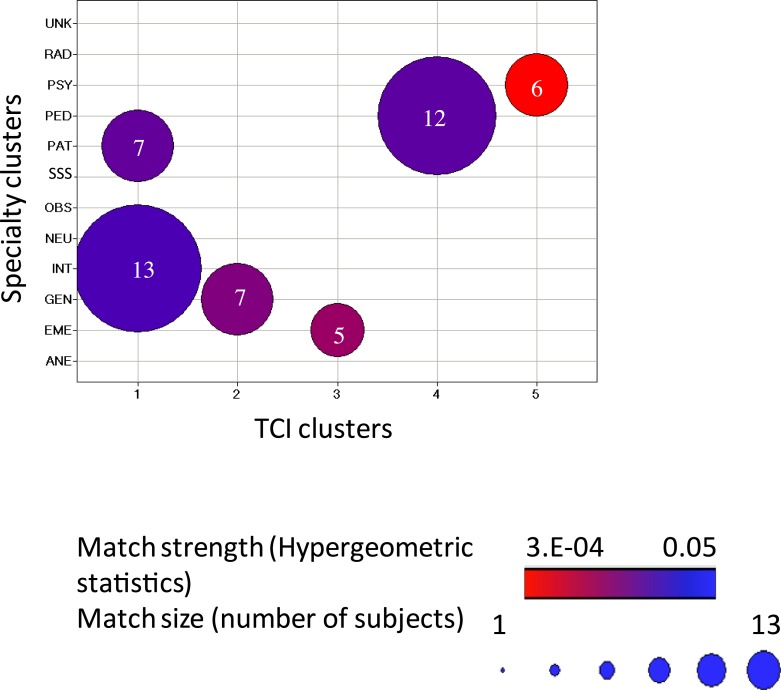
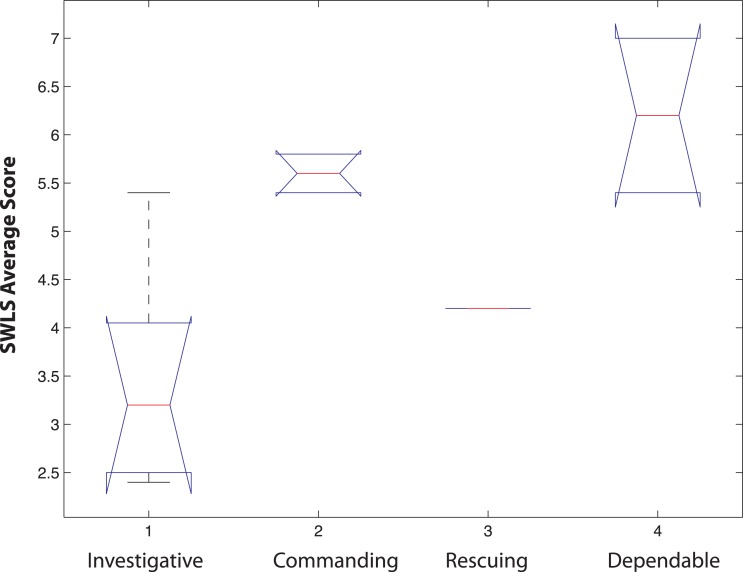
169 resident physicians at a large Midwestern US training hospital completed the Temperament and Character Inventory (TCI) and the Satisfaction with Life Scale (SWLS). Clusters of personality profiles were identified without regard to medical specialty, and then the personality clusters were tested for association with their choice of specialty by co-clustering analysis. Life satisfaction was tested for association with personality traits and medical specialty by linear regression and analysis of variance.
We identified five clusters of people with distinct personality profiles, and found that these were associated with particular medical specialties Physicians with an "investigative" personality profile often chose pathology or internal medicine, those with a "commanding" personality often chose general surgery, "rescuers" often chose emergency medicine, the "dependable" often chose pediatrics, and the "compassionate" often chose psychiatry. Life satisfaction scores were not enhanced by personality-specialty congruence, but were related strongly to self-directedness regardless of specialty.
The personality profiles of physicians were strongly associated with their medical specialty choices. Nevertheless, the relationships were complex: physicians with each personality profile went into a variety of medical specialties, and physicians in each medical specialty had variable personality profiles. The plasticity and resilience of physicians were more important for their life satisfaction than was matching personality to the prototype of a particular specialty.
多种因素影响着从事医学职业及选择专业的决定。以往的研究探讨了医学领域的人格差异,但往往无法描述每个专业内部存在的异质性。我们的研究采用以人为本的方法来描述住院医师的人格特征与其专业选择之间的复杂关系。
美国中西部一家大型培训医院的169名住院医师完成了气质与性格量表(TCI)和生活满意度量表(SWLS)。在不考虑医学专业的情况下确定人格特征集群,然后通过共聚类分析测试人格集群与其专业选择之间的关联。通过线性回归和方差分析测试生活满意度与人格特质及医学专业之间的关联。
我们确定了五组具有不同人格特征的人群,并发现这些特征与特定的医学专业相关。具有“探究型”人格特征的医生通常选择病理学或内科,具有“指挥型”人格的医生通常选择普通外科,“救援者型”通常选择急诊医学,“可靠型”通常选择儿科,“富有同情心型”通常选择精神病学。人格与专业的匹配并未提高生活满意度得分,但无论专业如何,生活满意度都与自我导向密切相关。
医生的人格特征与其医学专业选择密切相关。然而,这种关系很复杂:每种人格特征的医生都进入了多种医学专业,每个医学专业的医生也具有不同的人格特征。对医生的生活满意度而言,其可塑性和适应能力比人格与特定专业原型的匹配更为重要。