Senthilan Pingkalai R, Helfrich-Förster Charlotte
Neurobiology and Genetics, Biocenter, University of Würzburg , Würzburg , Germany.
PeerJ. 2016 Sep 6;4:e2427. doi: 10.7717/peerj.2427. eCollection 2016.
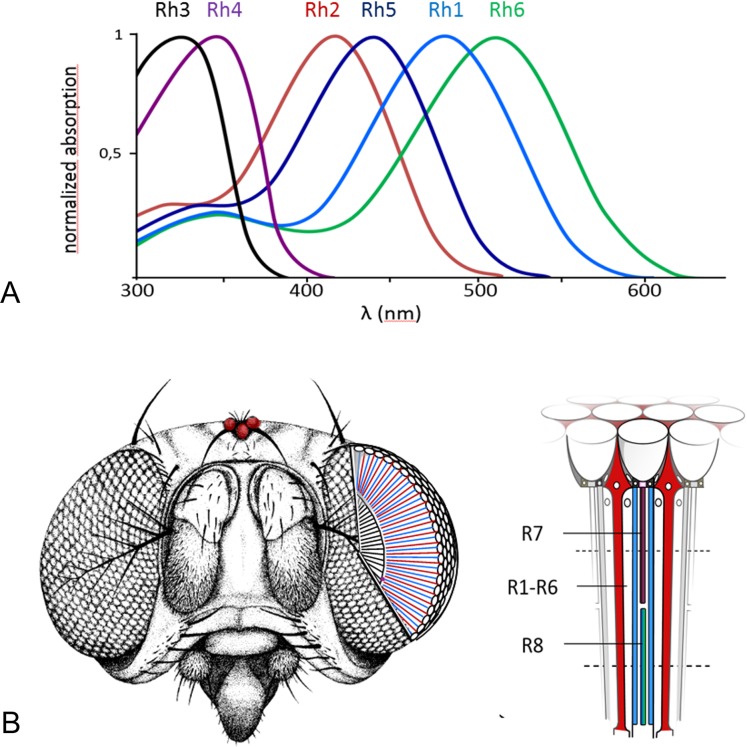
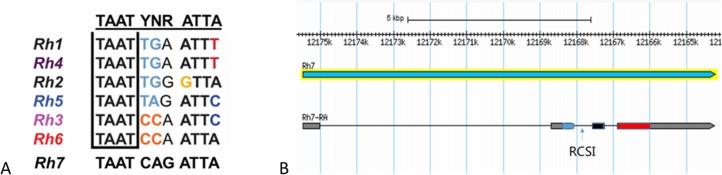
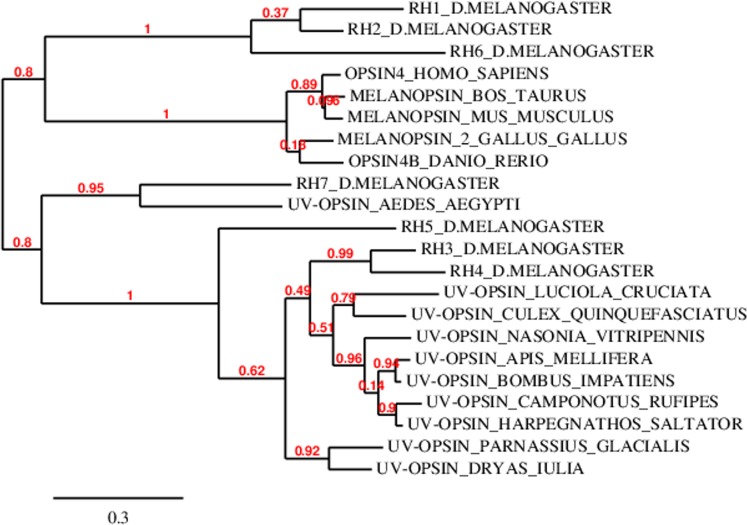
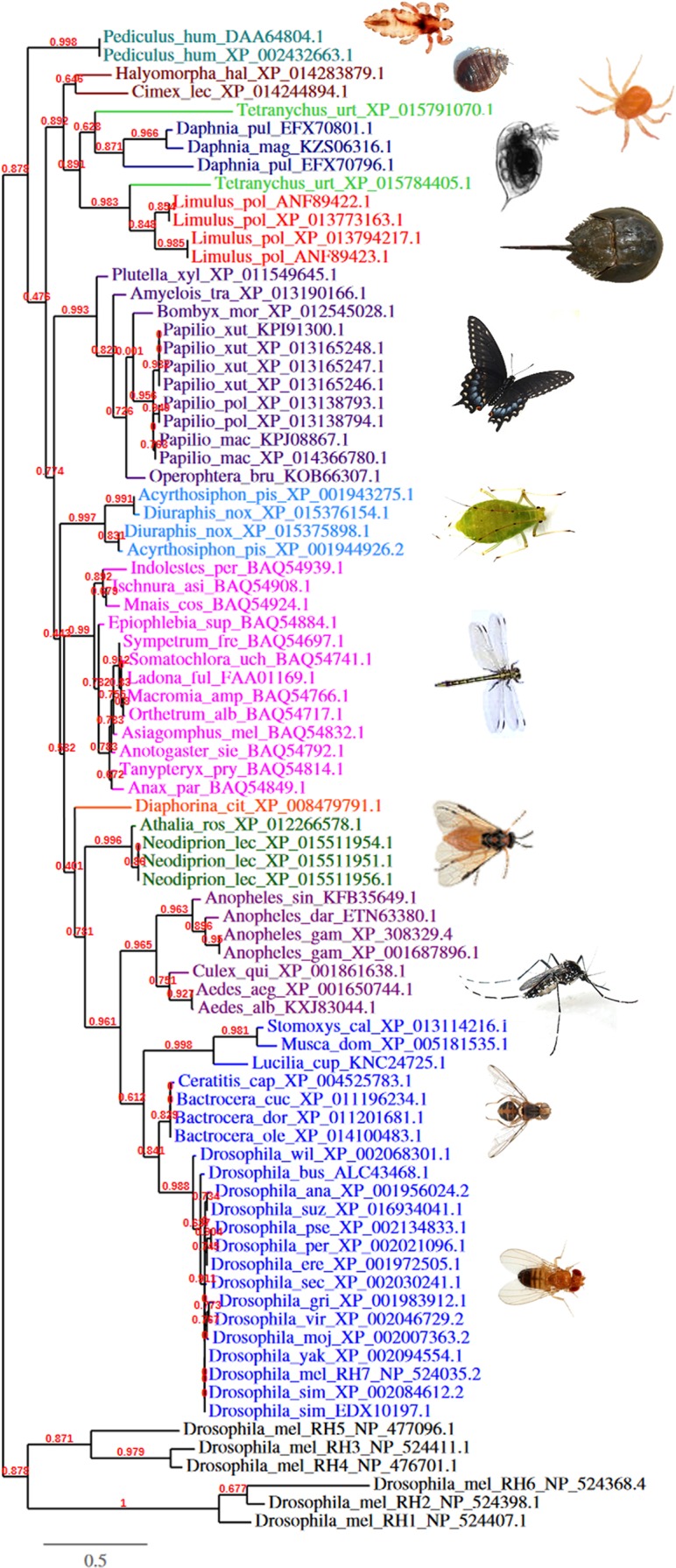
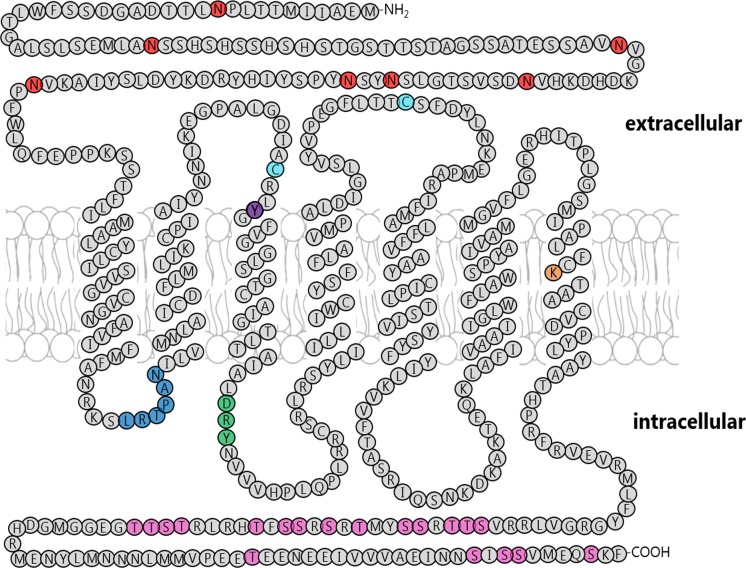
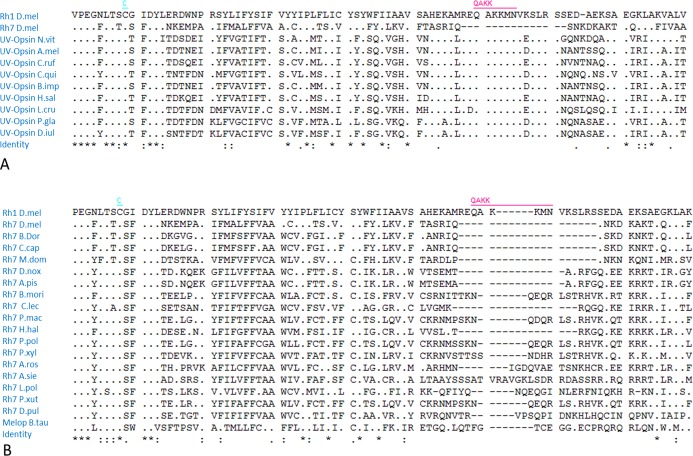
Rhodopsins are the major photopigments in the fruit fly Drosophila melanogaster. Drosophila express six well-characterized Rhodopsins (Rh1-Rh6) with distinct absorption maxima and expression pattern. In 2000, when the Drosophila genome was published, a novel Rhodopsin gene was discovered: Rhodopsin 7 (Rh7). Rh7 is highly conserved among the Drosophila genus and is also found in other arthropods. Phylogenetic trees based on protein sequences suggest that the seven Drosophila Rhodopsins cluster in three different groups. While Rh1, Rh2 and Rh6 form a "vertebrate-melanopsin-type"-cluster, and Rh3, Rh4 and Rh5 form an "insect-type"-Rhodopsin cluster, Rh7 seem to form its own cluster. Although Rh7 has nearly all important features of a functional Rhodopsin, it differs from other Rhodopsins in its genomic and structural properties, suggesting it might have an overall different role than other known Rhodopsins.
视紫红质是果蝇(黑腹果蝇)中的主要光色素。果蝇表达六种特征明确的视紫红质(Rh1 - Rh6),它们具有不同的吸收最大值和表达模式。2000年,果蝇基因组公布时,发现了一个新的视紫红质基因:视紫红质7(Rh7)。Rh7在果蝇属中高度保守,在其他节肢动物中也有发现。基于蛋白质序列的系统发育树表明,七种果蝇视紫红质聚为三个不同的组。Rh1、Rh2和Rh6形成一个“脊椎动物 - 黑视蛋白型”簇,Rh3、Rh4和Rh5形成一个“昆虫型”视紫红质簇,而Rh7似乎形成了自己的簇。尽管Rh7几乎具备功能性视紫红质的所有重要特征,但其基因组和结构特性与其他视紫红质不同,这表明它可能具有与其他已知视紫红质截然不同的整体作用。