McHenry Megan Song, Nyandiko Winstone M, Scanlon Michael L, Fischer Lydia J, McAteer Carole I, Aluoch Josephine, Naanyu Violet, Vreeman Rachel C
1 Department of Pediatrics, Indiana University School of Medicine, Indianapolis, IN, USA.
2 Academic Model Providing Access to Healthcare (AMPATH), Eldoret, Kenya.
J Int Assoc Provid AIDS Care. 2017 May/Jun;16(3):215-225. doi: 10.1177/2325957416668995. Epub 2016 Sep 21.
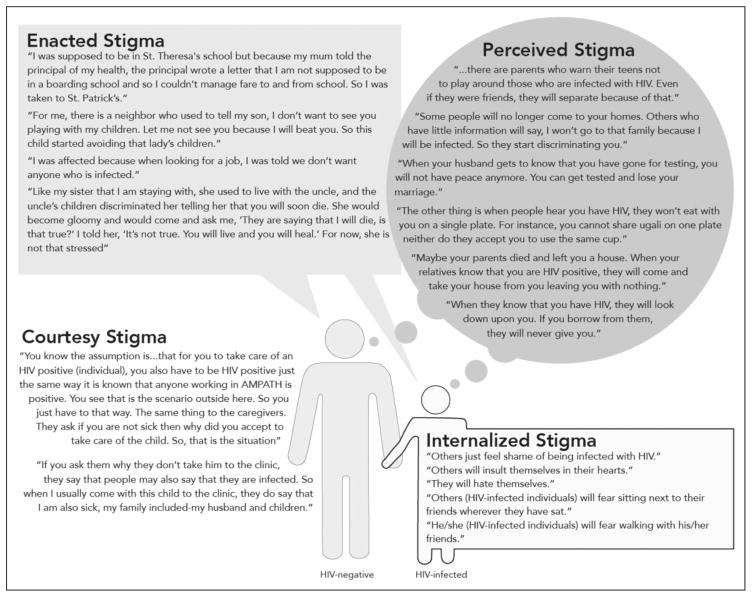
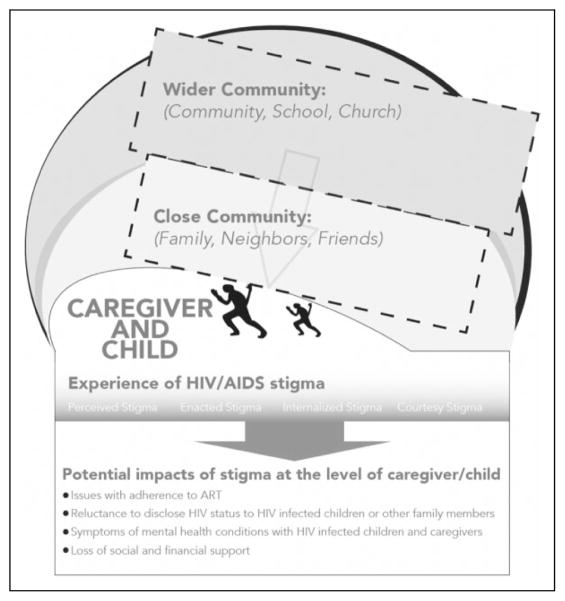
Stigma shapes all aspects of HIV prevention and treatment, yet there are limited data on how HIV-infected youth and their families are affected by stigma in sub-Saharan Africa. The authors conducted a qualitative study using focus group discussions among 39 HIV-infected adolescents receiving care at HIV clinics in western Kenya and 53 caregivers of HIV-infected children. Participants felt that while knowledge and access to treatment were increasing, many community members still held negative and inaccurate views about HIV, including associating it with immorality and believing in transmission by casual interactions. Stigma was closely related to a loss of social and economic support but also included internalized negative feelings about oneself. Participants identified treatment-related impacts of stigma, including nonadherence, nondisclosure of status to child or others, and increased mental health problems. Qualitative inquiry also provided insights into how to measure and reduce stigma among affected individuals and families.
耻辱感影响着艾滋病预防和治疗的方方面面,但在撒哈拉以南非洲地区,关于感染艾滋病毒的青少年及其家庭如何受到耻辱感影响的数据却很有限。作者开展了一项定性研究,对肯尼亚西部艾滋病诊所接受治疗的39名感染艾滋病毒的青少年以及53名感染艾滋病毒儿童的照料者进行了焦点小组讨论。参与者们觉得,虽然知识普及和治疗可及性在提高,但许多社区成员对艾滋病毒仍持有负面且不准确的看法,包括将其与不道德联系起来,并相信会通过偶然接触传播。耻辱感与社会和经济支持的丧失密切相关,但也包括对自身的内化负面情绪。参与者们指出了耻辱感对治疗产生的影响,包括不坚持治疗、不向孩子或其他人透露病情,以及心理健康问题加剧。定性调查还为如何衡量和减少受影响个人及家庭的耻辱感提供了见解。