Hudson C M, McCurry M R, Lundgren P, McHenry C R, Shine R
School of Life and Environmental Sciences A08, University of Sydney, Sydney, New South Wales 2006, Australia.
Anatomy and Developmental Biology, Monash University, Clayton, Victoria 3800, Australia.
PLoS One. 2016 Sep 22;11(9):e0156950. doi: 10.1371/journal.pone.0156950. eCollection 2016.
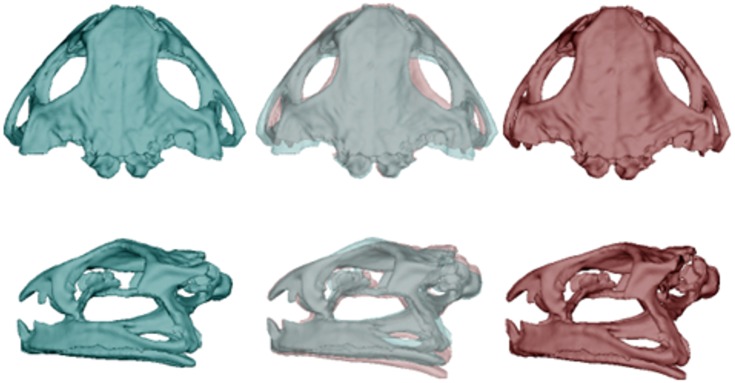
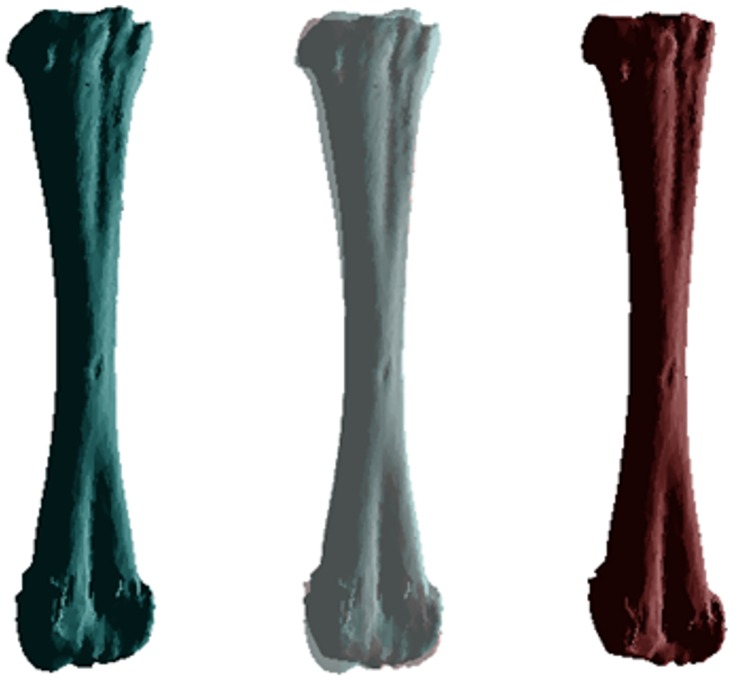
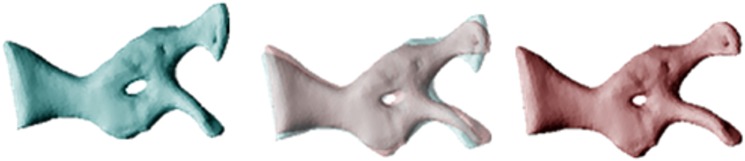
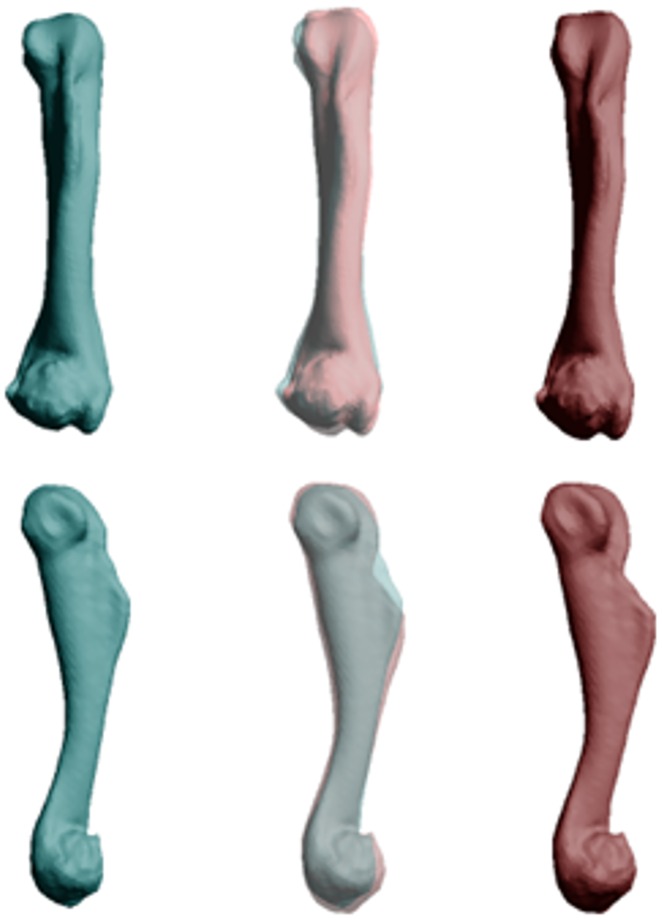
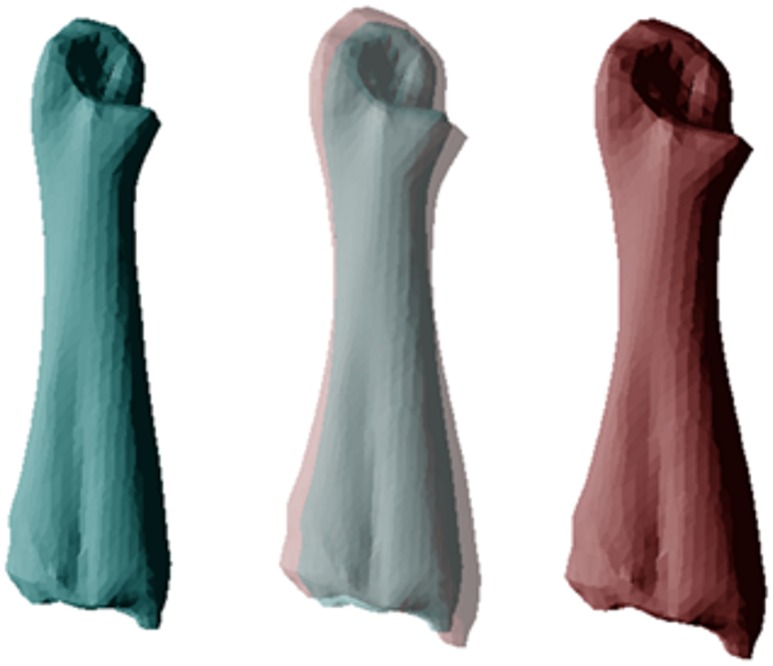
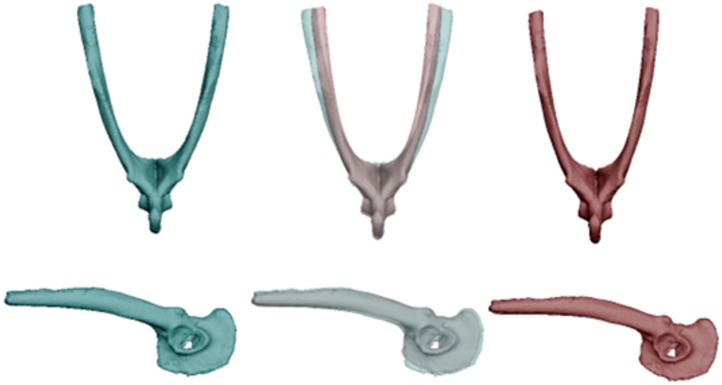
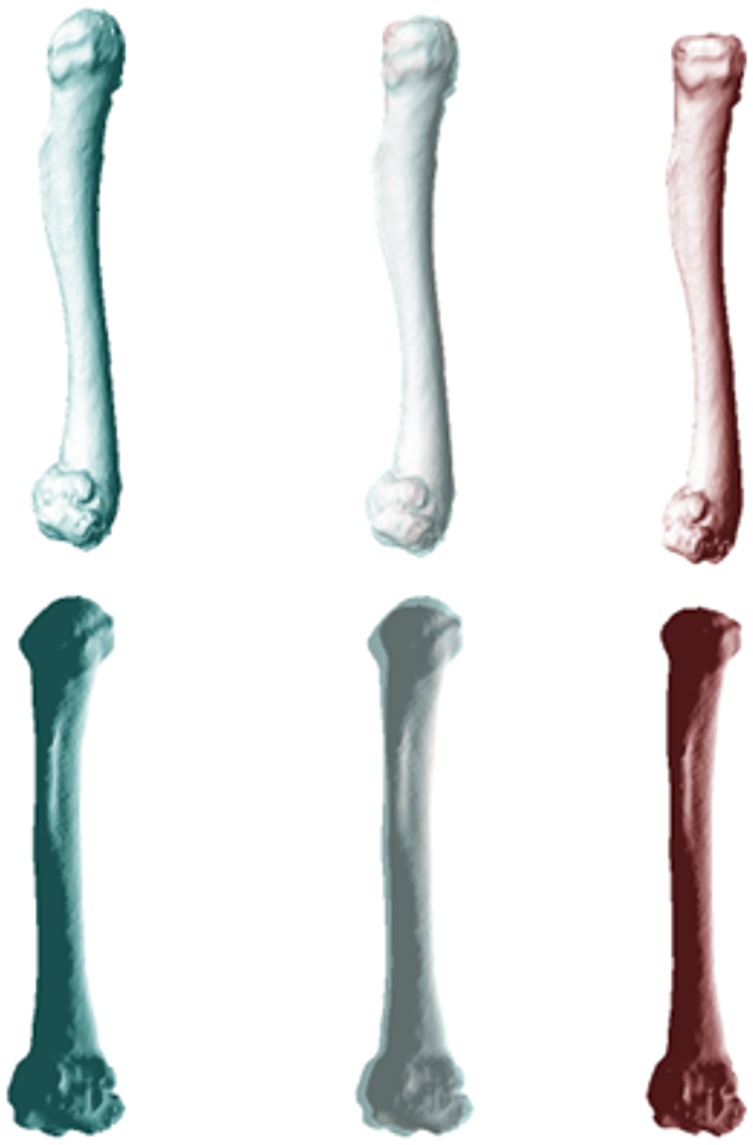
Biological invasions can induce rapid evolutionary change. As cane toads (Rhinella marina) have spread across tropical Australia over an 80-year period, their rate of invasion has increased from around 15 to 60 km per annum. Toads at the invasion front disperse much faster and further than conspecifics from range-core areas, and their offspring inherit that rapid dispersal rate. We investigated morphological changes that have accompanied this dramatic acceleration, by conducting three-dimensional morphometric analyses of toads from both range-core and invasion-front populations. Morphology of heads, limbs, pectoral girdles and pelvic girdles differed significantly between toads from the two areas, ranging from 0.5% to 16.5% difference in mean bone dimensions between populations, with invasion-front toads exhibiting wider forelimbs, narrower hindlimbs and more compact skulls. Those changes plausibly reflect an increased reliance on bounding (multiple short hops in quick succession) rather than separate large leaps. Within an 80-year period, invasive cane toads have converted the basic anuran body plan - which evolved for occasional large leaps to evade predators - into a morphotype better-suited to sustained long-distance travel.
生物入侵能够引发快速的进化改变。在80年的时间里,蔗蟾蜍(海蟾蜍,Rhinella marina)已在澳大利亚热带地区扩散开来,其入侵速度已从每年约15公里增至60公里。入侵前沿的蟾蜍比来自分布核心区域的同种蟾蜍扩散得更快、更远,并且它们的后代继承了这种快速扩散的速度。我们通过对来自分布核心区域和入侵前沿种群的蟾蜍进行三维形态测量分析,研究了伴随这种急剧加速所发生的形态变化。两个区域的蟾蜍在头部、四肢、肩带和腰带的形态上存在显著差异,种群之间平均骨骼尺寸的差异在0.5%至16.5%之间,入侵前沿的蟾蜍前肢更宽,后肢更窄,头骨更紧凑。这些变化可能反映出对连续跳跃(快速连续多次短跳)而非单次大跳跃的依赖增加。在80年的时间里,入侵的蔗蟾蜍已经将为偶尔的大跳跃以躲避捕食者而进化出的基本无尾两栖动物身体结构,转变为一种更适合持续长距离移动的形态类型。