Li Qiang, Zhang Bingjian, He Zhang, Yang Xiaoru
Laboratory of Cultural Relics Conservation Materials, Department of Chemistry, Zhejiang University, Hangzhou, 310027, China.
Department of Cultural Heritage and Museology, Zhejiang University, Hangzhou, 310028, China.
PLoS One. 2016 Sep 22;11(9):e0163287. doi: 10.1371/journal.pone.0163287. eCollection 2016.
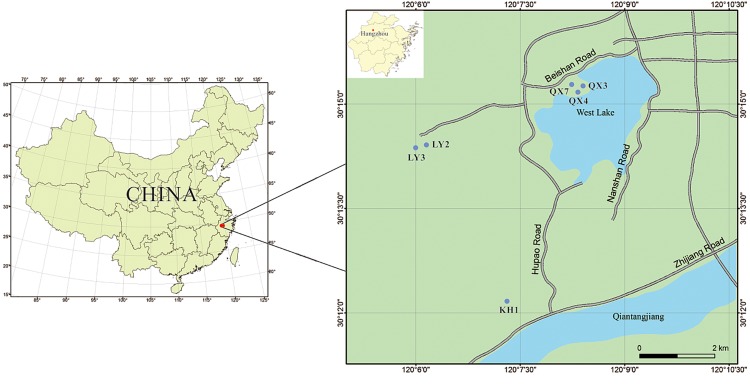
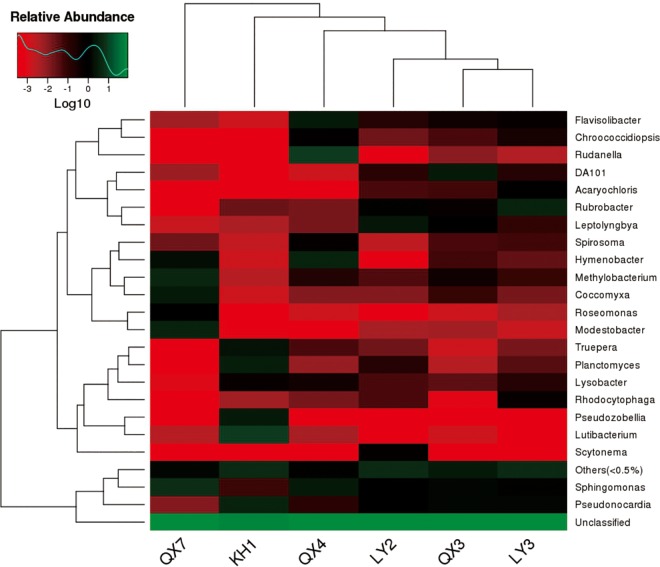
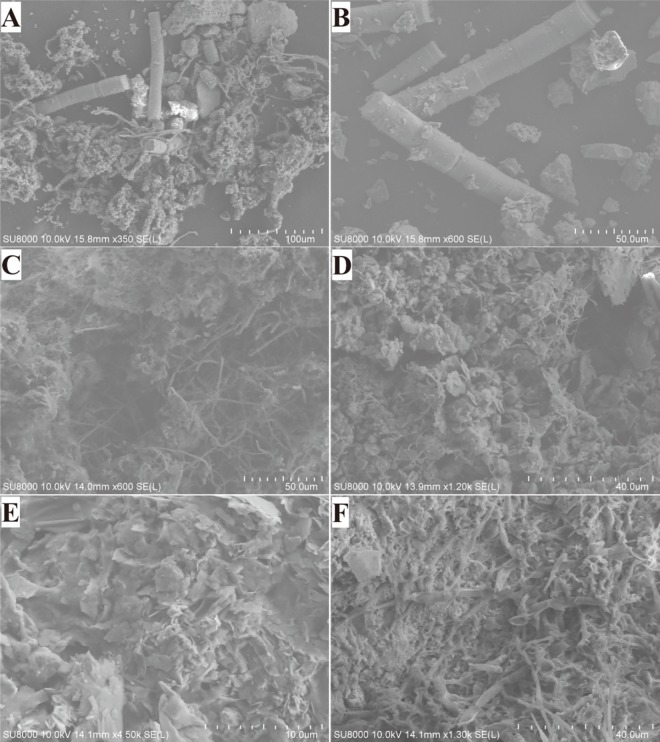
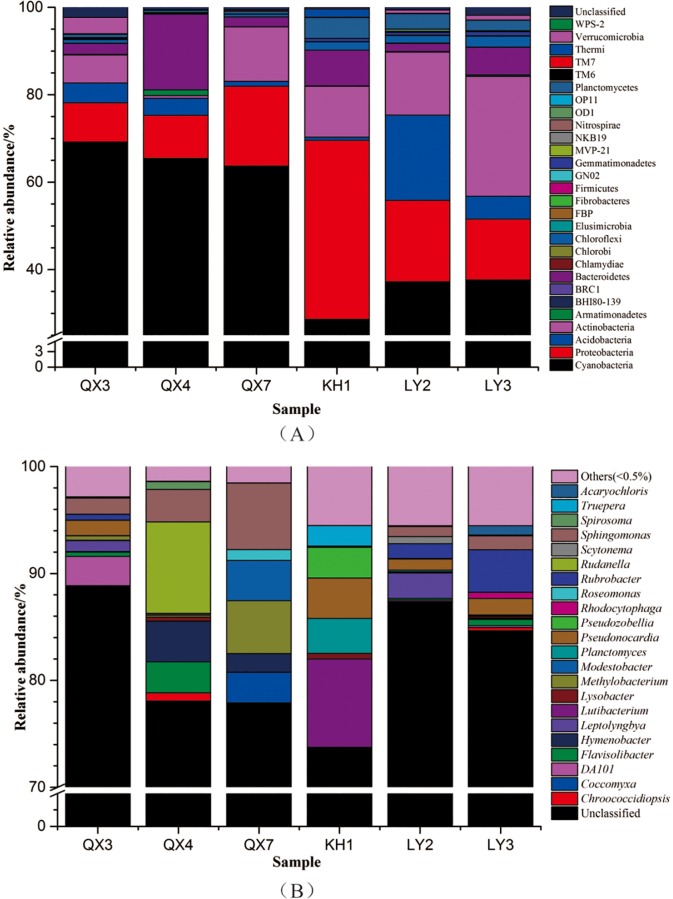
The historical and cultural heritage of Qingxing palace and Lingyin and Kaihua temple, located in Hangzhou of China, include a large number of exquisite Buddhist statues and ancient stone sculptures which date back to the Northern Song (960-1219 A.D.) and Qing dynasties (1636-1912 A.D.) and are considered to be some of the best examples of ancient stone sculpting techniques. They were added to the World Heritage List in 2011 because of their unique craftsmanship and importance to the study of ancient Chinese Buddhist culture. However, biodeterioration of the surface of the ancient Buddhist statues and white marble pillars not only severely impairs their aesthetic value but also alters their material structure and thermo-hygric properties. In this study, high-throughput sequencing was utilized to identify the microbial communities colonizing the stone monuments. The diversity and distribution of the microbial communities in six samples collected from three different environmental conditions with signs of deterioration were analyzed by means of bioinformatics software and diversity indices. In addition, the impact of environmental factors, including temperature, light intensity, air humidity, and the concentration of NO2 and SO2, on the microbial communities' diversity and distribution was evaluated. The results indicate that the presence of predominantly phototrophic microorganisms was correlated with light and humidity, while nitrifying bacteria and Thiobacillus were associated with NO2 and SO2 from air pollution.
位于中国杭州的清行宫以及灵隐寺和开化寺的历史文化遗产,包含大量精美的佛像和古代石雕,其历史可追溯到北宋(公元960 - 1127年)和清朝(公元1636 - 1912年),被认为是古代石雕技艺的一些最佳典范。它们于2011年被列入世界遗产名录,因其独特的工艺以及对研究中国古代佛教文化的重要性。然而,古代佛像和白色大理石柱表面的生物劣化不仅严重损害其美学价值,还改变了它们的物质结构和热湿性能。在本研究中,利用高通量测序来鉴定在石碑上定殖的微生物群落。借助生物信息学软件和多样性指数,分析了从三个不同环境条件下采集的六个有劣化迹象的样本中微生物群落的多样性和分布。此外,评估了包括温度、光照强度空气湿度以及二氧化氮和二氧化硫浓度在内的环境因素对微生物群落多样性和分布的影响。结果表明,主要的光合微生物的存在与光照和湿度相关,而硝化细菌和硫杆菌与空气污染中的二氧化氮和二氧化硫有关。