Sun Miao, Liu An, Shao Huifeng, Yang Xianyan, Ma Chiyuan, Yan Shigui, Liu Yanming, He Yong, Gou Zhongru
Department of Oral and Maxillofacial Surgery, Second Affiliated Hospital, School of Medicine, Zhejiang University, Hangzhou 310009, Zhejiang, China.
Department of Orthopaedic Surgery, Second Affiliated Hospital, School of Medicine, Zhejiang University, Hangzhou, China.
Sci Rep. 2016 Sep 23;6:34029. doi: 10.1038/srep34029.
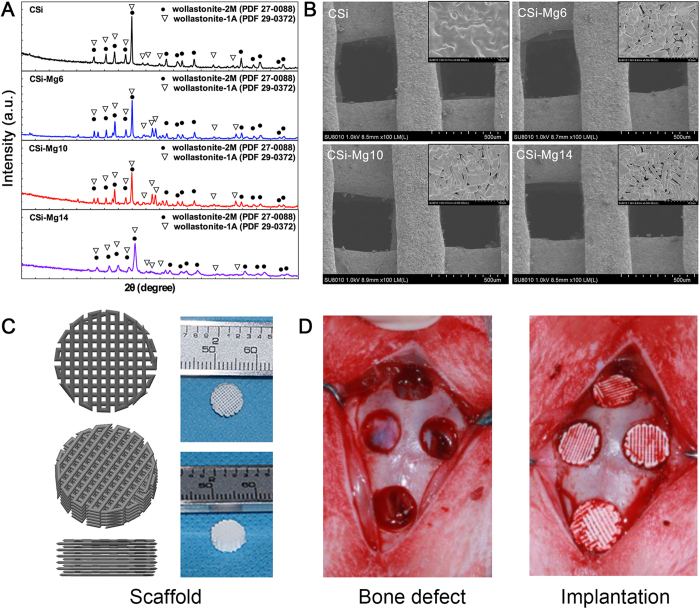
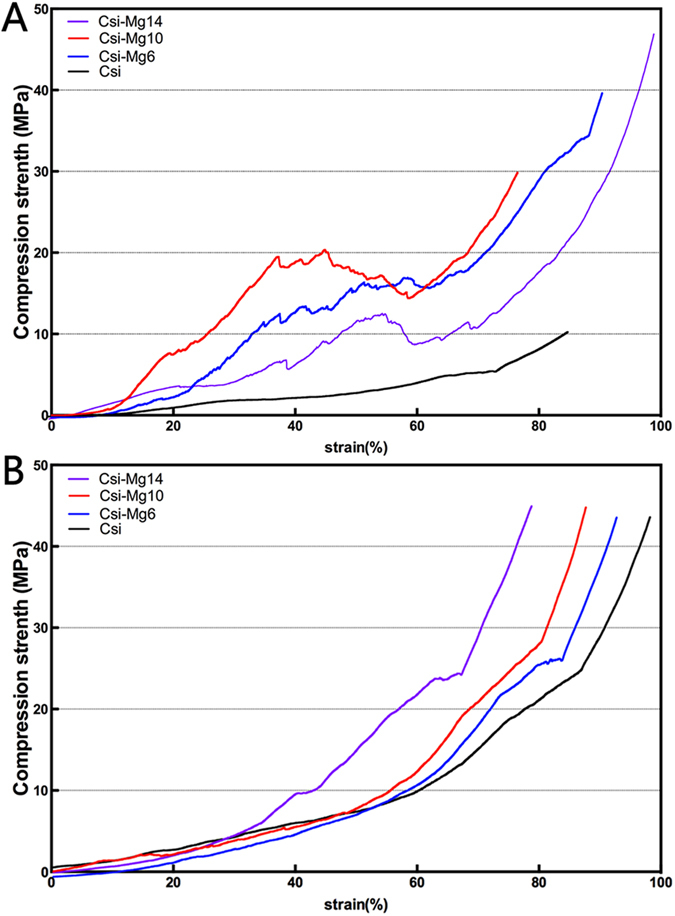
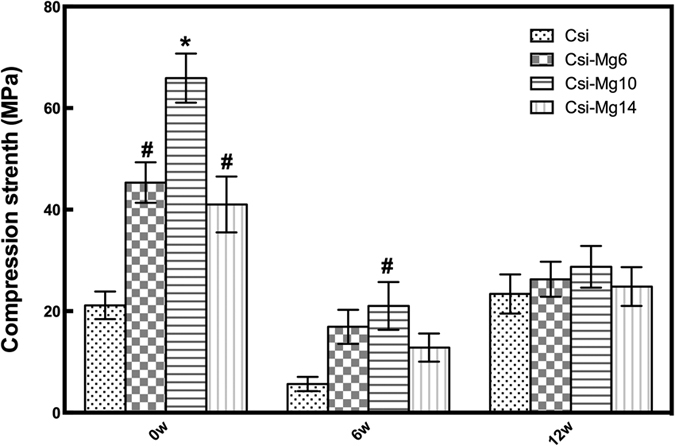
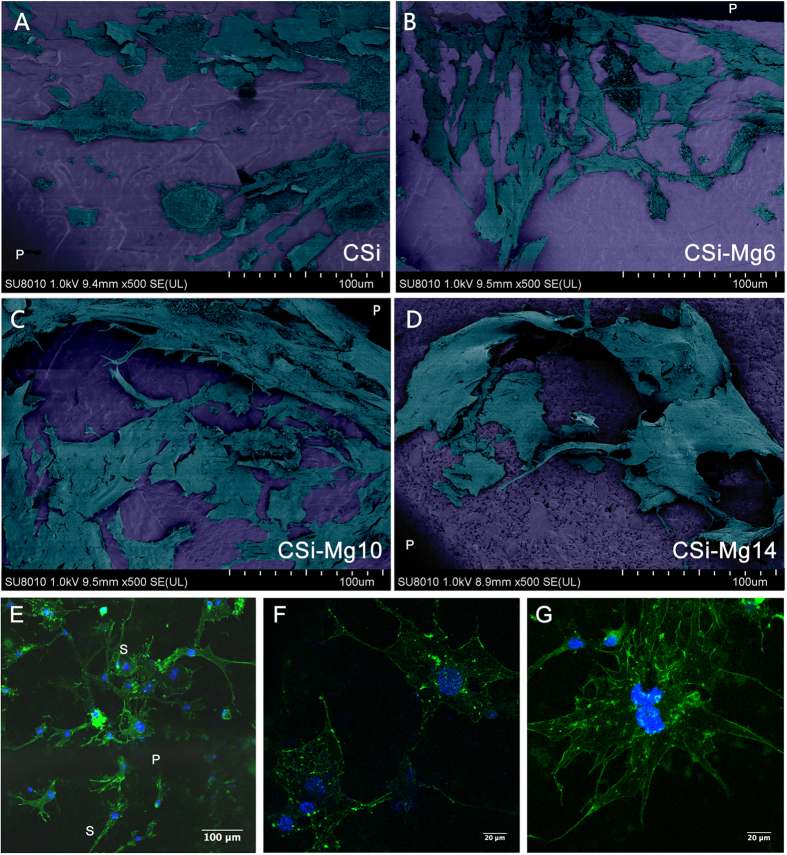
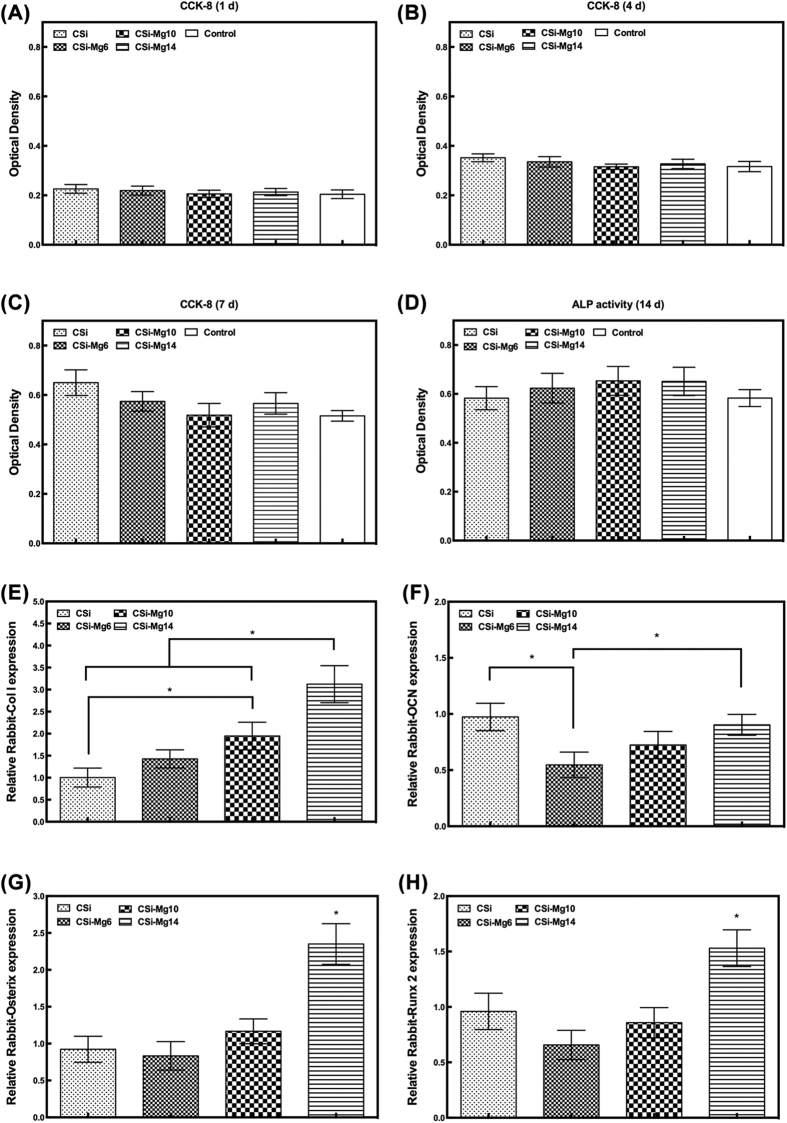
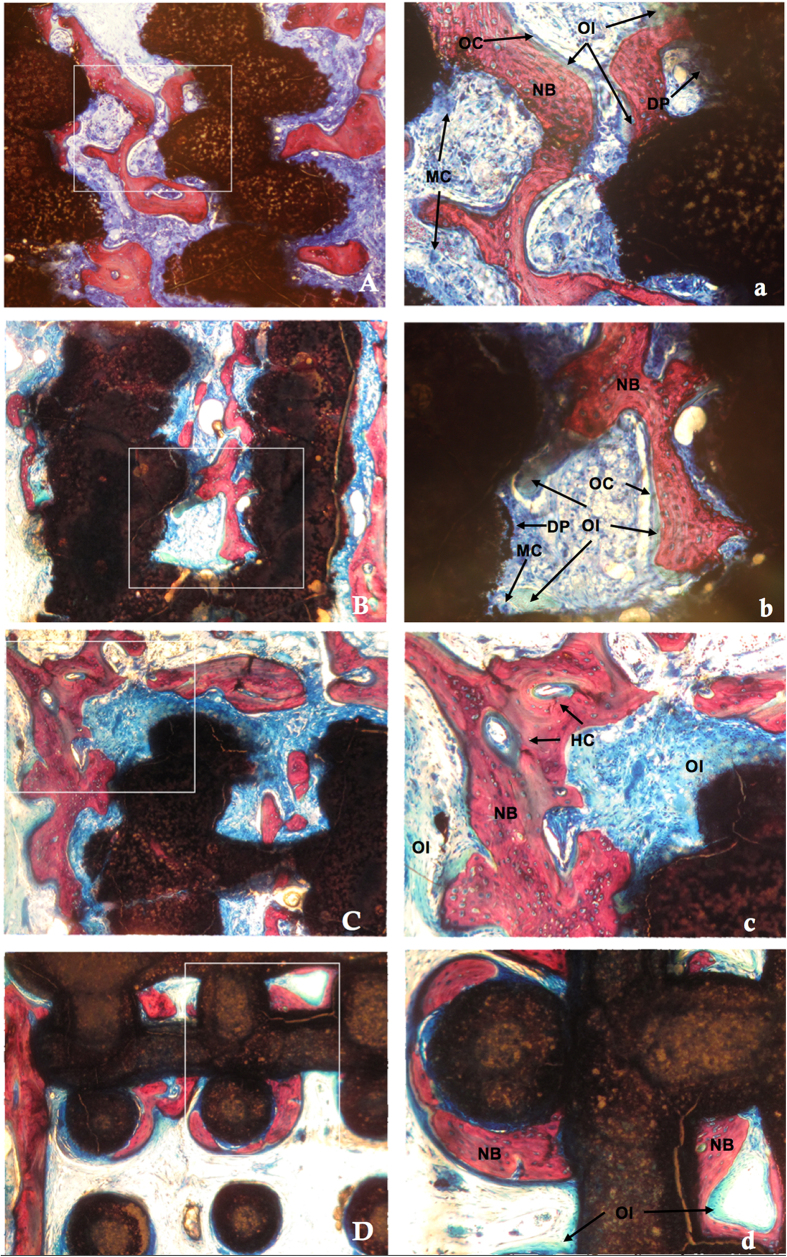
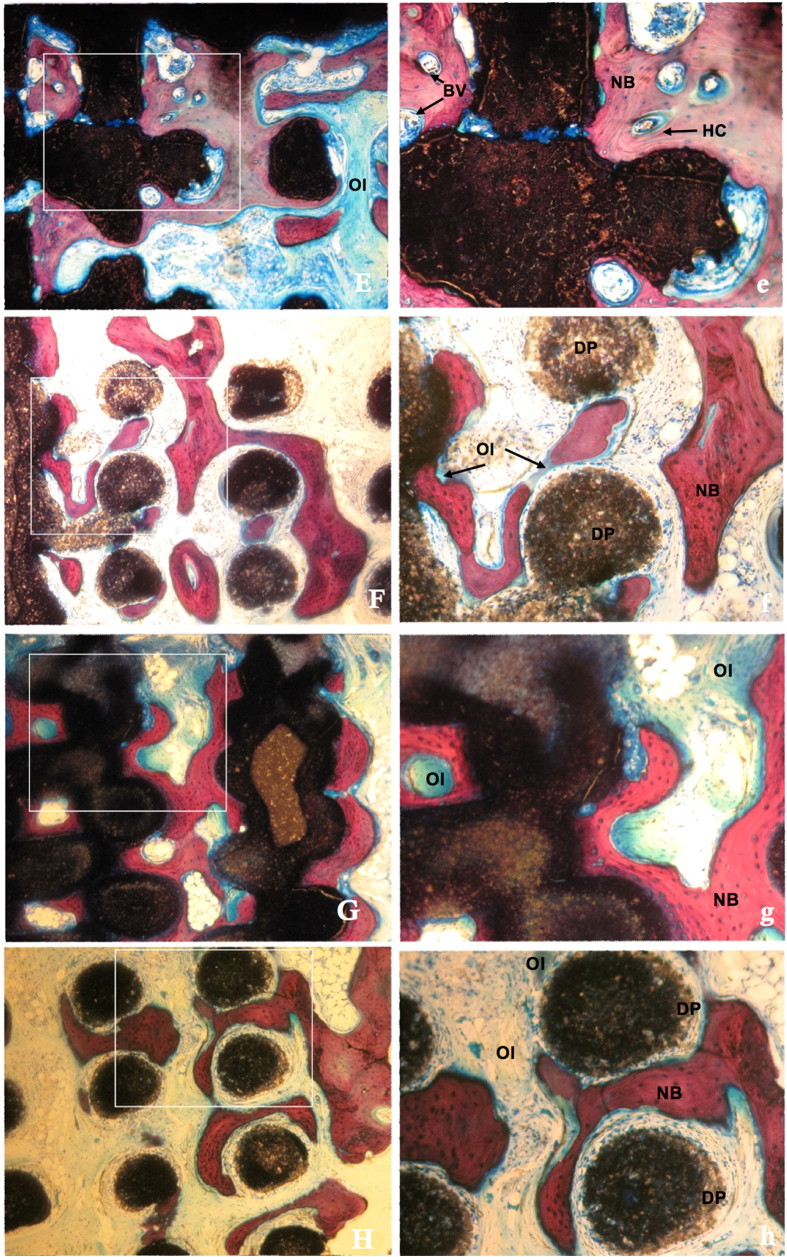
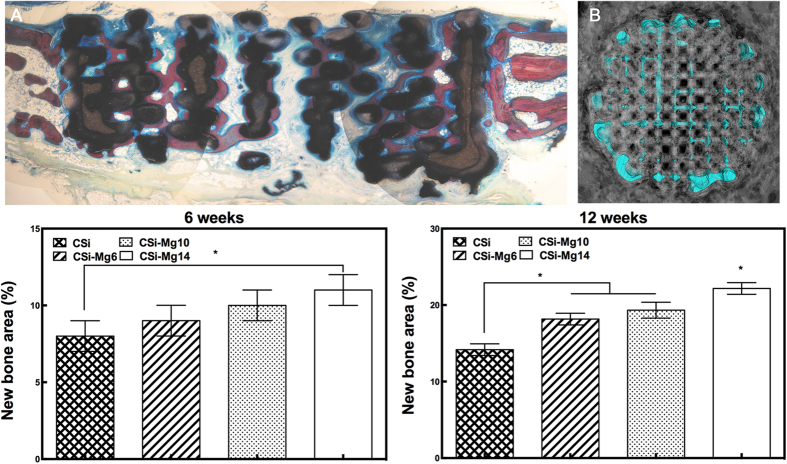
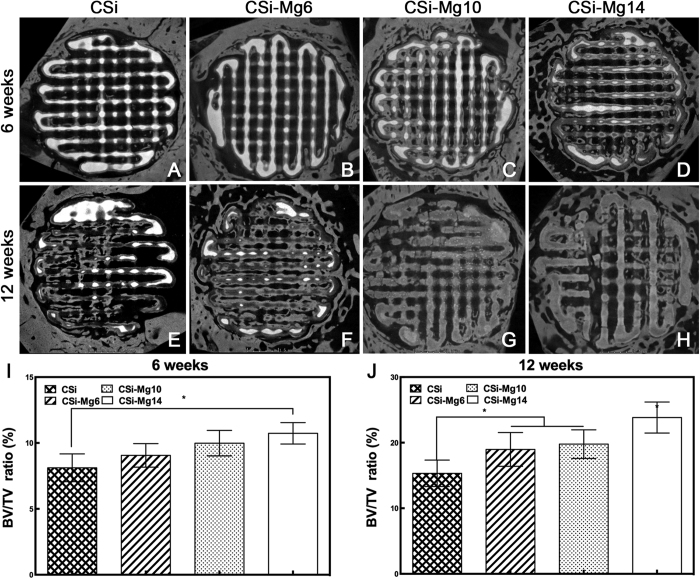
Wollastonite (CaSiO3; CSi) ceramic is a promising bioactive material for bone defect repair due to slightly fast degradation of its porous constructs in vivo. In our previous strategy some key features of CSi ceramic have been significantly improved by dilute magnesium doping for regulating mechanical properties and biodegradation. Here we demonstrate that 6 ~ 14% of Ca substituted by Mg in CSi (CSi-Mgx, x = 6, 10, 14) can enhance the mechanical strength (>40 MPa) but not compromise biological performances of the 3D printed porous scaffolds with open porosity of 60‒63%. The in vitro cell culture tests in vitro indicated that the dilute Mg doping into CSi was beneficial for ALP activity and high expression of osteogenic marker genes of MC3T3-E1 cells in the scaffolds. A good bone tissue regeneration response and elastoplastic response in mechanical strength in vivo were determined after implantation in rabbit calvarial defects for 6‒12 weeks. Particularly, the CSi-Mg10 and CSi-Mg14 scaffolds could enhance new bone regeneration with a significant increase of newly formed bone tissue (18 ~ 22%) compared to the pure CSi (~14%) at 12 weeks post-implantation. It is reasonable to consider that, therefore, such CSi-Mgx scaffolds possessing excellent strength and reasonable degradability are promising for bone reconstruction in thin-wall bone defects.
硅灰石(CaSiO₃;CSi)陶瓷是一种很有前景的生物活性材料,可用于骨缺损修复,因为其多孔结构在体内的降解速度稍快。在我们之前的策略中,通过稀镁掺杂来调节机械性能和生物降解,CSi陶瓷的一些关键特性得到了显著改善。在这里,我们证明在CSi中用Mg取代6%至14%的Ca(CSi-Mgx,x = 6、10、14)可以提高机械强度(>40 MPa),同时不会损害孔隙率为60%-63%的3D打印多孔支架的生物学性能。体外细胞培养测试表明,向CSi中稀镁掺杂有利于支架中MC3T3-E1细胞的碱性磷酸酶活性和成骨标记基因的高表达。在兔颅骨缺损中植入6至12周后,体内观察到良好的骨组织再生反应和机械强度的弹塑性反应。特别是,与植入12周后的纯CSi(~14%)相比,CSi-Mg10和CSi-Mg14支架可以增强新骨再生,新形成的骨组织显著增加(18%至22%)。因此,可以合理地认为,这种具有优异强度和合理降解性的CSi-Mgx支架在薄壁骨缺损的骨重建方面具有广阔前景。