Hu Yeguang, Zhang Zhihong, Kashiwagi Mariko, Yoshida Toshimi, Joshi Ila, Jena Nilamani, Somasundaram Rajesh, Emmanuel Akinola Olumide, Sigvardsson Mikael, Fitamant Julien, El-Bardeesy Nabeel, Gounari Fotini, Van Etten Richard A, Georgopoulos Katia
Cutaneous Biology Research Center, Massachusetts General Hospital, Harvard Medical School, Charlestown, Massachusetts 02129, USA;
Department of Medicine, Chao Family Comprehensive Cancer Center, University of California at Irvine, Irvine, California 92868, USA; Department of Biological Chemistry, Chao Family Comprehensive Cancer Center, University of California at Irvine, Irvine, California 92868, USA;
Genes Dev. 2016 Sep 1;30(17):1971-90. doi: 10.1101/gad.283762.116.
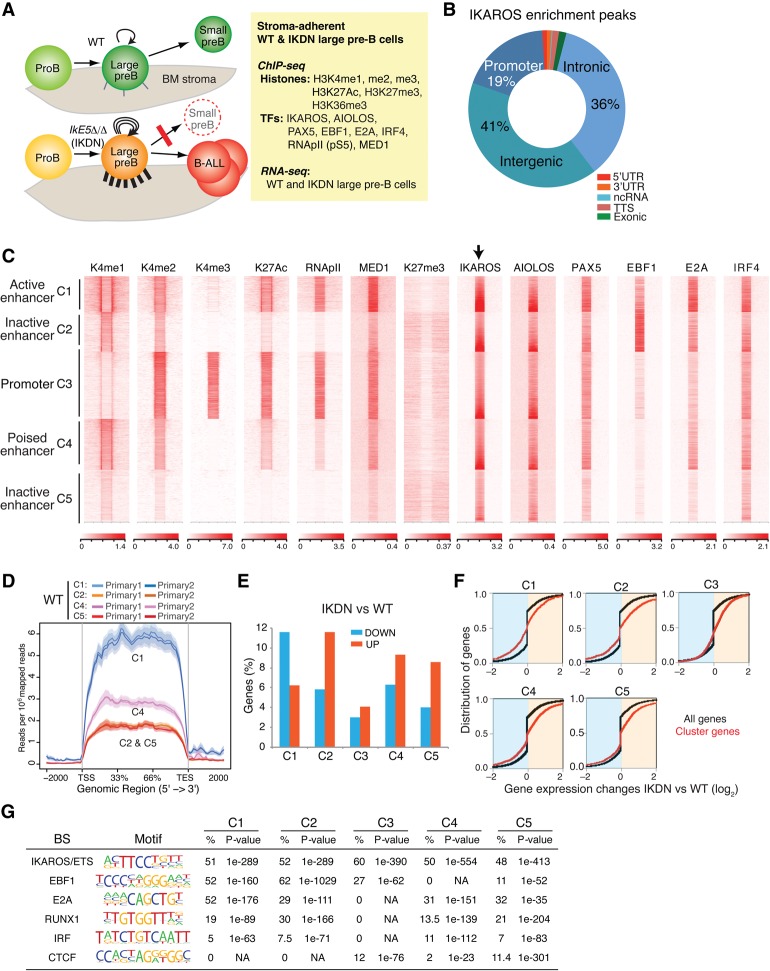
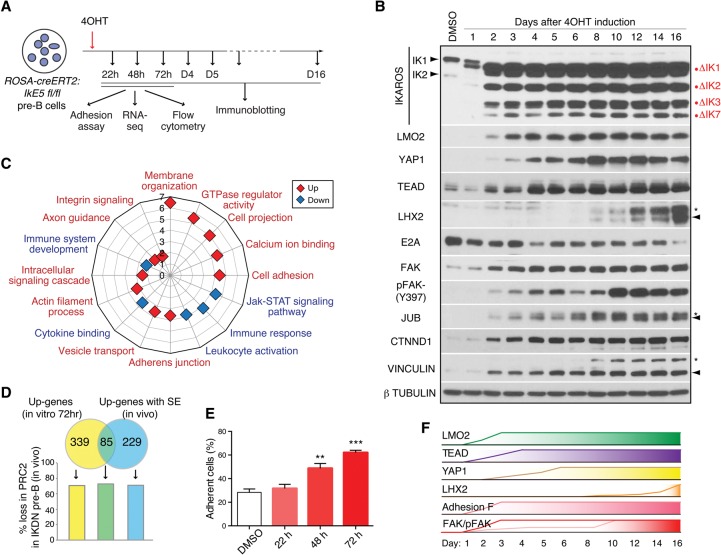
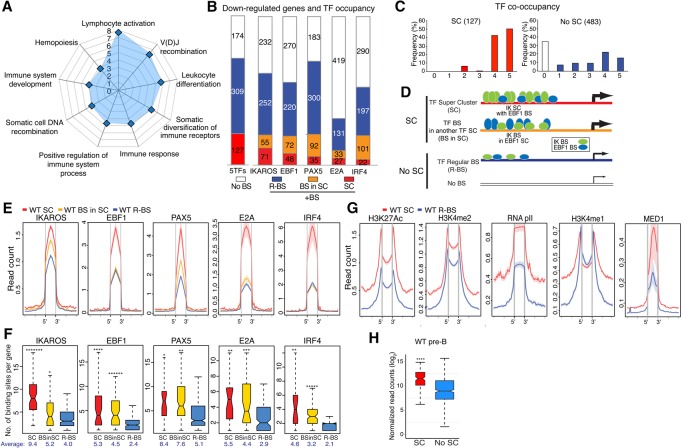
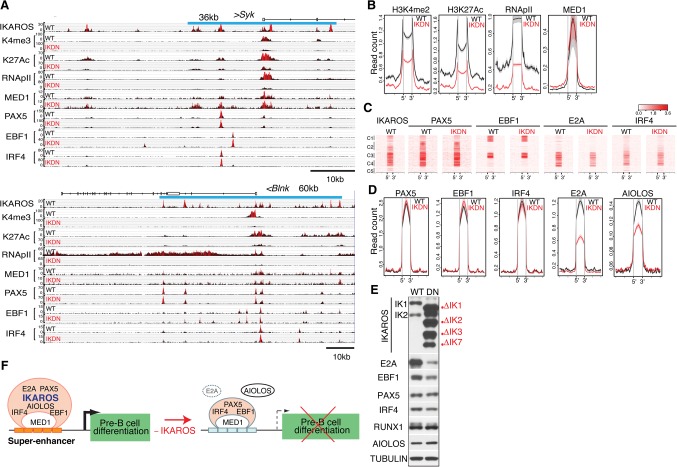
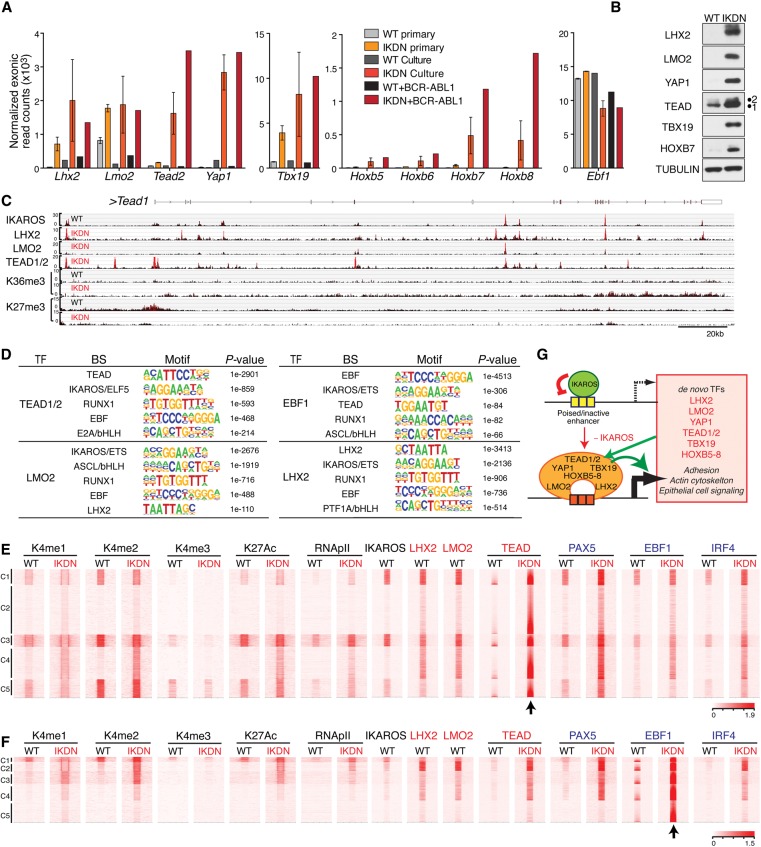
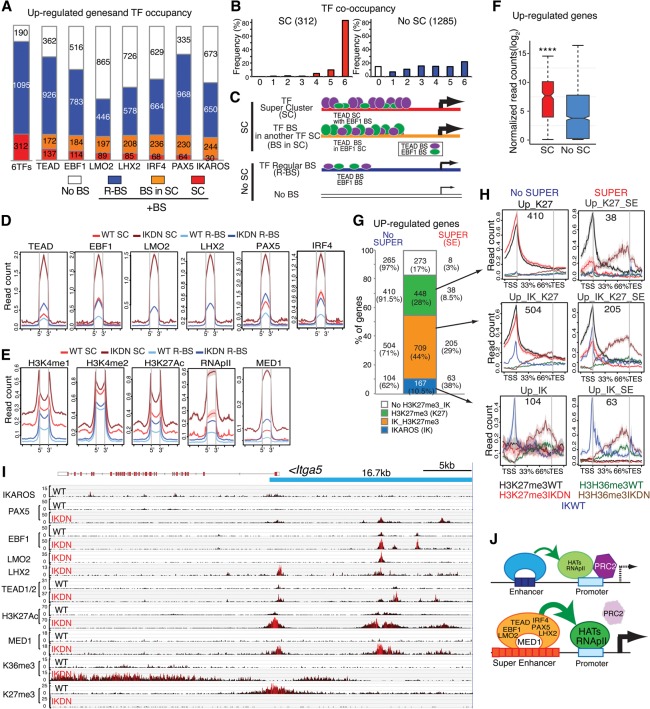
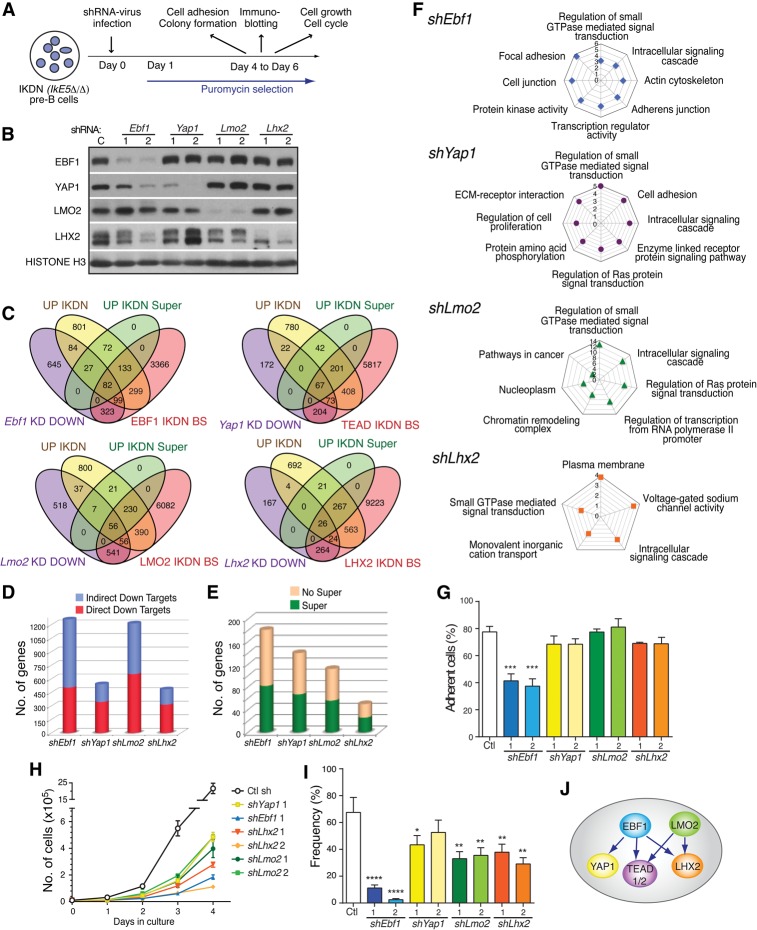
IKAROS is required for the differentiation of highly proliferative pre-B-cell precursors, and loss of IKAROS function indicates poor prognosis in precursor B-cell acute lymphoblastic leukemia (B-ALL). Here we show that IKAROS regulates this developmental stage by positive and negative regulation of superenhancers with distinct lineage affiliations. IKAROS defines superenhancers at pre-B-cell differentiation genes together with B-cell master regulators such as PAX5, EBF1, and IRF4 but is required for a highly permissive chromatin environment, a function that cannot be compensated for by the other transcription factors. IKAROS is also highly enriched at inactive enhancers of genes normally expressed in stem-epithelial cells. Upon IKAROS loss, expression of pre-B-cell differentiation genes is attenuated, while a group of extralineage transcription factors that are directly repressed by IKAROS and depend on EBF1 relocalization at their enhancers for expression is induced. LHX2, LMO2, and TEAD-YAP1, normally kept separate from native B-cell transcription regulators by IKAROS, now cooperate directly with them in a de novo superenhancer network with its own feed-forward transcriptional reinforcement. Induction of de novo superenhancers antagonizes Polycomb repression and superimposes aberrant stem-epithelial cell properties in a B-cell precursor. This dual mechanism of IKAROS regulation promotes differentiation while safeguarding against a hybrid stem-epithelial-B-cell phenotype that underlies high-risk B-ALL.
高度增殖的前B细胞前体的分化需要IKAROS,而IKAROS功能的丧失表明前体B细胞急性淋巴细胞白血病(B-ALL)的预后不良。在这里,我们表明IKAROS通过对具有不同谱系归属的超级增强子进行正负调控来调节这一发育阶段。IKAROS与PAX5、EBF1和IRF4等B细胞主调节因子一起在pre-B细胞分化基因处定义超级增强子,但它是高度宽松染色质环境所必需的,这一功能无法被其他转录因子补偿。IKAROS在通常在干上皮细胞中表达的基因的非活性增强子处也高度富集。IKAROS缺失后,pre-B细胞分化基因的表达减弱,而一组被IKAROS直接抑制且依赖EBF1在其增强子处重新定位以进行表达的细胞外谱系转录因子被诱导。LHX2、LMO2和TEAD-YAP1通常通过IKAROS与天然B细胞转录调节因子分开,现在它们在一个具有自身前馈转录增强作用的新生超级增强子网络中直接与它们合作。新生超级增强子的诱导拮抗多梳抑制,并在B细胞前体中叠加异常的干上皮细胞特性。IKAROS调节的这种双重机制促进分化,同时防止构成高危B-ALL基础的混合干上皮-B细胞表型。