Mueller A J, Tew S R, Vasieva O, Clegg P D, Canty-Laird E G
Department of Musculoskeletal Biology, Institute of Ageing and Chronic Disease, Faculty of Health &Life Sciences, University of Liverpool, William Henry Duncan Building, 6 West Derby Street, Liverpool, L7 8TX, United Kingdom.
The MRC-Arthritis Research UK Centre for Integrated Research into Musculoskeletal Ageing (CIMA).
Sci Rep. 2016 Sep 27;6:33956. doi: 10.1038/srep33956.
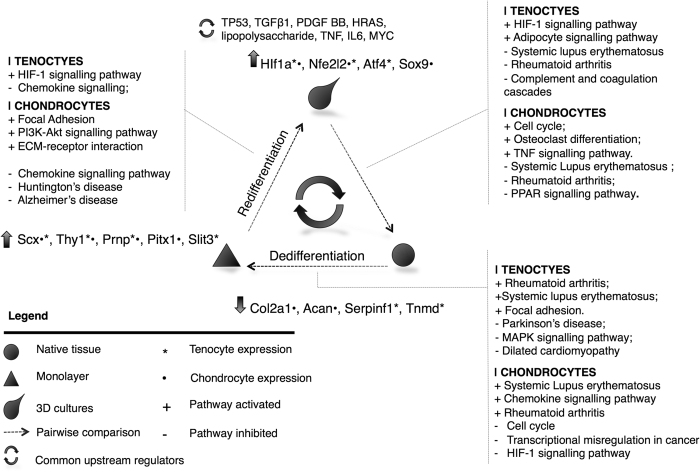
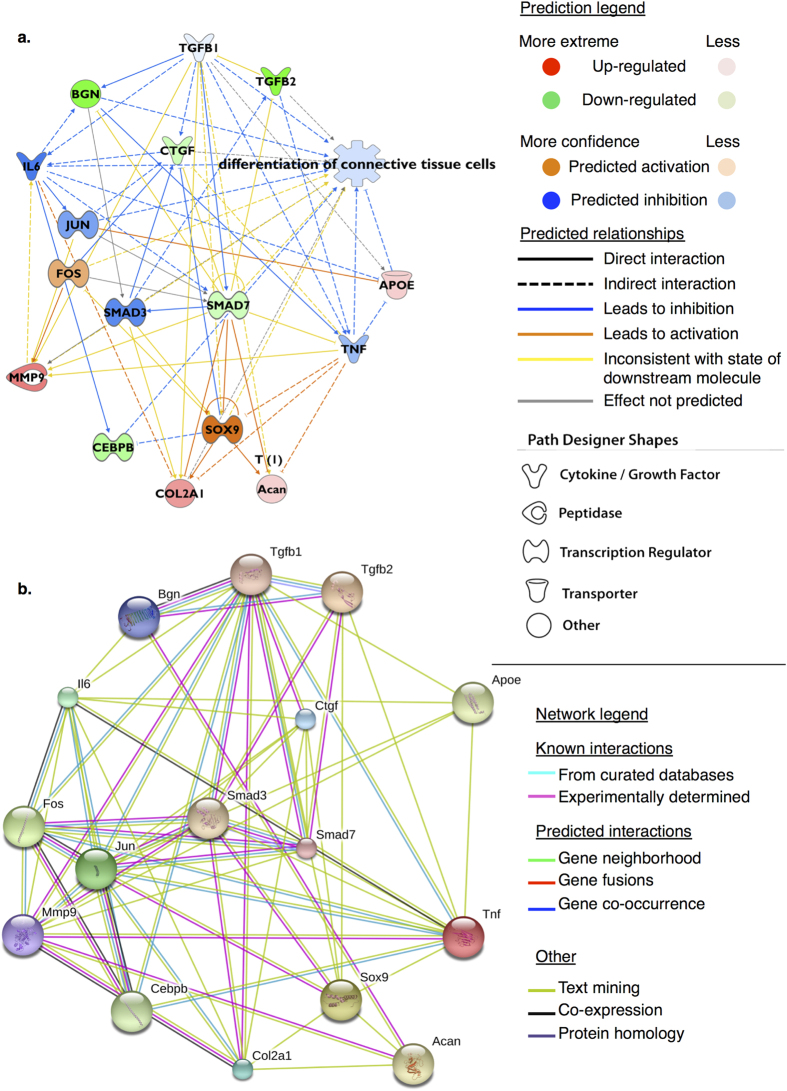
Phenotypic plasticity of adult somatic cells has provided emerging avenues for the development of regenerative therapeutics. In musculoskeletal biology the mechanistic regulatory networks of genes governing the phenotypic plasticity of cartilage and tendon cells has not been considered systematically. Additionally, a lack of strategies to effectively reproduce in vitro functional models of cartilage and tendon is retarding progress in this field. De- and redifferentiation represent phenotypic transitions that may contribute to loss of function in ageing musculoskeletal tissues. Applying a systems biology network analysis approach to global gene expression profiles derived from common in vitro culture systems (monolayer and three-dimensional cultures) this study demonstrates common regulatory mechanisms governing de- and redifferentiation transitions in cartilage and tendon cells. Furthermore, evidence of convergence of gene expression profiles during monolayer expansion of cartilage and tendon cells, and the expression of key developmental markers, challenges the physiological relevance of this culture system. The study also suggests that oxidative stress and PI3K signalling pathways are key modulators of in vitro phenotypes for cells of musculoskeletal origin.
成体体细胞的表型可塑性为再生治疗的发展提供了新途径。在肌肉骨骼生物学中,尚未系统地考虑控制软骨和肌腱细胞表型可塑性的基因的机制调控网络。此外,缺乏有效重现软骨和肌腱体外功能模型的策略阻碍了该领域的进展。去分化和再分化代表表型转变,这可能导致衰老肌肉骨骼组织功能丧失。本研究应用系统生物学网络分析方法对源自常见体外培养系统(单层培养和三维培养)的全局基因表达谱进行分析,证明了控制软骨和肌腱细胞去分化和再分化转变的共同调控机制。此外,软骨和肌腱细胞单层扩增过程中基因表达谱的趋同证据以及关键发育标志物的表达,对该培养系统的生理相关性提出了质疑。该研究还表明,氧化应激和PI3K信号通路是肌肉骨骼来源细胞体外表型的关键调节因子。