Cavailler Philippe, Tarantola Arnaud, Leo Yee Sin, Lover Andrew A, Rachline Anne, Duch Moniboth, Huy Rekol, Quake Ai Li, Kdan Yuvatha, Duong Veasna, Brett Jeremy L, Buchy Philippe
Infectious Diseases Programme, Saw Swee Hock School of Public Health, National University of Singapore, Singapore, Singapore.
Current address: Agence de Médecine Préventive, 13 Chemin du Levant, Ferney-Voltaire, 01210, France.
BMC Infect Dis. 2016 Sep 26;16(1):512. doi: 10.1186/s12879-016-1849-8.
Dengue is endemic throughout Cambodia, a country faced with significant health and economic challenges. We undertook a clinical study at the National Paediatric Hospital in Phnom Penh to evaluate clinical diagnostic parameters for dengue and predictors of disease outcome.
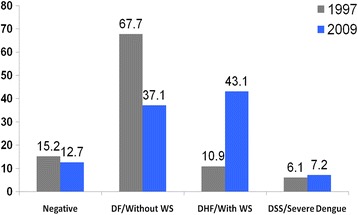
Between September 2011 and January 2013, all consecutive inpatients aged between 1 and 15 years and presenting with suspected dengue were enrolled. They were clinically assessed using both the 1997 and 2009 WHO dengue classifications. Specimens were collected upon admission and discharge and tested for dengue at Institut Pasteur in Cambodia.
A total of 701 patients were screened. Of these, 79 % were dengue-confirmed by laboratory testing, and 21 % tested dengue-negative. A positive tourniquet test, absence of upper respiratory symptoms, leukopenia, thrombocytopenia, and elevated liver transaminases were independent predictors for laboratory-confirmed dengue among the children. The presence of several warning signs on hospital admission was associated with a concurrent laboratory-confirmed diagnosis of severe disease outcome.
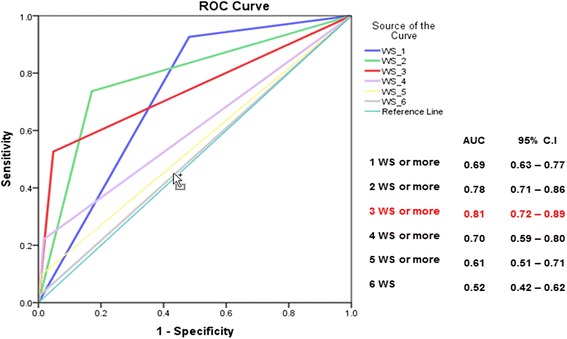
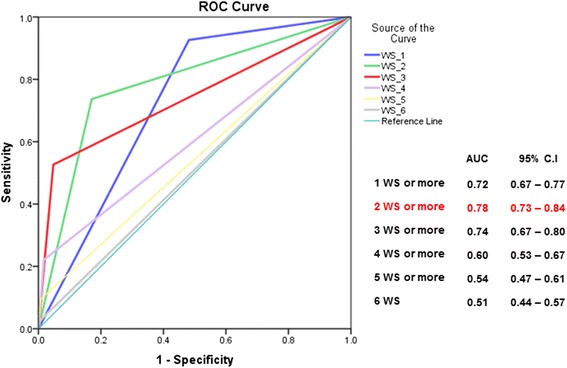
The presence of two or more warning signs was associated with a concurrent laboratory-confirmed diagnosis of severe dengue at hospital admission. Thus, a cumulative score combining simple clinical parameters and first-line laboratory findings could be used to accurately predict dengue virus infection in pediatric populations, optimizing triage in settings with limited laboratory resources.
登革热在柬埔寨呈地方性流行,该国面临重大的健康和经济挑战。我们在金边的国家儿童医院开展了一项临床研究,以评估登革热的临床诊断参数和疾病预后的预测因素。
2011年9月至2013年1月期间,纳入所有年龄在1至15岁之间、疑似登革热的连续住院患者。使用1997年和2009年世界卫生组织登革热分类标准对他们进行临床评估。入院和出院时采集标本,并在柬埔寨巴斯德研究所进行登革热检测。
共筛查了701例患者。其中,79%经实验室检测确诊为登革热,21%检测为登革热阴性。在儿童中,阳性束臂试验、无上呼吸道症状、白细胞减少、血小板减少和肝转氨酶升高是实验室确诊登革热的独立预测因素。入院时出现多个警示体征与实验室确诊的严重疾病预后同时存在相关。
入院时出现两个或更多警示体征与实验室确诊的严重登革热同时存在相关。因此,结合简单临床参数和一线实验室检查结果的累积评分可用于准确预测儿童人群中的登革热病毒感染,在实验室资源有限的情况下优化分诊。