Li Yan, Carayannopoulos Leonidas N, Thomas Michael, Palmisano Maria, Zhou Simon
Translational Development and Clinical Pharmacology, Celgene Corporation, Summit, NJ, USA.
Clin Pharmacol. 2016 Sep 9;8:117-25. doi: 10.2147/CPAA.S111867. eCollection 2016.
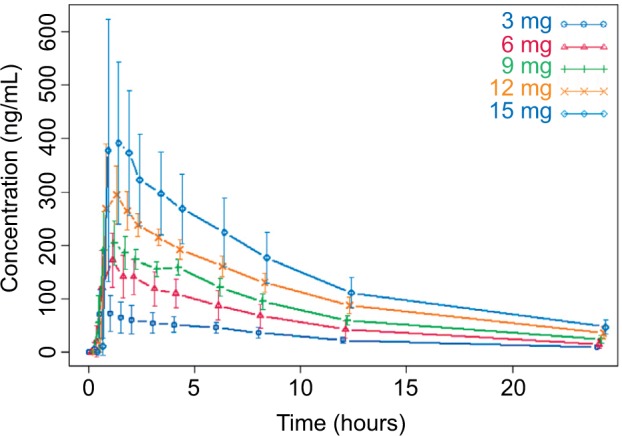
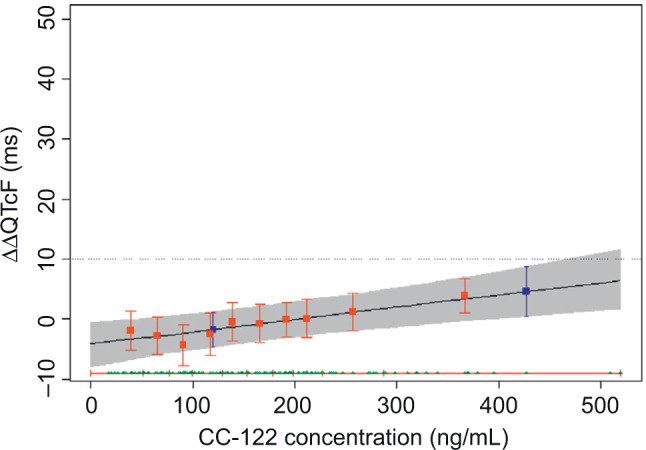
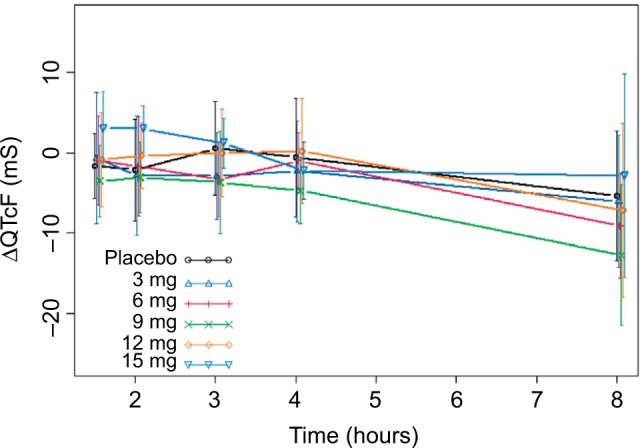
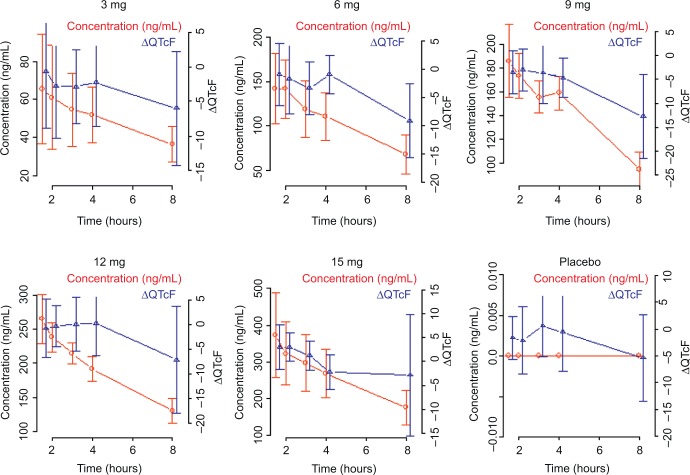
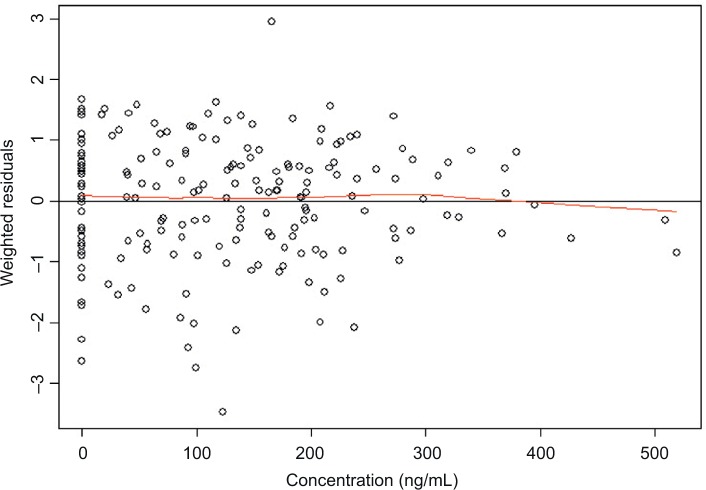
CC-122 hydrochloride is a novel pleiotropic pathway modifier compound that binds cereblon, a substrate receptor of the Cullin 4 RING E3 ubiquitin ligase complex. CC-122 has multiple activities including modulation of immune cells, antiproliferative activity of multiple myeloma and lymphoma cells, and antiangiogenic activity. CC-122 is being developed as an oncology treatment for hematologic malignancies and advanced solid tumors. Cardiovascular and vital sign assessments of CC-122 have been conducted in hERG assays in vitro and in a 28-day good laboratory practice monkey study with negative signals. To assess the potential concentration-QTc relationship in humans and to ascertain or exclude a small QT effect by CC-122, a plasma concentration exposure- and ΔQTcF-response model of CC-122 was developed. Intensive CC-122 concentration and paired triplicate electrocardiogram data from a single ascending dose study were included in the analysis. The parameters included in the final linear exposure-response model are intercept, slope, and treatment effect. The slope estimate of 0.0201 with 90% CI of (0.009, 0.035) indicates a weak relationship between ΔQTcF and CC-122 concentration. The upper bounds of the 90% CI of the model-predicted ΔΔQTcF effect at C max from the 4 mg clinical dose and the supratherapeutic dose of 15 mg (1.18 ms and 8.76 ms, respectively) are <10 ms threshold, suggesting that the risk of CC-122 QT prolongation effect at the relevant therapeutic dose range from 1 mg to 4 mg is low.
盐酸CC - 122是一种新型的多效性途径调节剂化合物,它能结合cereblon,后者是Cullin 4 RING E3泛素连接酶复合物的底物受体。CC - 122具有多种活性,包括调节免疫细胞、对多发性骨髓瘤和淋巴瘤细胞的抗增殖活性以及抗血管生成活性。CC - 122正被开发用于治疗血液系统恶性肿瘤和晚期实体瘤的肿瘤学治疗药物。已在体外hERG试验以及一项28天的符合良好实验室规范的猴子研究中对CC - 122进行了心血管和生命体征评估,结果均为阴性信号。为了评估CC - 122在人体中的潜在浓度 - QTc关系,并确定或排除其对QT的微小影响,建立了CC - 122的血浆浓度暴露 - 和ΔQTcF - 反应模型。来自单次递增剂量研究的密集CC - 122浓度和配对的三份心电图数据被纳入分析。最终线性暴露 - 反应模型中包含的参数有截距、斜率和治疗效果。斜率估计值为0.0201,90%置信区间为(0.009, 0.035),表明ΔQTcF与CC - 122浓度之间存在较弱的关系。在4 mg临床剂量和15 mg超治疗剂量下,模型预测的Cmax时的ΔΔQTcF效应的90%置信区间上限(分别为1.18 ms和8.76 ms)<10 ms阈值,这表明在1 mg至4 mg的相关治疗剂量范围内,CC - 122导致QT延长效应的风险较低。