Fang Xiefan, Poulsen Ryan R, Rivkees Scott A, Wendler Christopher C
Child Health Research Institute, Department of Pediatrics, College of Medicine, University of Florida, Gainesville, FL 32610, USA.
Sci Rep. 2016 Sep 28;6:34106. doi: 10.1038/srep34106.
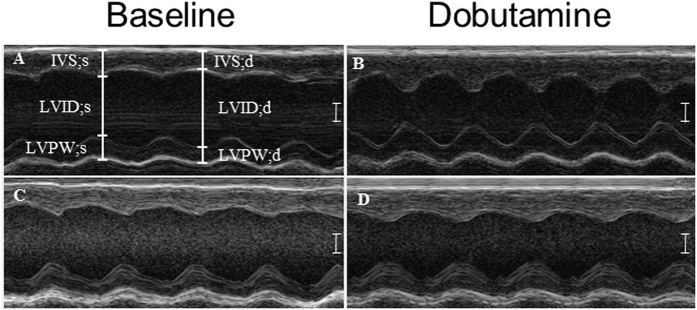
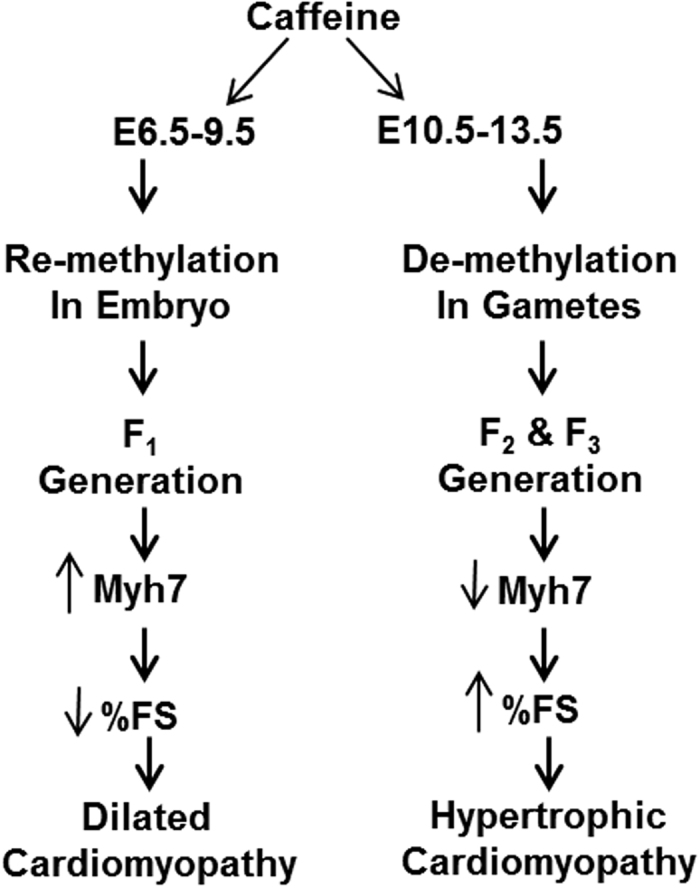
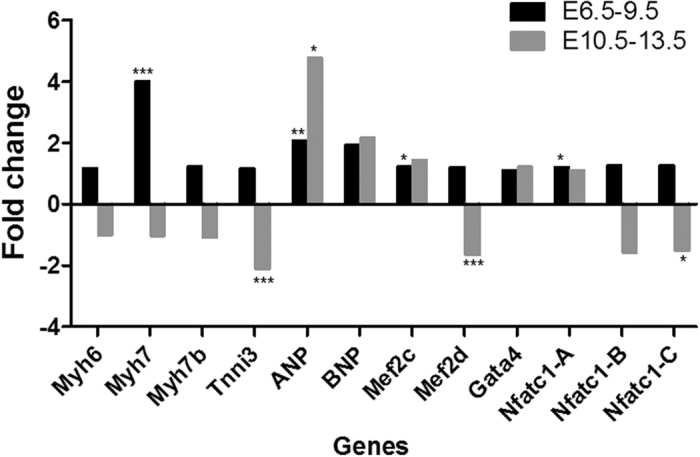
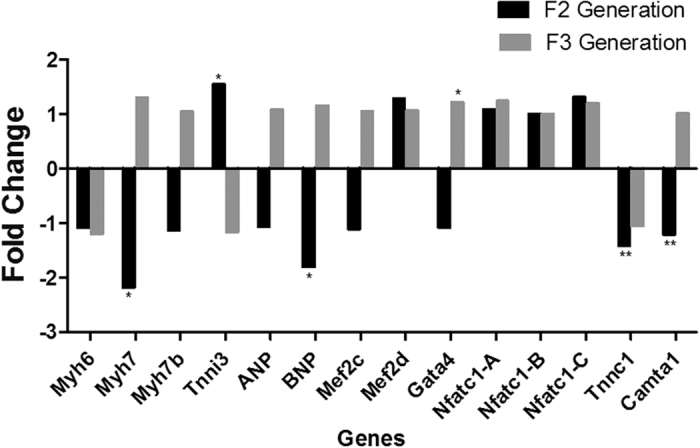
Each year millions of pregnant woman are exposed to caffeine, which acts to antagonize adenosine action. The long-term consequences of this exposure on the developing fetus are largely unknown, although in animal models we have found adverse effects on cardiac function. To assess if these effects are transmitted transgenerationally, we exposed pregnant mice to caffeine equivalent to 2-4 cups of coffee at two embryonic stages. Embryos (F1 generation) exposed to caffeine early from embryonic (E) day 6.5-9.5 developed a phenotype similar to dilated cardiomyopathy by 1 year of age. Embryos exposed to caffeine later (E10.5-13.5) were not affected. We next examined the F2 generation and F3 generation of mice exposed to caffeine from E10.5-13.5, as this coincides with germ cell development. These F2 generation adult mice developed a cardiac phenotype similar to hypertrophic cardiomyopathy. The F3 generation exhibited morphological changes in adult hearts, including increased mass. This report shows that in utero caffeine exposure has long-term effects into adulthood and that prenatal caffeine exposure can exert adverse transgenerational effects on adult cardiac function.
每年有数百万孕妇接触咖啡因,咖啡因会拮抗腺苷的作用。这种接触对发育中胎儿的长期影响在很大程度上尚不清楚,尽管在动物模型中我们发现了对心脏功能的不良影响。为了评估这些影响是否会跨代传递,我们在两个胚胎阶段让怀孕小鼠接触相当于2至4杯咖啡的咖啡因。在胚胎期第6.5至9.5天早期接触咖啡因的胚胎(F1代)在1岁时出现了类似于扩张型心肌病的表型。后期(胚胎期第10.5至13.5天)接触咖啡因的胚胎未受影响。接下来,我们检查了在胚胎期第10.5至13.5天接触咖啡因的小鼠的F2代和F3代,因为这与生殖细胞发育时间相符。这些F2代成年小鼠出现了类似于肥厚型心肌病的心脏表型。F3代成年心脏表现出形态学变化,包括重量增加。本报告表明,子宫内接触咖啡因对成年期有长期影响,产前接触咖啡因可对成年心脏功能产生不良的跨代影响。