Anderson Brian A
Soc Cogn Affect Neurosci. 2017 Mar 1;12(3):461-467. doi: 10.1093/scan/nsw141.
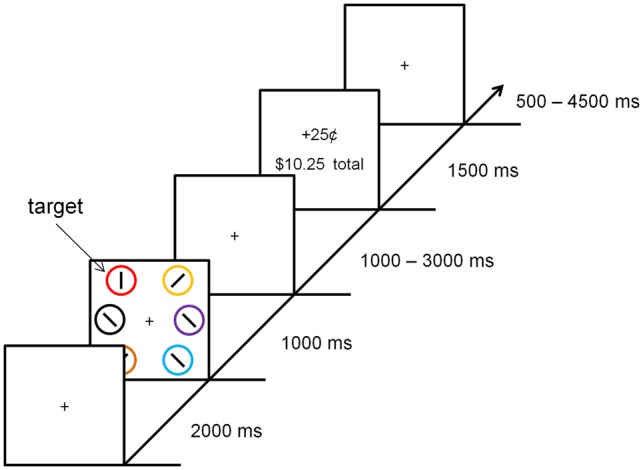
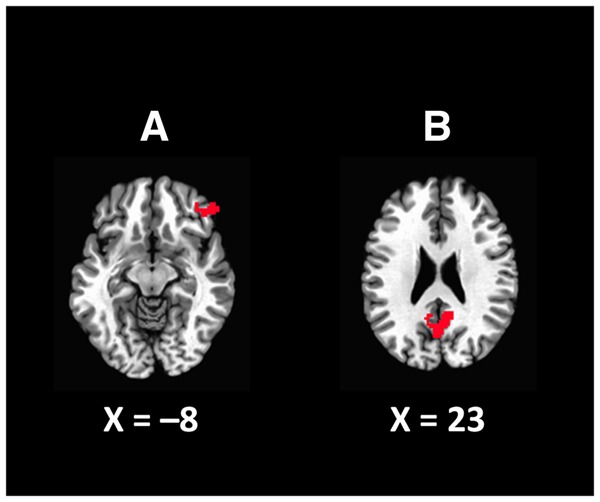
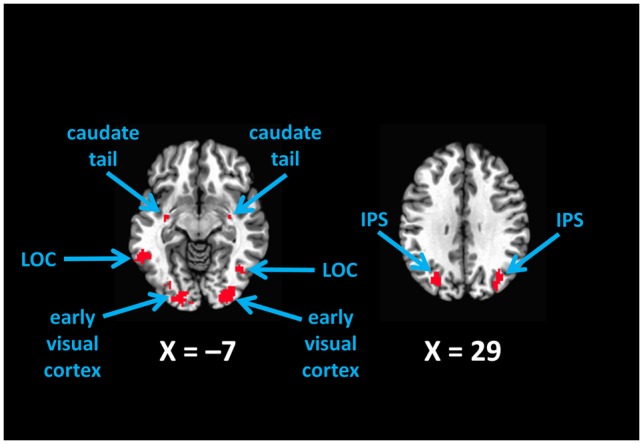
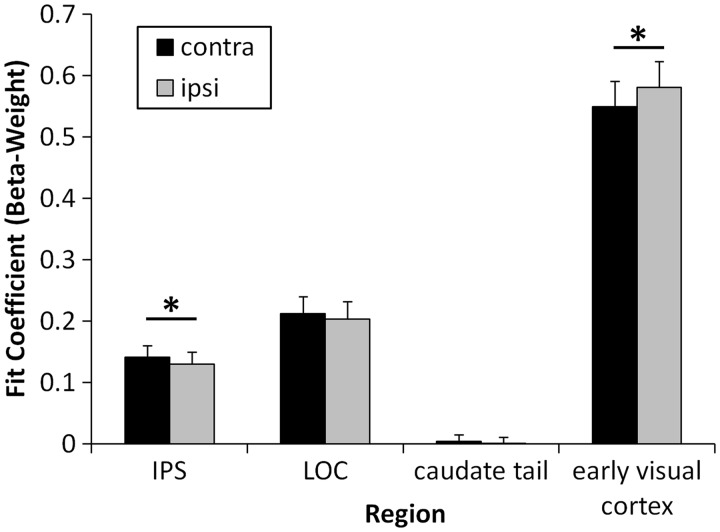
Through associative reward learning, arbitrary cues acquire the ability to automatically capture visual attention. Previous studies have examined the neural correlates of value-driven attentional orienting, revealing elevated activity within a network of brain regions encompassing the visual corticostriatal loop [caudate tail, lateral occipital complex (LOC) and early visual cortex] and intraparietal sulcus (IPS). Such attentional priority signals raise a broader question concerning how visual signals are combined with reward signals during learning to create a representation that is sensitive to the confluence of the two. This study examines reward signals during the cued reward training phase commonly used to generate value-driven attentional biases. High, compared with low, reward feedback preferentially activated the value-driven attention network, in addition to regions typically implicated in reward processing. Further examination of these reward signals within the visual system revealed information about the identity of the preceding cue in the caudate tail and LOC, and information about the location of the preceding cue in IPS, while early visual cortex represented both location and identity. The results reveal teaching signals within the value-driven attention network during associative reward learning, and further suggest functional specialization within different regions of this network during the acquisition of an integrated representation of stimulus value.
通过联想奖励学习,任意线索获得了自动捕获视觉注意力的能力。以往的研究考察了价值驱动的注意力定向的神经关联,揭示了包括视觉皮质纹状体环路[尾状核尾部、枕外侧复合体(LOC)和早期视觉皮层]以及顶内沟(IPS)在内的脑区网络内活动增强。这种注意力优先信号引发了一个更广泛的问题,即视觉信号在学习过程中如何与奖励信号结合,以创建对两者融合敏感的表征。本研究考察了在常用于产生价值驱动的注意力偏差的线索奖励训练阶段的奖励信号。与低奖励反馈相比,高奖励反馈除了优先激活通常与奖励处理相关的区域外,还优先激活了价值驱动的注意力网络。对视觉系统内这些奖励信号的进一步检查揭示了尾状核尾部和LOC中有关先前线索身份的信息,以及IPS中有关先前线索位置的信息,而早期视觉皮层则同时表征了位置和身份。结果揭示了联想奖励学习过程中价值驱动的注意力网络内的教学信号,并进一步表明在获取刺激价值的综合表征过程中,该网络不同区域内存在功能特化。