Zhou Xin-Hui, Zhang Dan, Shi Jin, Wu Yi-Jun
aDepartment of Gynecology bDepartment of General Surgery, First Affiliated Hospital, School of Medicine, Zhejiang University, Hangzhou 310003, China.
Medicine (Baltimore). 2016 Sep;95(39):e4095. doi: 10.1097/MD.0000000000004095.
Vitrification is the standard method for cryopreserving human oocytes and embryos, but its effects on ovarian tissue are uncertain. The purpose of this meta-analysis was to compare the proportion of intact primordial follicles in ovarian tissue cryopreserved with vitrification versus slow freezing.
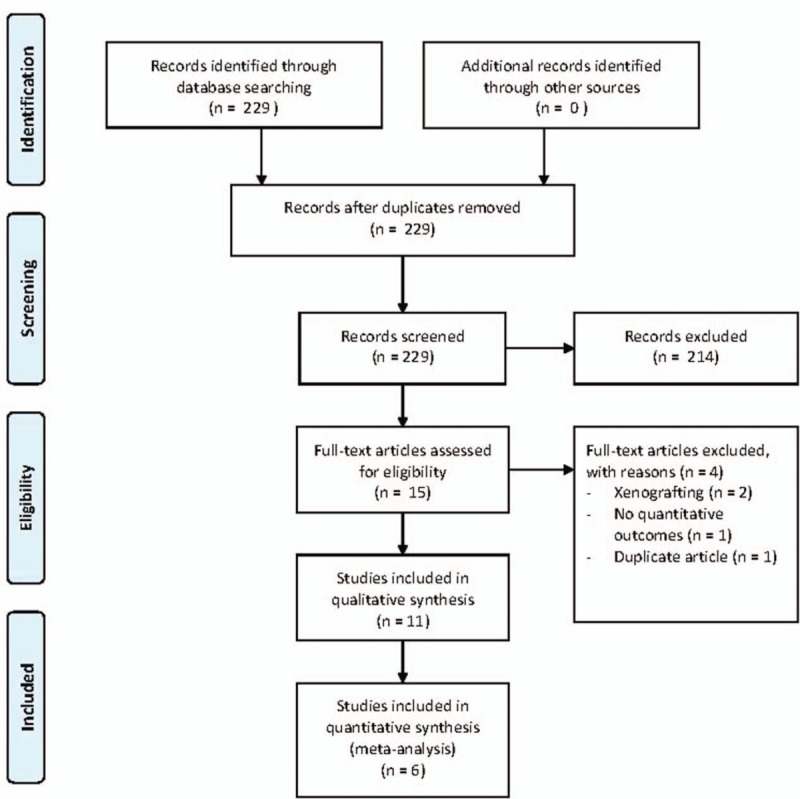
Medline, Cochrane, EMBASE, and Google Scholar databases were searched until November 11, 2014 using combinations of the search terms: ovarian tissue, cryopreservation, vitrification, follicle, follicles. Inclusion criteria were randomized controlled trails, two-arm prospective studies, and retrospective studies in which ovarian tissues were preserved by vitrification or conventional slow freezing. The primary outcome was the proportion of intact primordial follicles.
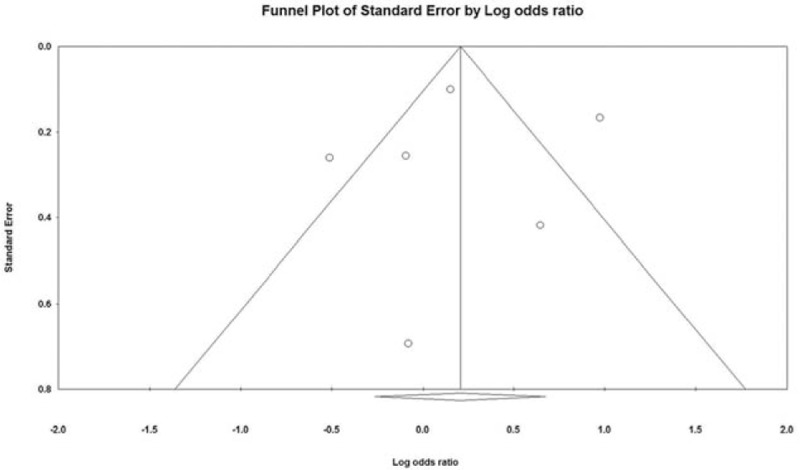
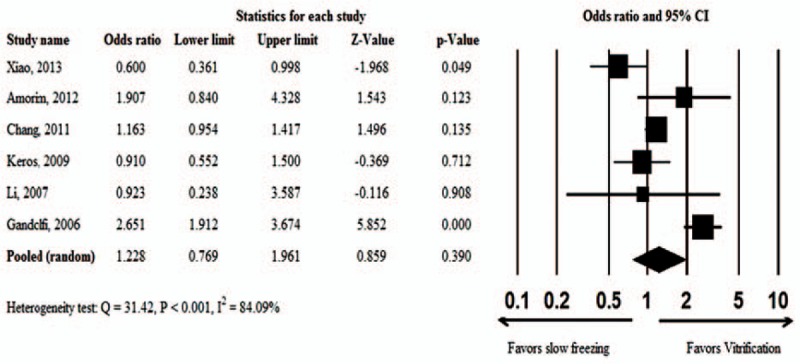
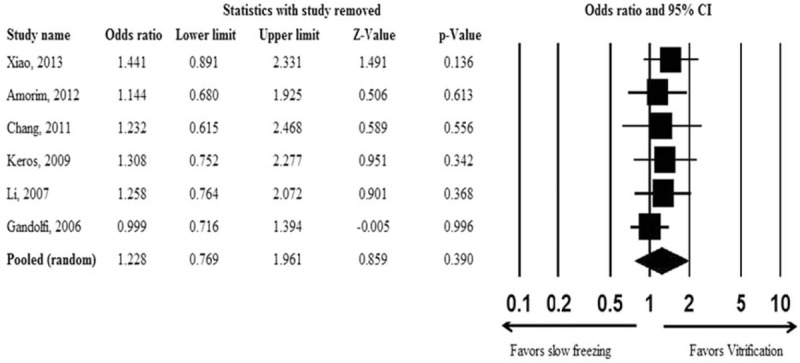
Six studies were included in the meta-analysis. The number of patients ranged from 3 to 20, and age ranged from 20 to 43 years. Total number of morphologically intact follicles ranged from 14 to 2058, among which 6 to 724 were primordial. The pooled odds ratio (OR) showed no significant difference in the proportion of intact primordial follicles after slow freezing or vitrification (OR = 1.228, 95% confidence interval [CI]: 0.769-1.961, P = 0.390). Sensitivity analysis using the leave-one-out approach indicated no considerable changes in the direction and magnitude of the pooled estimates when individual studies were excluded one at a time, indicating good reliability of the current analysis.
Vitrification and slow freezing produce equivalent results with respect to intact primordial follicles for the cryopreservation of human ovarian tissue. However, the included studies varied in the cryopreservation protocols used.
玻璃化冷冻是人类卵母细胞和胚胎冷冻保存的标准方法,但其对卵巢组织的影响尚不确定。本荟萃分析的目的是比较玻璃化冷冻与慢速冷冻保存的卵巢组织中完整原始卵泡的比例。
检索Medline、Cochrane、EMBASE和谷歌学术数据库至2014年11月11日,检索词组合如下:卵巢组织、冷冻保存、玻璃化冷冻、卵泡。纳入标准为随机对照试验、双臂前瞻性研究以及卵巢组织通过玻璃化冷冻或传统慢速冷冻保存的回顾性研究。主要结局是完整原始卵泡的比例。
荟萃分析纳入了6项研究。患者人数从3至20不等,年龄从20至43岁。形态完整卵泡的总数从14至2058不等,其中原始卵泡有6至724个。合并比值比(OR)显示,慢速冷冻或玻璃化冷冻后完整原始卵泡的比例无显著差异(OR = 1.228,95%置信区间[CI]:0.769 - 1.961,P = 0.390)。采用逐一剔除法的敏感性分析表明,逐一排除个别研究时,合并估计值的方向和大小没有显著变化,表明当前分析具有良好的可靠性。
在人类卵巢组织冷冻保存方面,就完整原始卵泡而言,玻璃化冷冻和慢速冷冻产生的结果相当。然而,纳入的研究在使用的冷冻保存方案方面存在差异。