Zhou Hua, Mo Di, Zhou Chengchao, Medina Alexis, Shi Yaojiang, Zhang Linxiu, Rozelle Scott
Schools of Economics & Management, Tongji University, Shanghai, China.
Freeman Spogli Institute for International Studies, Stanford University, Stanford, USA.
Int J Equity Health. 2016 Sep 29;15(1):162. doi: 10.1186/s12939-016-0442-5.
The gender gap remains a major impediment in the path towards equality and it is especially wide in low-income countries. Up to the early 2000s, many studies documented extensive inequalities in China: girls had poorer health, less nutrition and less education than their male counterparts. The goal of this study is to examine whether the gender gap persists, given that China is now making the transition into the ranks of upper-middle income countries. We consider educational outcomes, mental and physical health status, as well as non-cognitive outcomes.
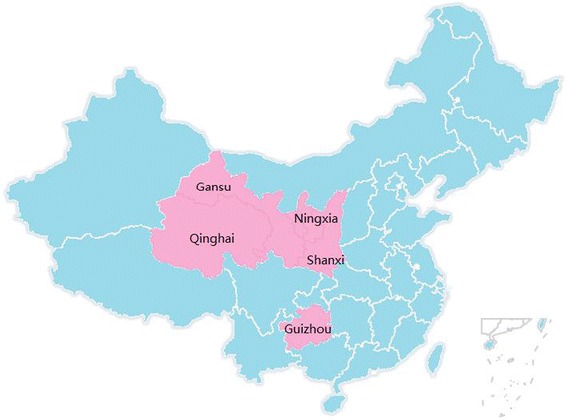
We draw on a dataset containing 69,565 observations constructed by combining data from 7 different school-level surveys spanning 5 provinces. The surveys were all conducted by the authors between 2008 and 2013 using uniform survey instruments and data collection protocols in randomly selected schools across western provinces in rural China. The sample children range in age from 9 to 14 years (with 79 % of the sample being aged 10 to 12). Our analysis compares rural girls with rural boys in terms of 13 different indicators.
With the exception of anemia rates, the health outcomes of girls are equal to those of boys. Girls and boys are statistically identical in terms of weight-for-age, height-for-age, and prevalence of intestinal worm infections. Girls performed better than boys on five of six cognitive and educational performance indicators. Girls performed worse than boys on all mental health indicators. All estimates are robust to the inclusion of different age ranges, controlling for the level of household assets, ethnic minority status, as well as the addition of provincial dummies.
Our findings suggest that with the exception of non-cognitive outcomes, anemia and standardized math test scores, the gender gap in our study areas in China appears to be diminishing.
性别差距仍然是实现平等道路上的主要障碍,在低收入国家尤为明显。直到21世纪初,许多研究都记录了中国存在广泛的不平等现象:女孩在健康、营养和教育方面比男孩差。鉴于中国目前正在向中高收入国家行列迈进,本研究的目的是检验性别差距是否仍然存在。我们考虑了教育成果、身心健康状况以及非认知成果。
我们利用一个数据集,该数据集包含通过合并来自中国农村西部5个省份7次不同学校层面调查的数据构建的69565个观测值。这些调查均由作者在2008年至2013年期间使用统一的调查工具和数据收集协议,在中国西部农村随机选取的学校中进行。样本儿童年龄在9至14岁之间(79%的样本年龄在10至12岁之间)。我们的分析从13个不同指标方面比较了农村女孩和农村男孩。
除贫血率外,女孩的健康状况与男孩相当。在年龄别体重、年龄别身高和肠道蠕虫感染患病率方面,女孩和男孩在统计学上没有差异。在六个认知和教育表现指标中的五个指标上,女孩的表现优于男孩。在所有心理健康指标上,女孩的表现比男孩差。所有估计结果在纳入不同年龄范围、控制家庭资产水平、少数民族身份以及添加省级虚拟变量后都是稳健的。
我们的研究结果表明,在中国我们研究的地区,除了非认知成果、贫血和标准化数学考试成绩外,性别差距似乎正在缩小。