Liang Xingwei, Yang Qiyuan, Zhang Lupei, Maricelli Joseph W, Rodgers Buel D, Zhu Mei-Jun, Du Min
Department of Animal Sciences, Washington State University, Pullman, WA 99164, USA.
State Key Laboratory for Conservation and Utilization of Subtropical Agro-bioresources, Guangxi High Education Laboratory for Animal Reproduction and Biotechnology, Guangxi University, Nanning, Guangxi 530004, China.
Sci Rep. 2016 Sep 30;6:34345. doi: 10.1038/srep34345.
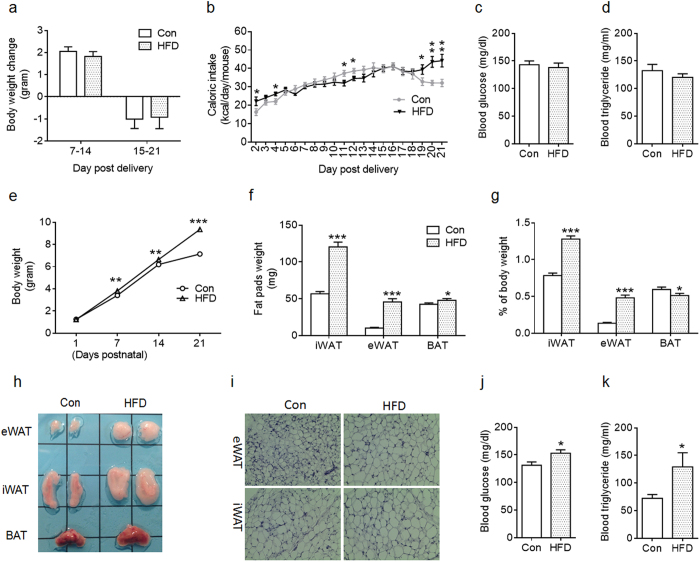
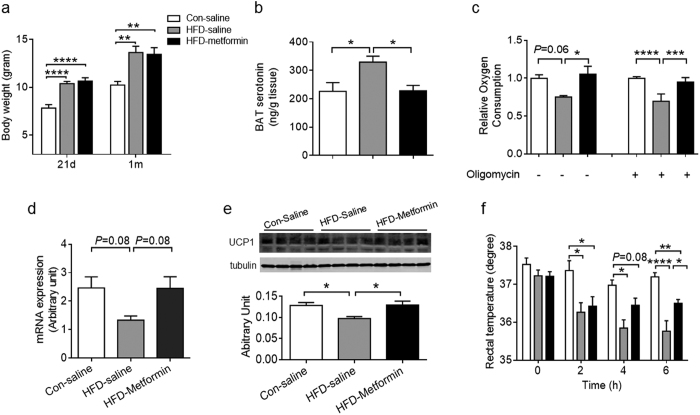
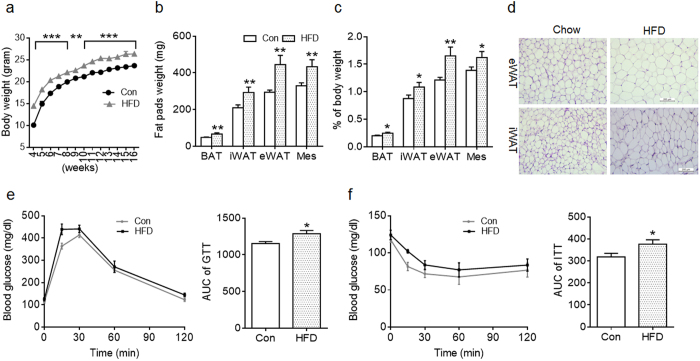
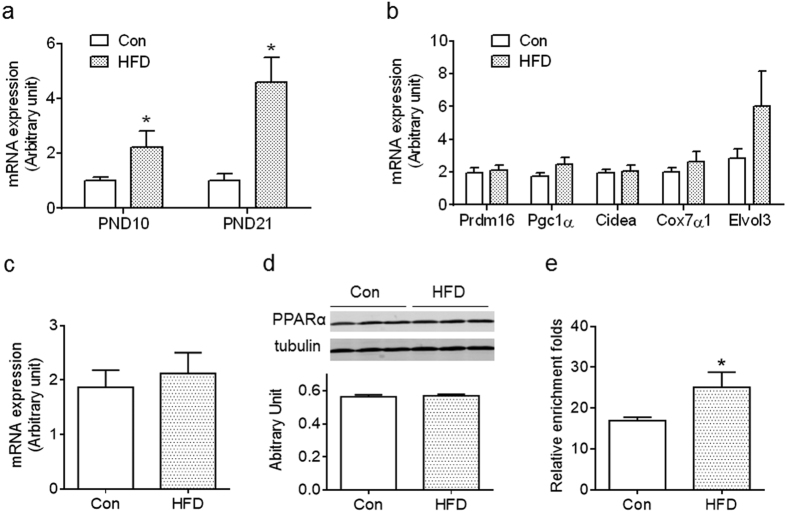
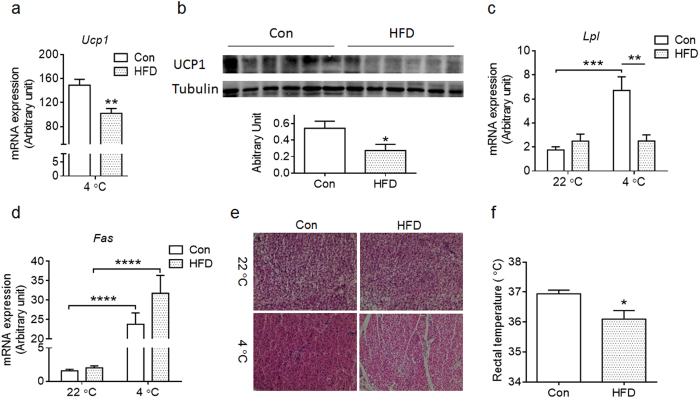
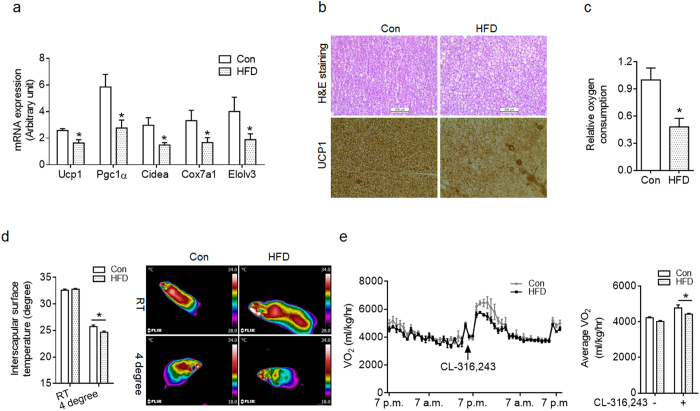
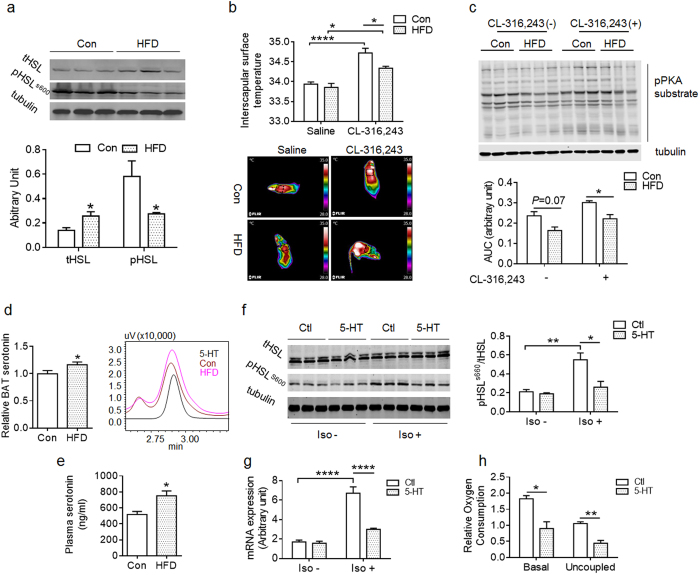
Maternal obesity and high-fat diet (HFD) predisposes offspring to obesity and metabolic diseases. Due to uncoupling, brown adipose tissue (BAT) dissipates energy via heat generation, mitigating obesity and diabetes. The lactation stage is a manageable period for improving the health of offspring of obese mothers, but the impact of maternal HFD during lactation on offspring BAT function is unknown. To determine, female mice were fed either a control or HFD during lactation. At weaning, HFD offspring gained more body weight and had greater body fat mass compared to the control, and these differences maintained into adulthood, which correlated with glucose intolerance and insulin resistance in HFD offspring. Adaptive thermogenesis of BAT was impaired in HFD offspring at weaning. In adulthood, HFD offspring BAT had lower Ucp1 expression and thermogenic activity. Mechanistically, maternal HFD feeding during lactation elevated peripheral serotonin, which decreased the sensitivity of BAT to sympathetic β3-adrenergic signaling. Importantly, early postnatal metformin administration decreased serotonin concentration and ameliorated the impairment of offspring BAT due to maternal HFD. Our data suggest that attenuation of BAT thermogenic function may be a key mechanism linking maternal HFD during lactation to persisted metabolic disorder in the offspring.
母体肥胖和高脂饮食(HFD)会使后代易患肥胖症和代谢性疾病。由于解偶联作用,棕色脂肪组织(BAT)通过产热消耗能量,减轻肥胖和糖尿病。哺乳期是改善肥胖母亲后代健康的一个可控时期,但哺乳期母体高脂饮食对后代BAT功能的影响尚不清楚。为了进行研究,在哺乳期给雌性小鼠喂食对照饮食或高脂饮食。断奶时,与对照组相比,高脂饮食组的后代体重增加更多,体脂量更大,这些差异一直持续到成年期,这与高脂饮食组后代的葡萄糖不耐受和胰岛素抵抗相关。断奶时,高脂饮食组后代的BAT适应性产热受损。成年后,高脂饮食组后代的BAT中Ucp1表达和产热活性较低。从机制上讲,哺乳期母体高脂饮食会使外周血清素升高,从而降低BAT对交感神经β3-肾上腺素能信号的敏感性。重要的是,出生后早期给予二甲双胍可降低血清素浓度,并改善母体高脂饮食导致的后代BAT损伤。我们的数据表明,BAT产热功能的减弱可能是将哺乳期母体高脂饮食与后代持续的代谢紊乱联系起来的关键机制。