Knief Ulrich, Hemmrich-Stanisak Georg, Wittig Michael, Franke Andre, Griffith Simon C, Kempenaers Bart, Forstmeier Wolfgang
Department of Behavioural Ecology and Evolutionary Genetics, Max Planck Institute for Ornithology, 82319, Seewiesen, Germany.
Current address: Division of Evolutionary Biology, Faculty of Biology, Ludwig Maximilian University of Munich, 82152, Planegg-Martinsried, Germany.
Genome Biol. 2016 Sep 29;17(1):199. doi: 10.1186/s13059-016-1056-3.
Inversion polymorphisms constitute an evolutionary puzzle: they should increase embryo mortality in heterokaryotypic individuals but still they are widespread in some taxa. Some insect species have evolved mechanisms to reduce the cost of embryo mortality but humans have not. In birds, a detailed analysis is missing although intraspecific inversion polymorphisms are regarded as common. In Australian zebra finches (Taeniopygia guttata), two polymorphic inversions are known cytogenetically and we set out to detect these two and potentially additional inversions using genomic tools and study their effects on embryo mortality and other fitness-related and morphological traits.
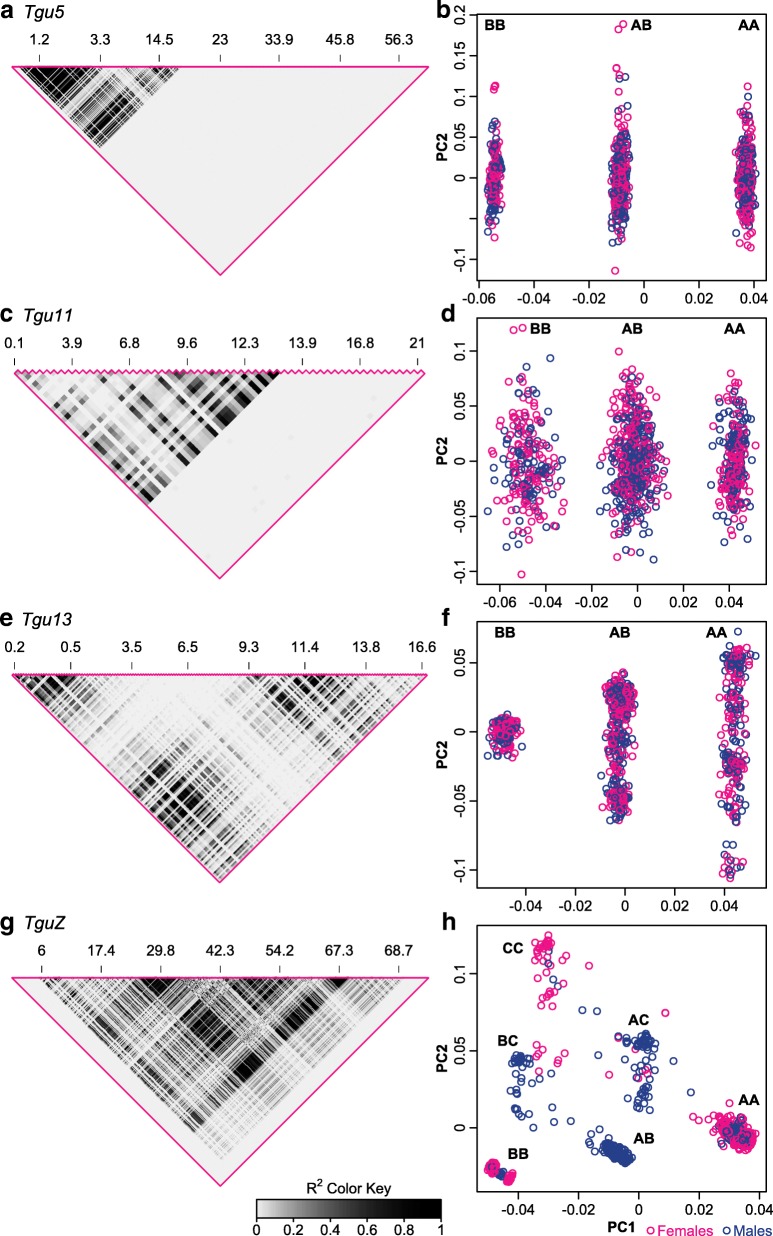
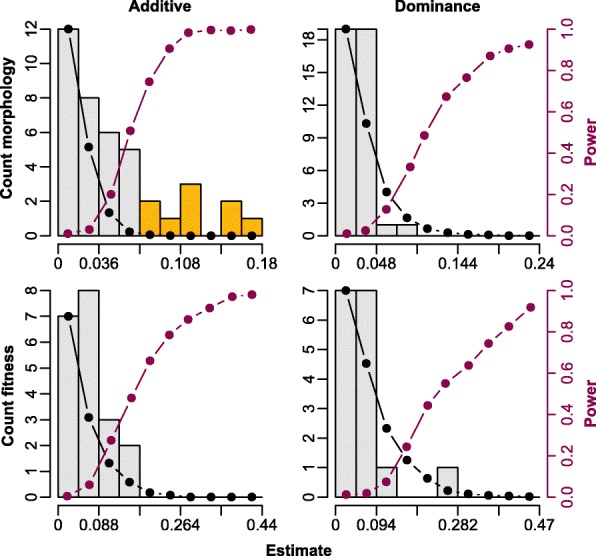
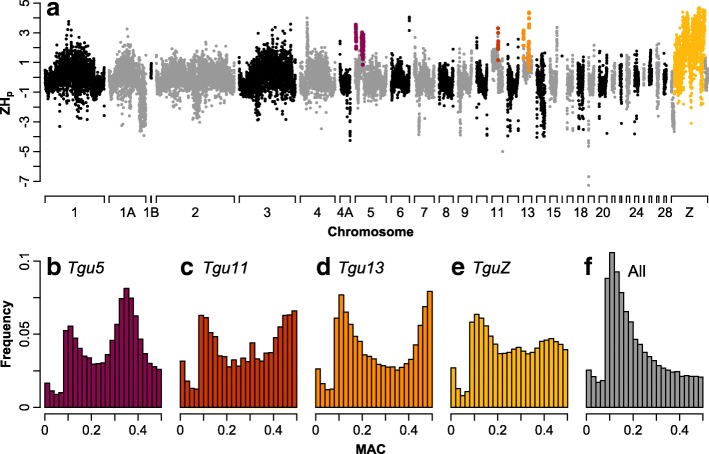
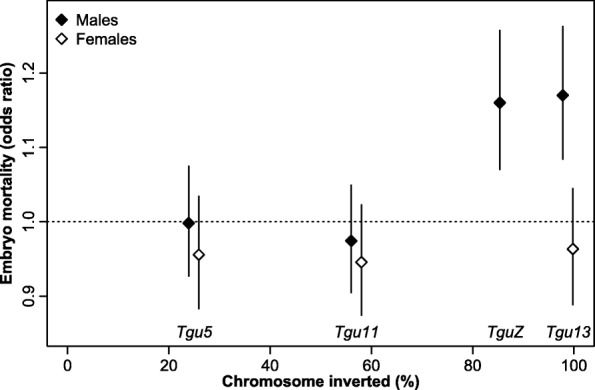
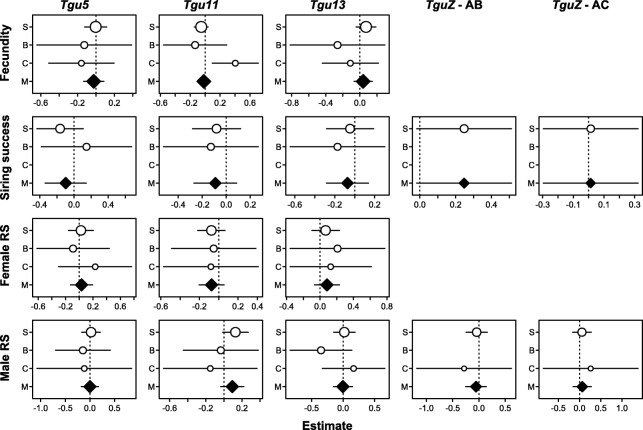
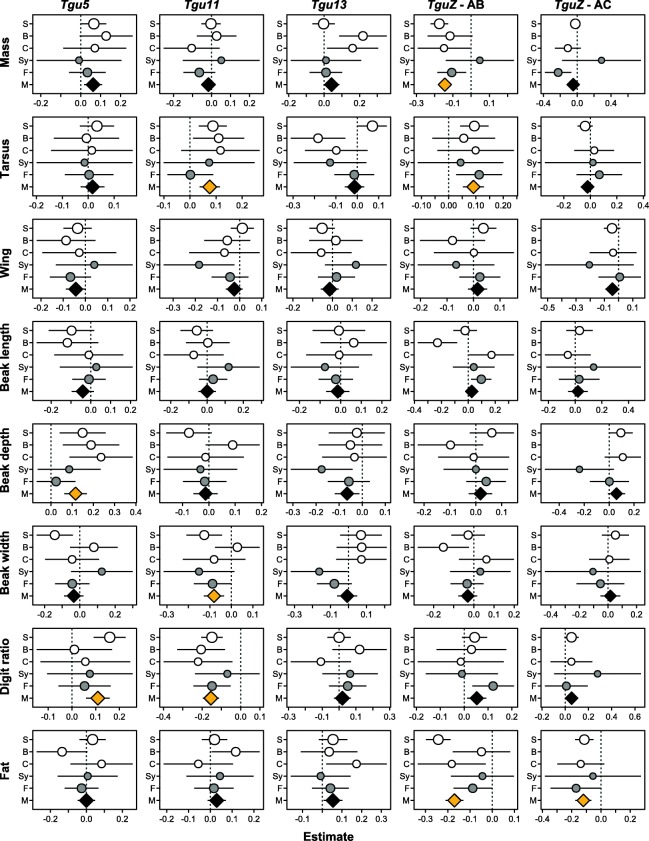
Using whole-genome SNP data, we screened 948 wild zebra finches for polymorphic inversions and describe four large (12-63 Mb) intraspecific inversion polymorphisms with allele frequencies close to 50 %. Using additional data from 5229 birds and 9764 eggs from wild and three captive zebra finch populations, we show that only the largest inversions increase embryo mortality in heterokaryotypic males, with surprisingly small effect sizes. We test for a heterozygote advantage on other fitness components but find no evidence for heterosis for any of the inversions. Yet, we find strong additive effects on several morphological traits.
The mechanism that has carried the derived inversion haplotypes to such high allele frequencies remains elusive. It appears that selection has effectively minimized the costs associated with inversions in zebra finches. The highly skewed distribution of recombination events towards the chromosome ends in zebra finches and other estrildid species may function to minimize crossovers in the inverted regions.
倒位多态性构成了一个进化难题:它们会增加异核型个体的胚胎死亡率,但在某些分类群中仍广泛存在。一些昆虫物种已经进化出降低胚胎死亡成本的机制,但人类却没有。在鸟类中,尽管种内倒位多态性被认为很常见,但尚未有详细分析。在澳大利亚斑胸草雀(Taeniopygia guttata)中,通过细胞遗传学已知两种多态性倒位,我们着手使用基因组工具检测这两种以及可能存在的其他倒位,并研究它们对胚胎死亡率以及其他与适应性相关和形态特征的影响。
利用全基因组SNP数据,我们在948只野生斑胸草雀中筛选多态性倒位,并描述了四个大的(12 - 63兆碱基)种内倒位多态性,其等位基因频率接近50%。利用来自野生和三个圈养斑胸草雀种群的5229只鸟和9764枚卵的额外数据,我们表明只有最大的倒位会增加异核型雄性的胚胎死亡率,但其效应大小惊人地小。我们测试了其他适应性成分上的杂合优势,但未发现任何倒位存在杂种优势的证据。然而,我们发现它们对几个形态特征有强烈的加性效应。
将衍生的倒位单倍型携带到如此高的等位基因频率的机制仍然难以捉摸。似乎选择已经有效地将与斑胸草雀倒位相关的成本最小化。斑胸草雀和其他梅花雀科物种中重组事件高度偏向染色体末端的分布可能起到使倒位区域内的交叉最小化的作用。