International Medical Corps, Los Angeles, CA, USA.
Ministry of Health, Monrovia, Liberia.
Glob Health Sci Pract. 2016 Sep 29;4(3):394-409. doi: 10.9745/GHSP-D-16-00186. Print 2016 Sep 28.
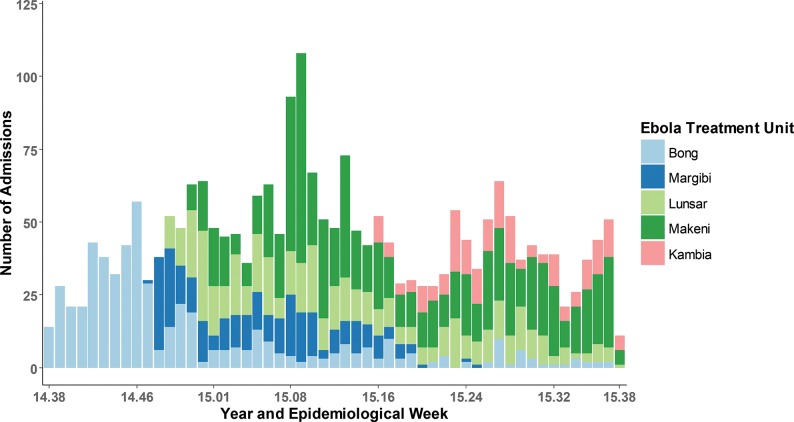
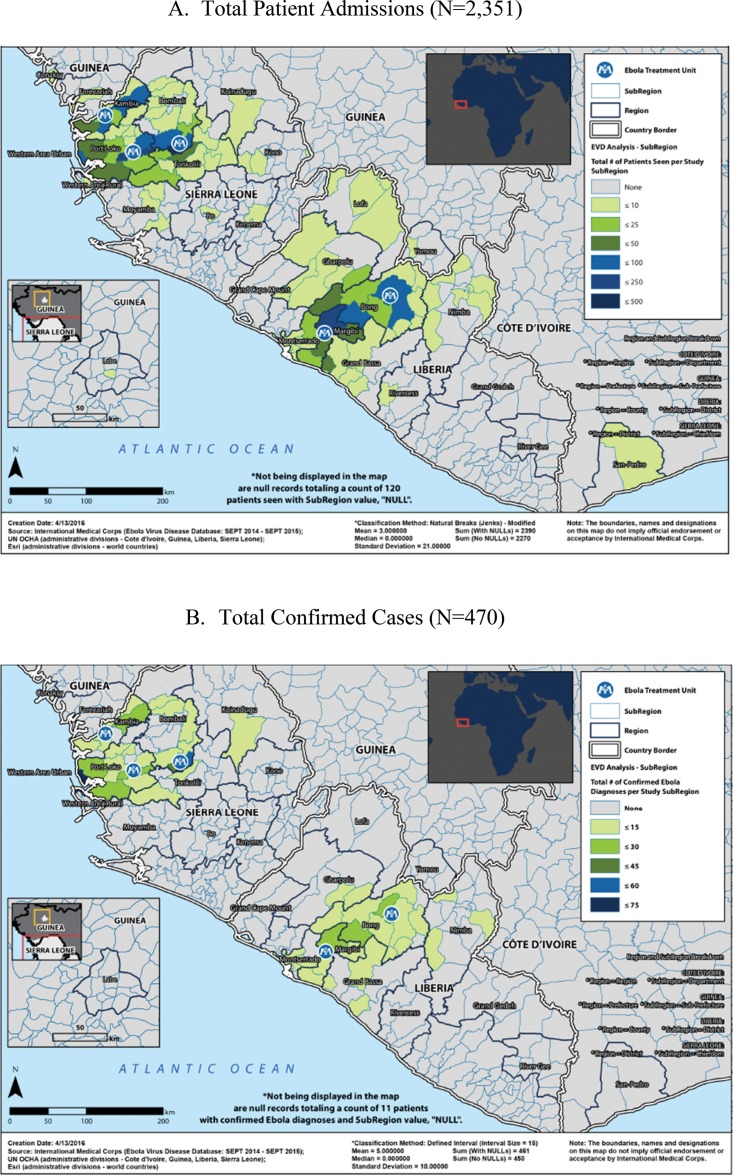
The 2014 outbreak of Ebola virus disease (EVD) in West Africa was the largest ever recorded. Starting in September 2014, International Medical Corps (IMC) managed 5 Ebola treatment units (ETUs) in Liberia and Sierra Leone, which cumulatively cared for about 2,500 patients. We conducted a retrospective cohort study of patient data collected at the 5 ETUs over 1 year of operations.
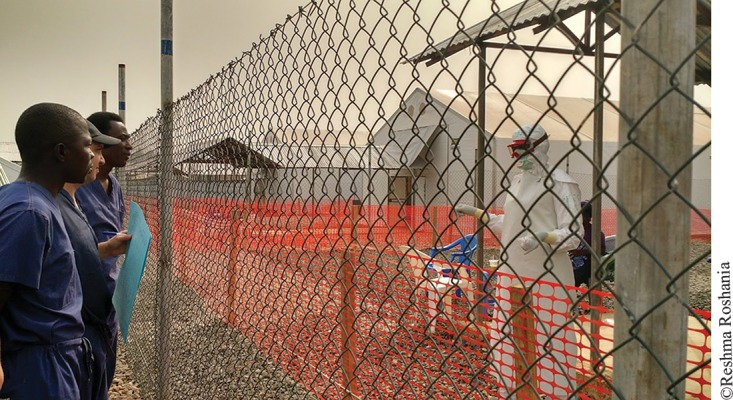
To collect clinical and epidemiological data from the patient care areas, each chart was either manually copied across the fence between the high-risk zone and low-risk zone, imaged across the fence, or imaged in the high-risk zone. Each ETU's data were entered into a separate electronic database, and these were later combined into a single relational database. Lot quality assurance sampling was used to ensure data quality, with reentry of data with high error rates from imaged records.
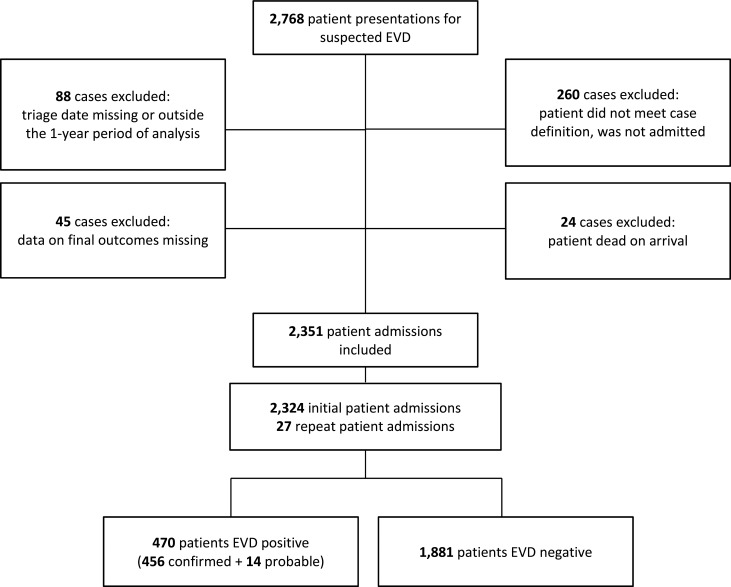
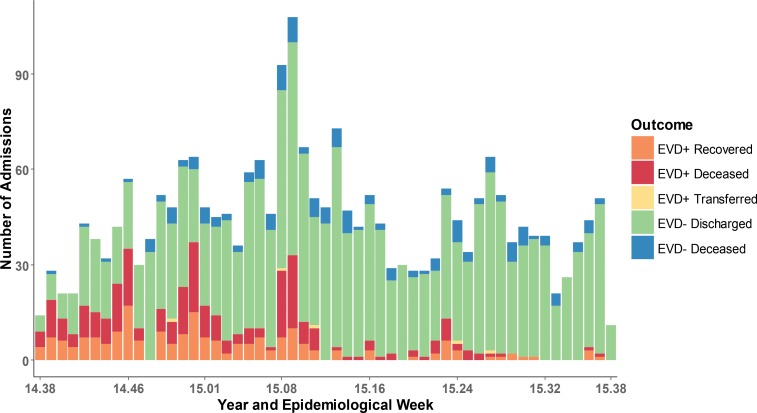
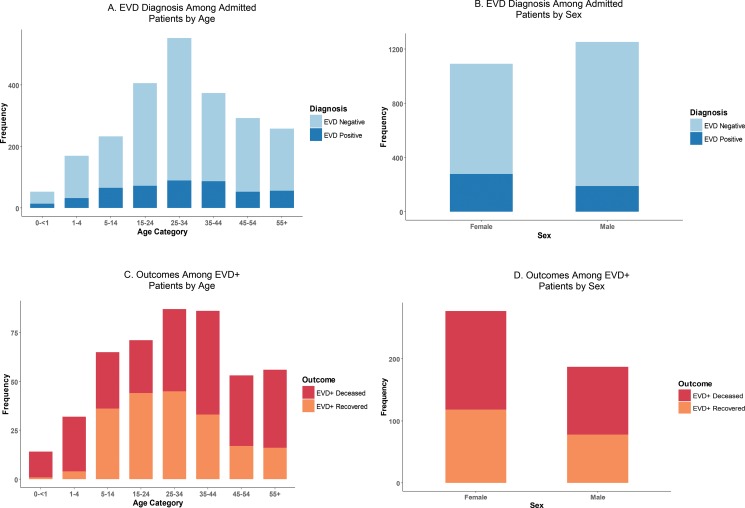
The IMC database contains records on 2,768 patient presentations, including 2,351 patient admissions with full follow-up data. Of the patients admitted, 470 (20.0%) tested positive for EVD, with an overall case fatality ratio (CFR) of 57.0% for EVD-positive patients and 8.1% for EVD-negative patients. Although more men were admitted than women (53.4% vs. 46.6%), a larger proportion of women were diagnosed EVD positive (25.6% vs. 15.2%). Diarrhea, red eyes, contact with an ill person, and funeral attendance were significantly more common in patients with EVD than in those with other diagnoses. Among EVD-positive patients, age was a significant predictor of mortality: the highest CFRs were among children under 5 (89.1%) and adults over 55 (71.4%).
While several prior reports have documented the experiences of individual ETUs, this study is the first to present data from multiple ETUs across 2 countries run by the same organization with similar clinical protocols. Our experience demonstrates that even in austere settings under difficult conditions, it is possible for humanitarian organizations to collect high-quality clinical and epidemiologic data during a major infectious disease outbreak.
2014 年西非的埃博拉病毒病(EVD)爆发是有史以来规模最大的一次。从 2014 年 9 月开始,国际医疗团(IMC)在利比里亚和塞拉利昂管理了 5 个埃博拉治疗单位(ETU),累计收治了约 2500 名患者。我们对这 5 个 ETU 在 1 年运营期间收集的患者数据进行了回顾性队列研究。
为了从患者护理区收集临床和流行病学数据,每个图表要么手动越过高危区和低危区之间的围栏复制,要么在围栏另一边拍照,要么在高危区拍照。每个 ETU 的数据都输入到一个单独的电子数据库中,然后这些数据库被合并到一个单独的关系数据库中。使用批量质量保证抽样来确保数据质量,对于图像记录中错误率较高的数据,会重新输入。
IMC 数据库包含 2768 名患者就诊记录,其中 2351 名患者入院并有完整的随访数据。在入院的患者中,有 470 名(20.0%)埃博拉病毒检测呈阳性,埃博拉病毒阳性患者的总体病死率(CFR)为 57.0%,埃博拉病毒阴性患者的 CFR 为 8.1%。尽管男性入院人数多于女性(53.4%比 46.6%),但女性被诊断为埃博拉病毒阳性的比例更大(25.6%比 15.2%)。腹泻、眼红、与病人接触和参加葬礼在埃博拉病毒患者中明显比在其他诊断患者中更为常见。在埃博拉病毒阳性患者中,年龄是死亡率的一个显著预测因素:年龄在 5 岁以下的儿童(89.1%)和 55 岁以上的成年人(71.4%)的病死率最高。
尽管之前有几份报告记录了个别 ETU 的经验,但这项研究是第一个由同一家组织在 2 个国家运行的多个 ETU 报告数据,这些 ETU 采用了类似的临床方案。我们的经验表明,即使在艰苦条件下的严峻环境中,人道主义组织也有可能在重大传染病爆发期间收集高质量的临床和流行病学数据。