Rodríguez-Vargas José M, Rodríguez María I, Majuelos-Melguizo Jara, García-Diaz Ángel, González-Flores Ariannys, López-Rivas Abelardo, Virág László, Illuzzi Giuditta, Schreiber Valerie, Dantzer Françoise, Oliver F Javier
Instituto López Neyra de Parasitología y Biomedicina, IPBLN, CSIC PTS-Granada, Armilla, Spain.
Centro Andaluz de Biología Molecular y Medicina Regenerativa (CABIMER), Consejo Superior de Investigaciones Científicas, Sevilla, Spain.
Cell Death Differ. 2016 Dec;23(12):2007-2018. doi: 10.1038/cdd.2016.80. Epub 2016 Sep 30.
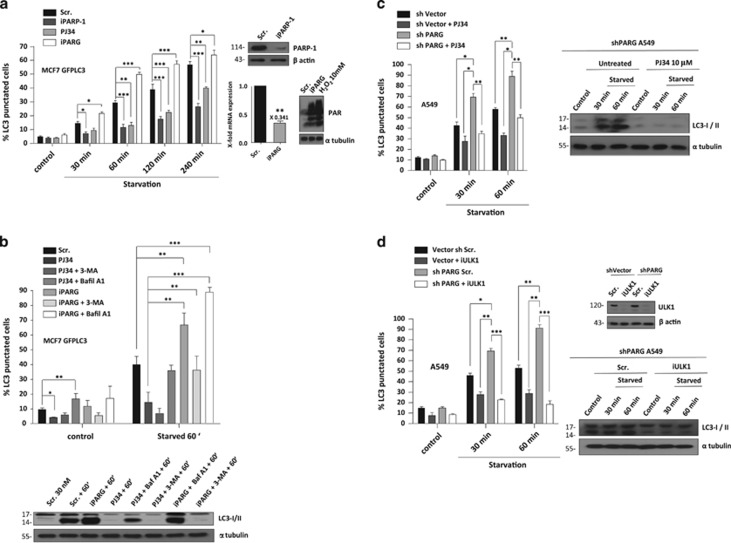
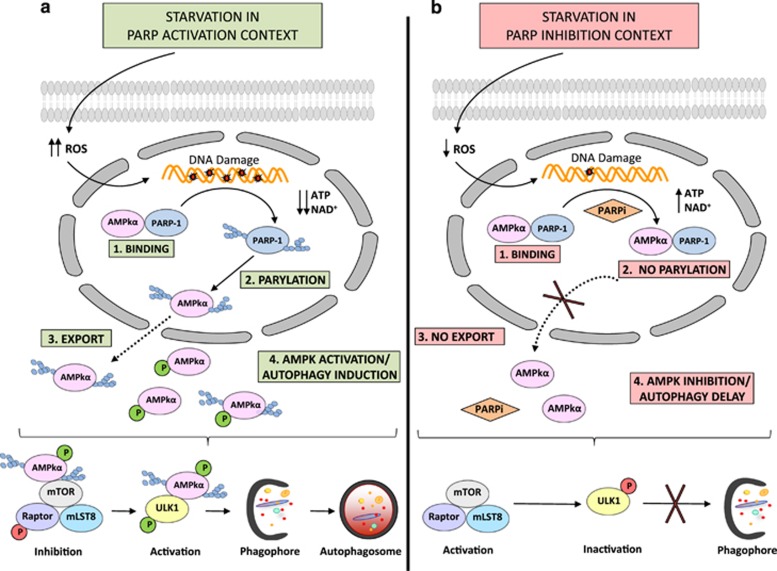
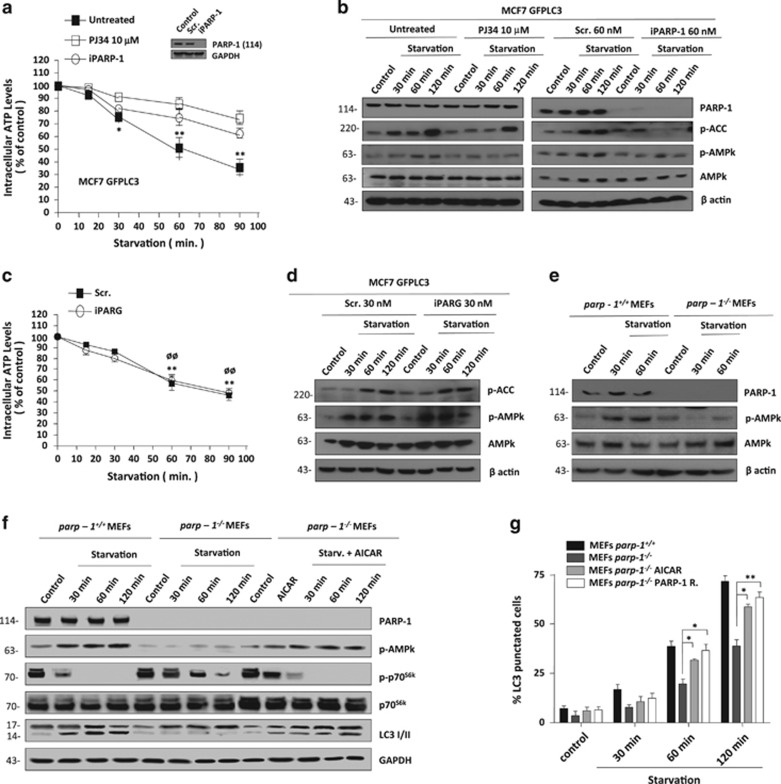
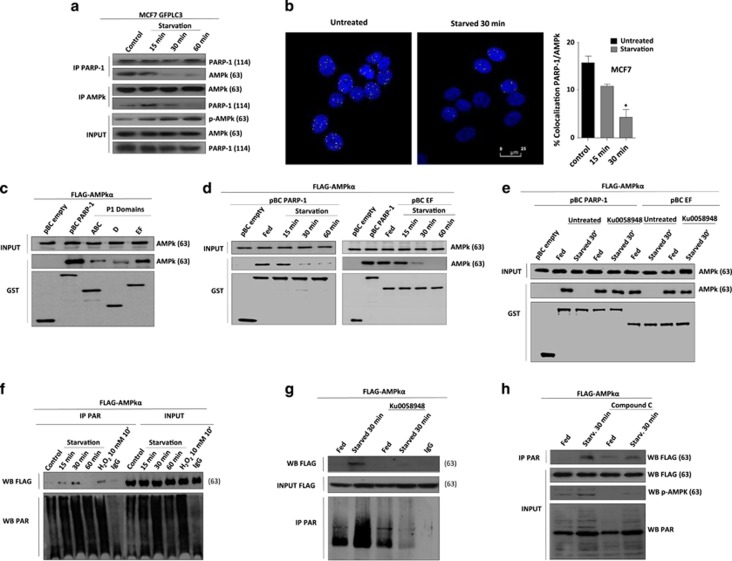
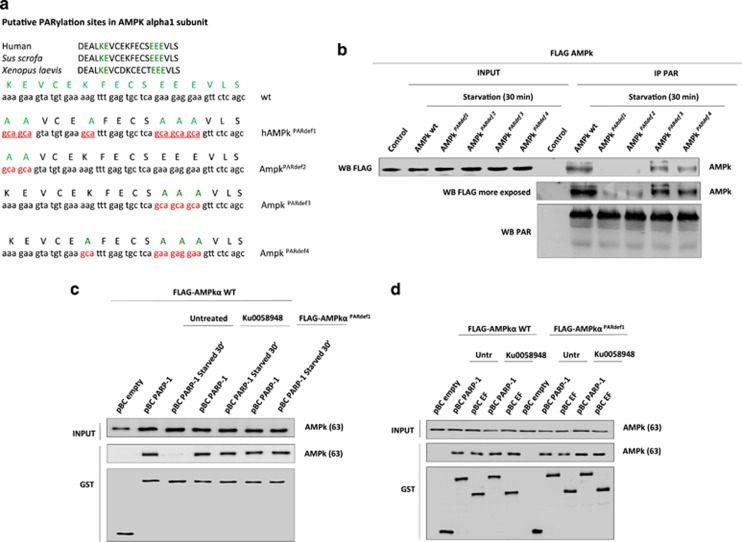
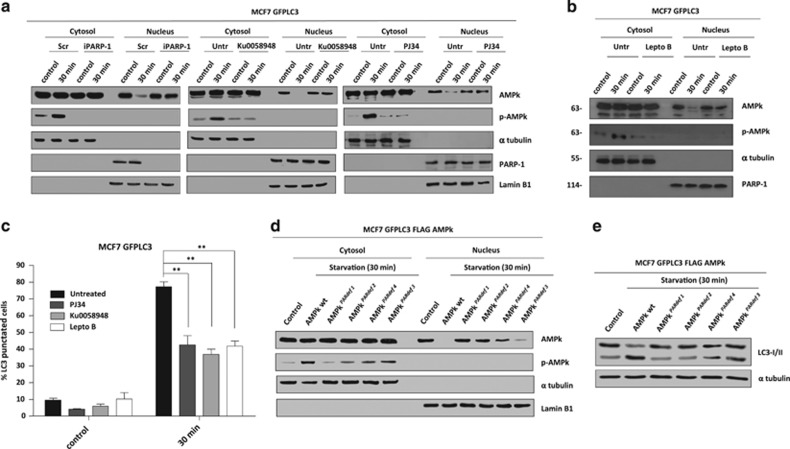
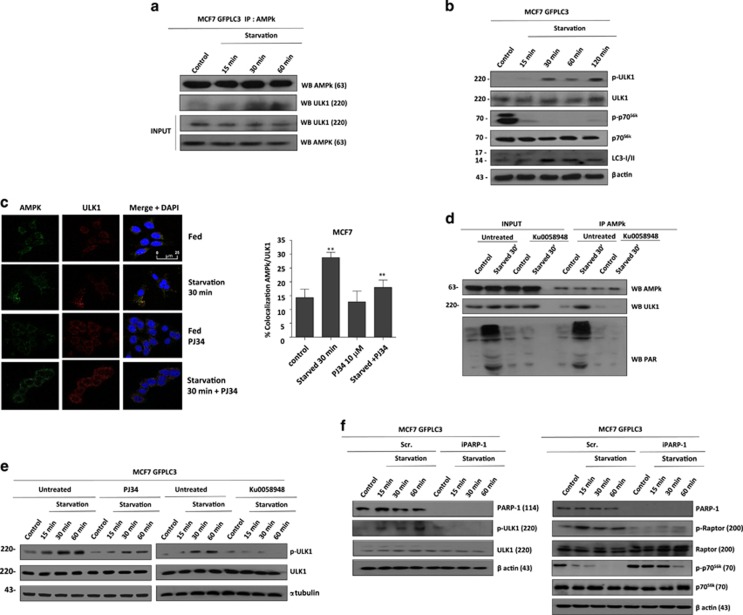
AMPK is a central energy sensor linking extracellular milieu fluctuations with the autophagic machinery. In the current study we uncover that Poly(ADP-ribosyl)ation (PARylation), a post-translational modification (PTM) of proteins, accounts for the spatial and temporal regulation of autophagy by modulating AMPK subcellular localisation and activation. More particularly, we show that the minority AMPK pool needs to be exported to the cytosol in a PARylation-dependent manner for optimal induction of autophagy, including ULK1 phosphorylation and mTORC1 inactivation. PARP-1 forms a molecular complex with AMPK in the nucleus in non-starved cells. In response to nutrient deprivation, PARP-1 catalysed PARylation, induced the dissociation of the PARP-1/AMPK complex and the export of free PARylated nuclear AMPK to the cytoplasm to activate autophagy. PARP inhibition, its silencing or the expression of PARylation-deficient AMPK mutants prevented not only the AMPK nuclear-cytosolic export but also affected the activation of the cytosolic AMPK pool and autophagosome formation. These results demonstrate that PARylation of AMPK is a key early signal to efficiently convey extracellular nutrient perturbations with downstream events needed for the cell to optimize autophagic commitment before autophagosome formation.
AMPK是一种核心能量传感器,将细胞外环境波动与自噬机制联系起来。在当前研究中,我们发现蛋白质的翻译后修饰(PTM)——多聚(ADP-核糖)化(PARylation),通过调节AMPK亚细胞定位和激活来解释自噬的时空调节。更具体地说,我们表明,少数AMPK池需要以PARylation依赖的方式输出到细胞质中,以实现自噬的最佳诱导,包括ULK1磷酸化和mTORC1失活。在非饥饿细胞中,PARP-1在细胞核中与AMPK形成分子复合物。响应营养剥夺,PARP-1催化的PARylation诱导PARP-1/AMPK复合物解离,并使游离的PARylated核AMPK输出到细胞质中以激活自噬。PARP抑制、其沉默或PARylation缺陷型AMPK突变体的表达不仅阻止了AMPK的核-细胞质输出,还影响了细胞质AMPK池的激活和自噬体形成。这些结果表明,AMPK的PARylation是一个关键的早期信号,可有效地将细胞外营养扰动与细胞在自噬体形成前优化自噬承诺所需下游事件传递开来。