Trahtemberg Uriel, Grau Amir, Tabib Adi, Atallah Mizhir, Krispin Alon, Mevorach Dror
The Laboratory for Cellular and Molecular Immunology, Department of Medicine, Hadassah-Hebrew University Medical Center, Jerusalem, Israel.
PLoS One. 2016 Sep 30;11(9):e0162984. doi: 10.1371/journal.pone.0162984. eCollection 2016.
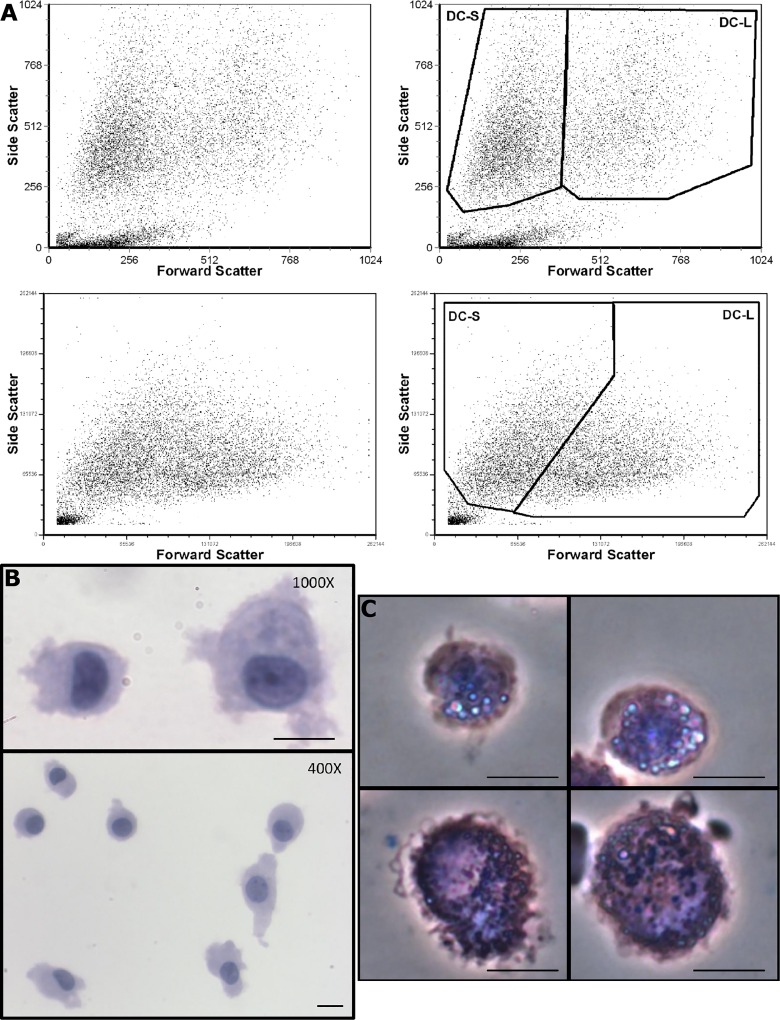
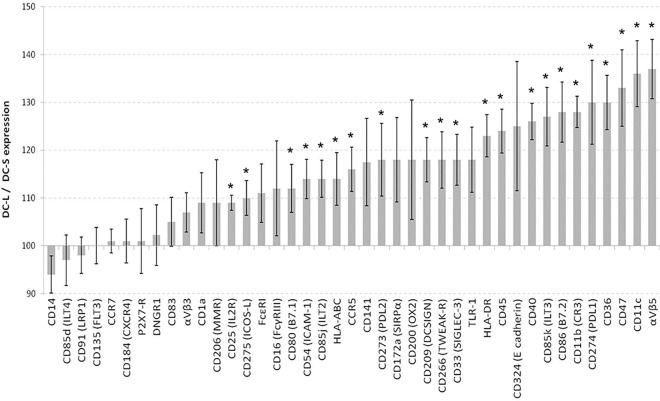
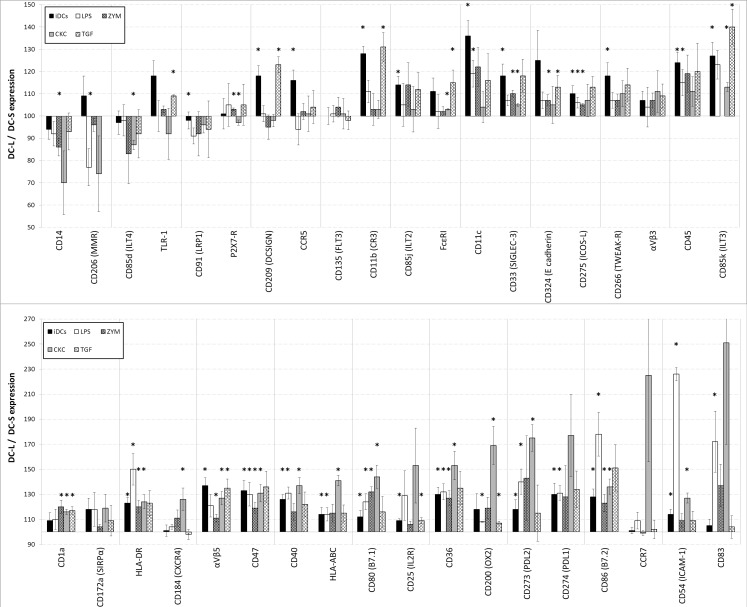
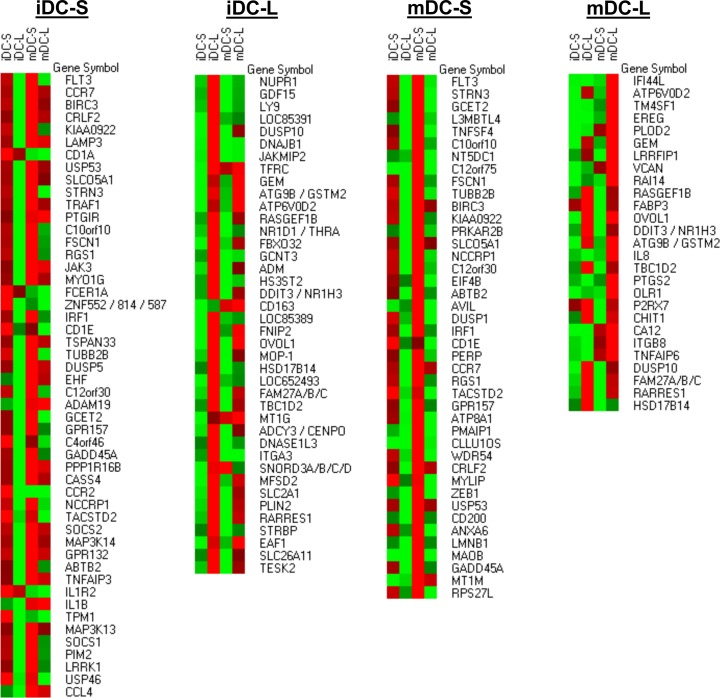
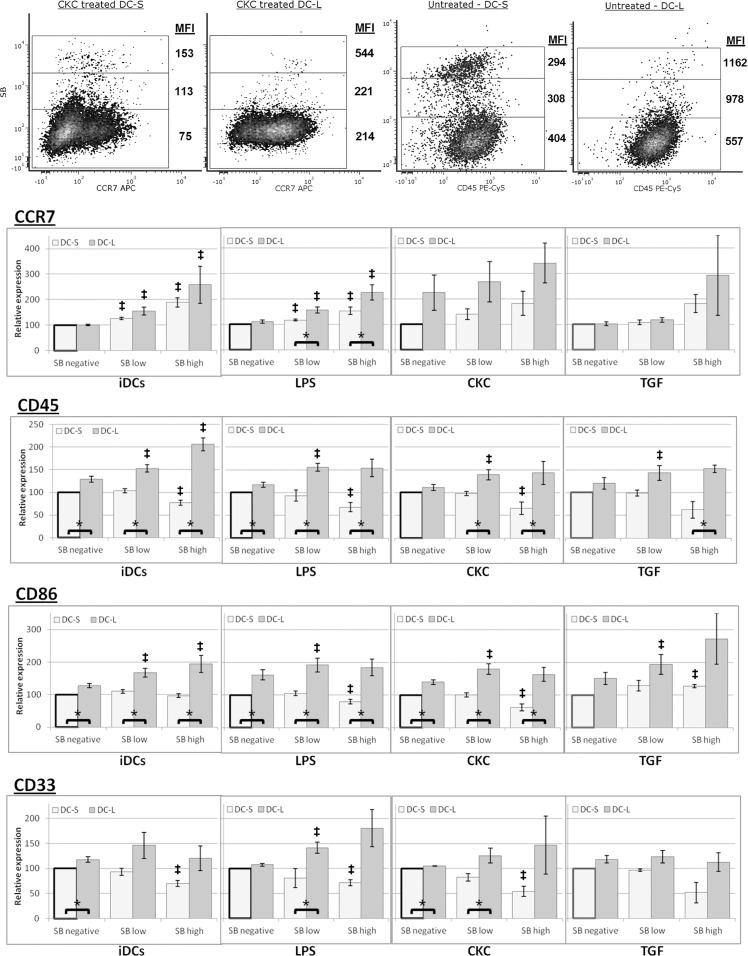
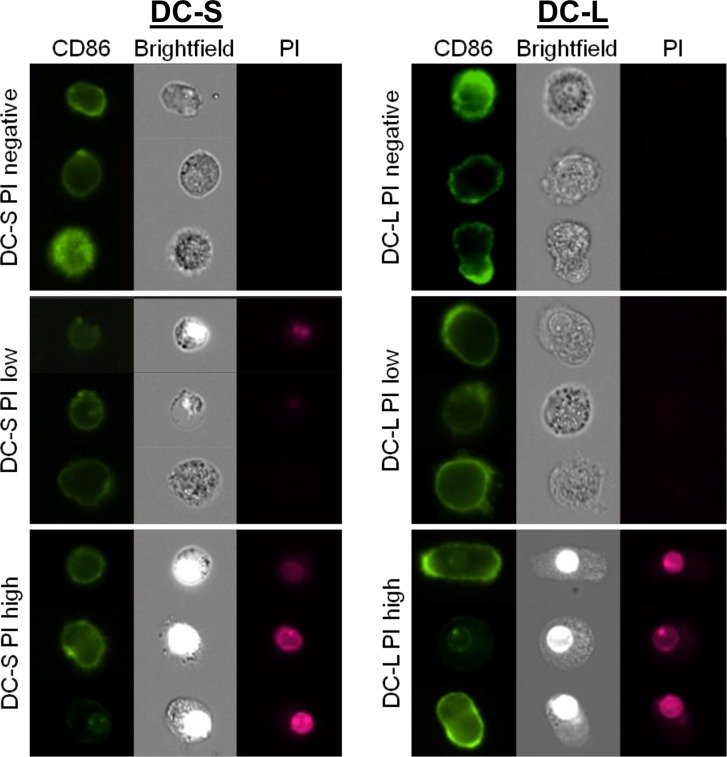
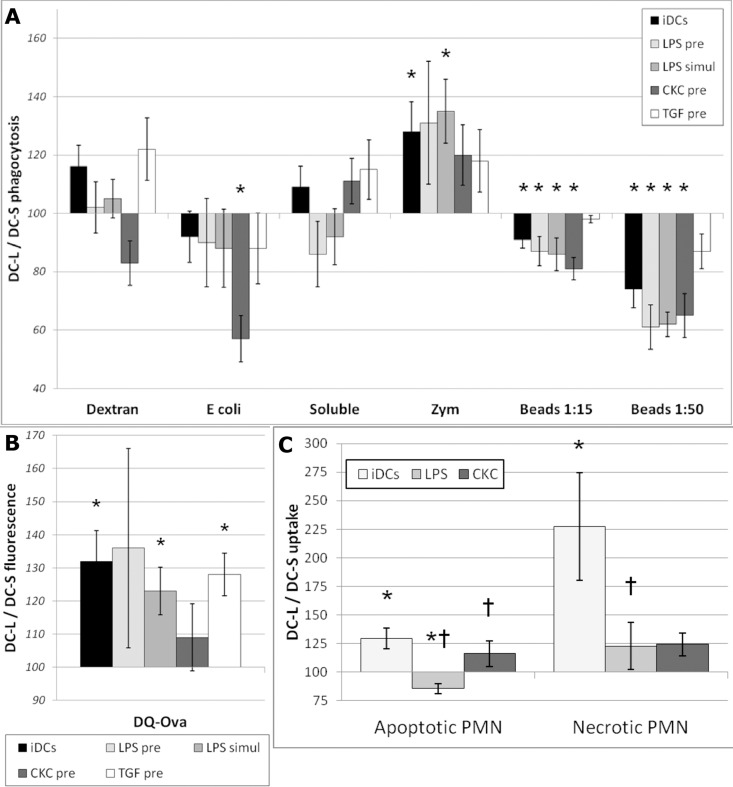
Human monocyte-derived dendritic cells (mdDCs) are versatile cells that are used widely for research and experimental therapies. Although different culture conditions can affect their characteristics, there are no known subpopulations. Since monocytes differentiate into dendritic cells (DCs) in a variety of tissues and contexts, we asked whether they can give rise to different subpopulations. In this work we set out to characterize two human mdDC subpopulations that we identified and termed small (DC-S) and large (DC-L). Morphologically, DC-L are larger, more granular and have a more complex cell membrane. Phenotypically, DC-L show higher expression of a wide panel of surface molecules and stronger responses to maturation stimuli. Transcriptomic analysis confirmed their separate identities and findings were consistent with the phenotypes observed. Although they show similar apoptotic cell uptake, DC-L have different capabilities for phagocytosis, demonstrate better antigen processing, and have significantly better necrotic cell uptake. These subpopulations also have different patterns of cell death, with DC-L presenting an inflammatory, "dangerous" phenotype while DC-S mostly downregulate their surface markers upon cell death. Apoptotic cells induce an immune-suppressed phenotype, which becomes more pronounced among DC-L, especially after the addition of lipopolysaccharide. We propose that these two subpopulations correspond to inflammatory (DC-L) and steady-state (DC-S) DC classes that have been previously described in mice and humans.
人单核细胞衍生的树突状细胞(mdDCs)是用途广泛的细胞,被广泛用于研究和实验性治疗。尽管不同的培养条件会影响其特性,但目前尚无已知的亚群。由于单核细胞在多种组织和环境中分化为树突状细胞(DCs),我们不禁要问,它们是否能产生不同的亚群。在这项研究中,我们着手对我们鉴定并命名为小(DC-S)和大(DC-L)的两个人mdDC亚群进行表征。在形态上,DC-L更大,颗粒更多,细胞膜更复杂。在表型上,DC-L表现出更广泛的表面分子高表达以及对成熟刺激更强的反应。转录组分析证实了它们各自的特性,研究结果与观察到的表型一致。尽管它们在凋亡细胞摄取方面表现相似,但DC-L在吞噬作用方面具有不同的能力,表现出更好的抗原加工能力,并且对坏死细胞的摄取能力明显更强。这些亚群在细胞死亡模式上也有所不同,DC-L呈现出一种炎症性的“危险”表型,而DC-S在细胞死亡时大多会下调其表面标志物。凋亡细胞会诱导一种免疫抑制表型,在DC-L中这种表型更为明显,尤其是在添加脂多糖之后。我们认为这两个亚群分别对应于先前在小鼠和人类中描述过的炎症性(DC-L)和稳态(DC-S)DC类别。