Sun Chuntao, Xue Lihua, Zhu Ziyang, Zhang Fan, Yang Ruixue, Yuan Xuewen, Jia Zhanjun, Liu Qianqi
Department of Endocrinology, Nanjing Children's Hospital Affiliated to Nanjing Medical University, Nanjing 210008, China; Department of Child Health Care, Huaian Maternity and Child Healthcare Hospital Affiliated to Yangzhou University Medical College, Huaian 223002, China.
The Fourth School of Clinical Medicine Nanjing Medical University, Nanjing 210029, China.
Mediators Inflamm. 2016;2016:9275106. doi: 10.1155/2016/9275106. Epub 2016 Sep 6.
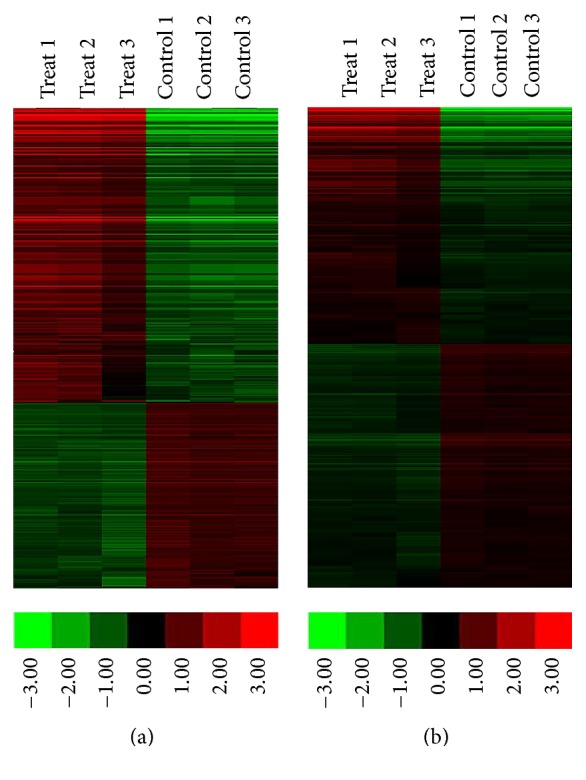
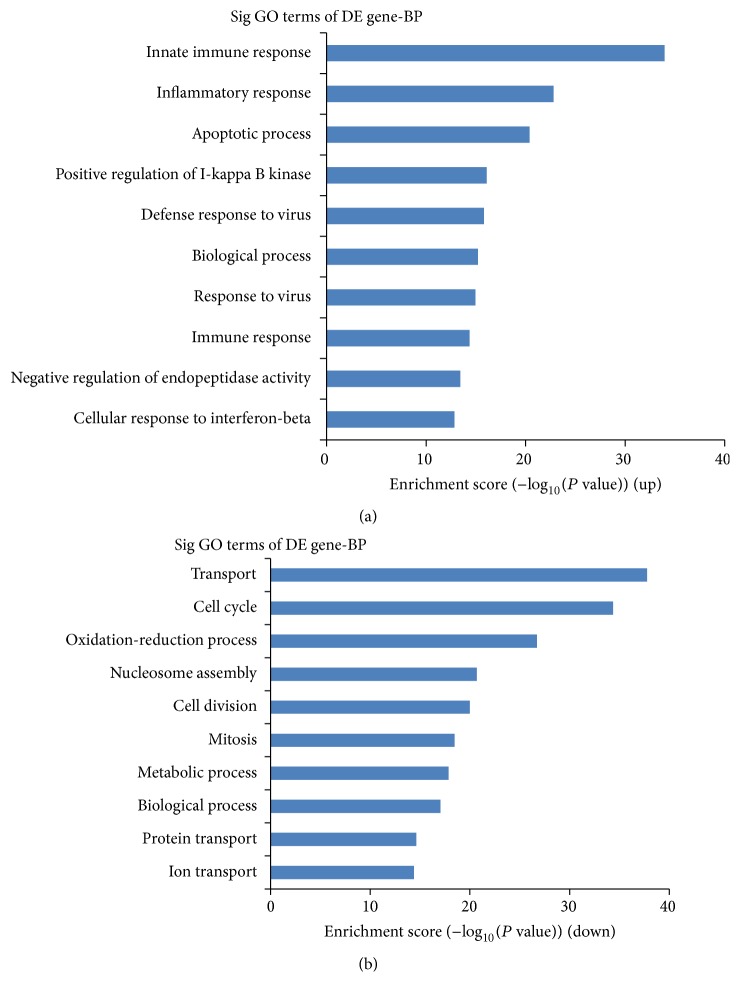
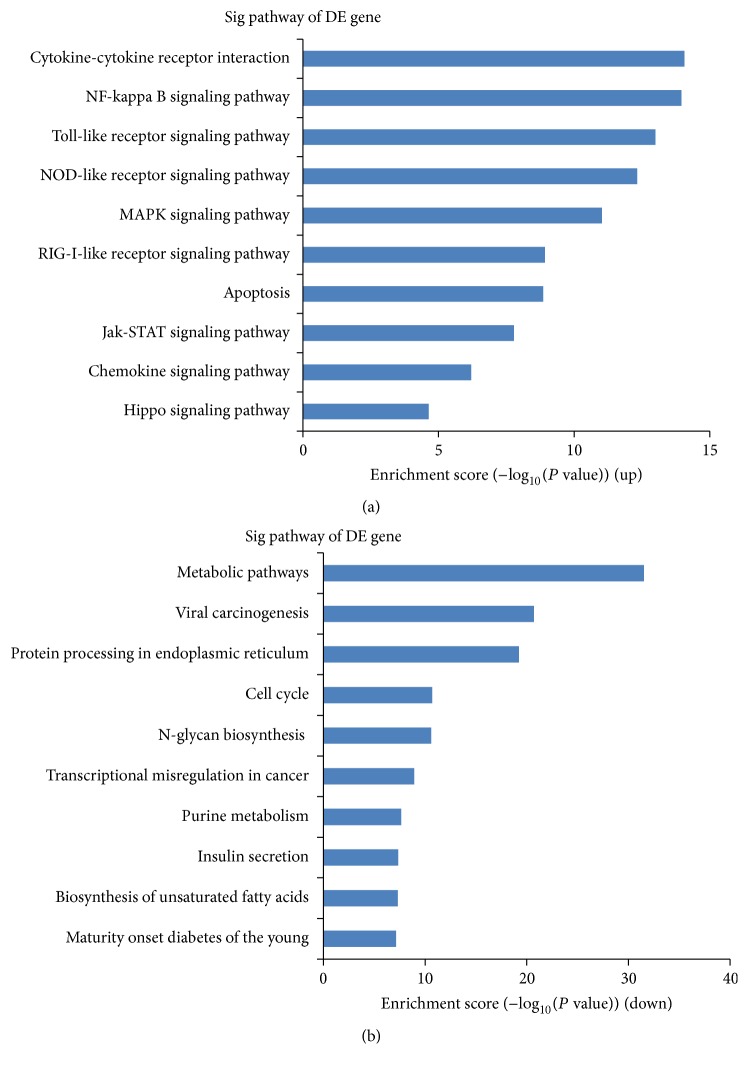
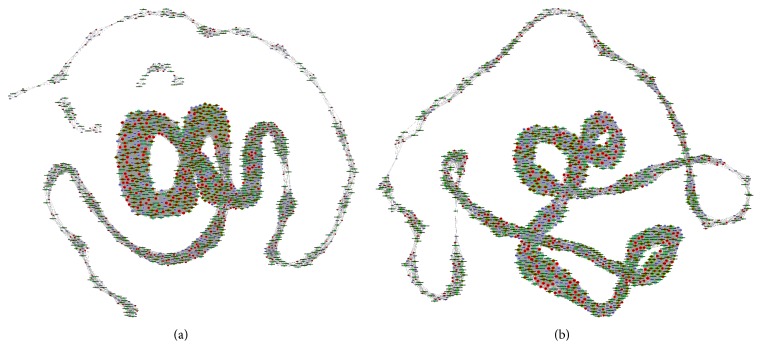
Type 1 diabetes mellitus (T1DM) is an organ-specific autoimmune disease characterized by chronic and progressive apoptotic destruction of pancreatic beta cells. During the initial phases of T1DM, cytokines and other inflammatory mediators released by immune cells progressively infiltrate islet cells, induce alterations in gene expression, provoke functional impairment, and ultimately lead to apoptosis. Long noncoding RNAs (lncRNAs) are a new important class of pervasive genes that have a variety of biological functions and play key roles in many diseases. However, whether they have a function in cytokine-induced beta cell apoptosis is still uncertain. In this study, lncRNA microarray technology was used to identify the differently expressed lncRNAs and mRNAs in MIN6 cells exposed to proinflammatory cytokines. Four hundred forty-four upregulated and 279 downregulated lncRNAs were detected with a set filter fold-change ≧2.0. To elucidate the potential functions of these lncRNAs, Gene Ontology (GO) and pathway analyses were used to evaluate the potential functions of differentially expressed lncRNAs. Additionally, a lncRNA-mRNA coexpression network was constructed to predict the interactions between the most strikingly regulated lncRNAs and mRNAs. This study may be utilized as a background or reference resource for future functional studies on lncRNAs related to the diagnosis and development of new therapies for T1DM.
1型糖尿病(T1DM)是一种器官特异性自身免疫性疾病,其特征是胰腺β细胞发生慢性进行性凋亡破坏。在T1DM的初始阶段,免疫细胞释放的细胞因子和其他炎症介质逐渐浸润胰岛细胞,诱导基因表达改变,引发功能障碍,并最终导致细胞凋亡。长链非编码RNA(lncRNA)是一类新的重要的普遍存在的基因,具有多种生物学功能,在许多疾病中起关键作用。然而,它们是否在细胞因子诱导的β细胞凋亡中发挥作用仍不确定。在本研究中,使用lncRNA微阵列技术鉴定暴露于促炎细胞因子的MIN6细胞中差异表达的lncRNA和mRNA。设置过滤倍数变化≧2.0,检测到444个上调的lncRNA和279个下调的lncRNA。为了阐明这些lncRNA的潜在功能,使用基因本体(GO)和通路分析来评估差异表达lncRNA的潜在功能。此外,构建了lncRNA-mRNA共表达网络,以预测调控最为显著的lncRNA和mRNA之间 的相互作用。本研究可作为未来关于与T1DM诊断和新疗法开发相关的lncRNA功能研究的背景或参考资源。