Zhu Xiao, Liu Yihan, Cui Jia, Lv Jianyi, Li Changlong, Lu Jing, Huo Xueyun, Dou Jingtao, Bai Zhigang, Chen Zhenwen, Du Xiaoyan
Department of medical genetics and biological development, School of Basic Medical Sciences, Capital Medical University, No.10 Xitoutiao, Youanmen, Fengtai District, Beijing, 100069, China.
Institute of Acupuncture and Moxibustion, China Academy of Chinese Medical Sciences, Beijing, 100700, China.
Cell Death Discov. 2022 May 4;8(1):245. doi: 10.1038/s41420-022-01019-z.
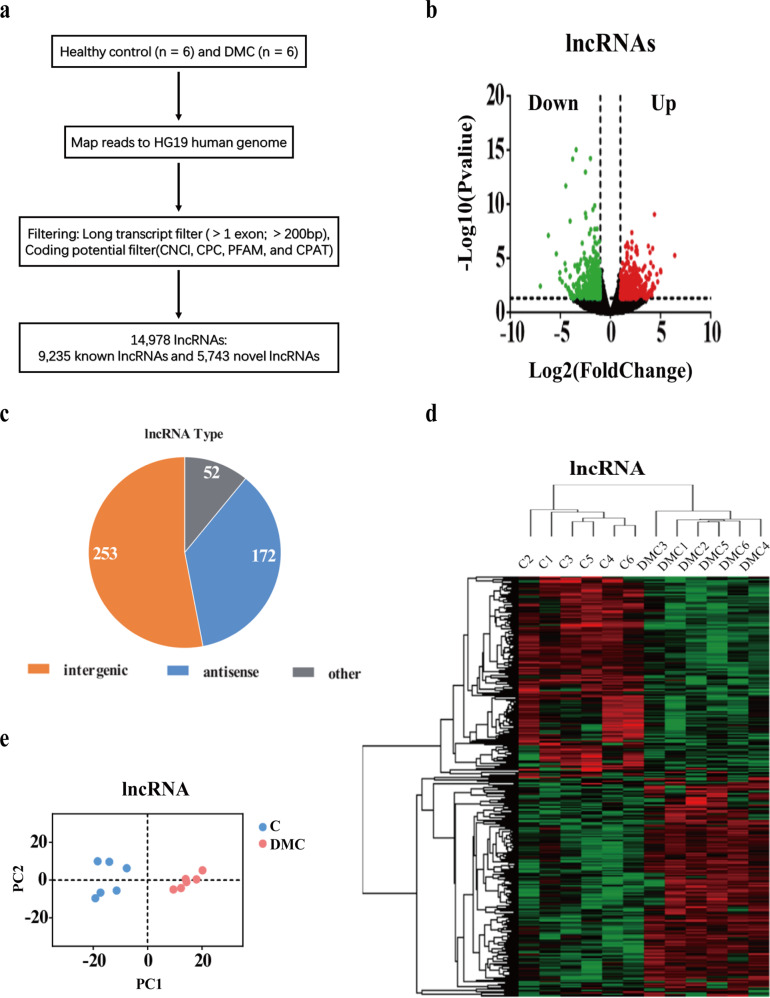
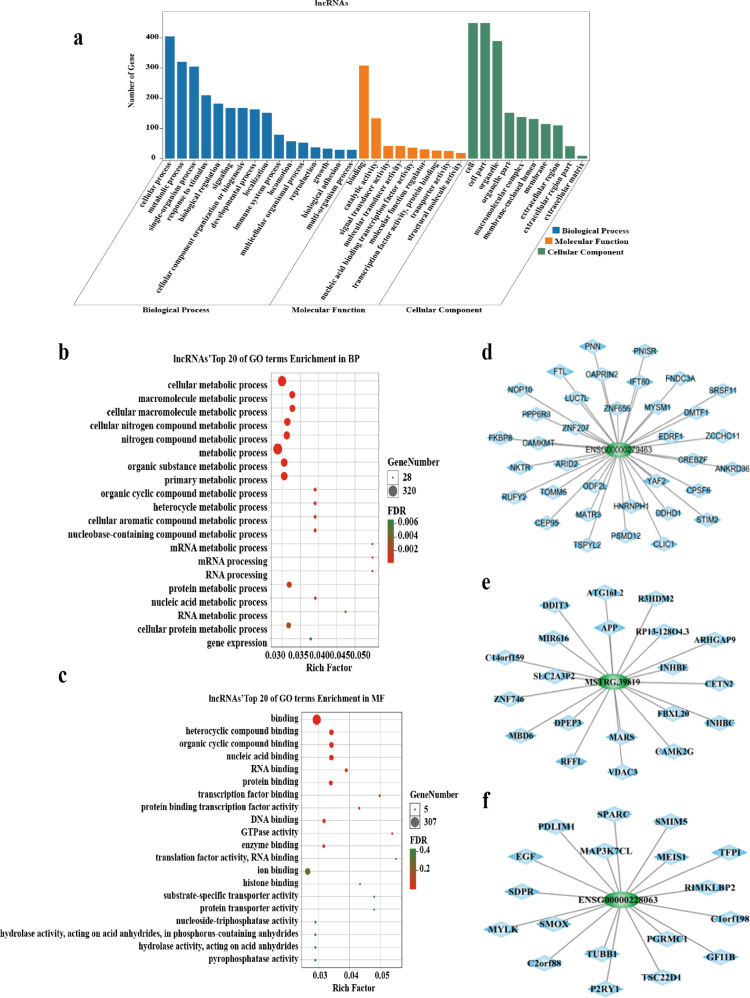
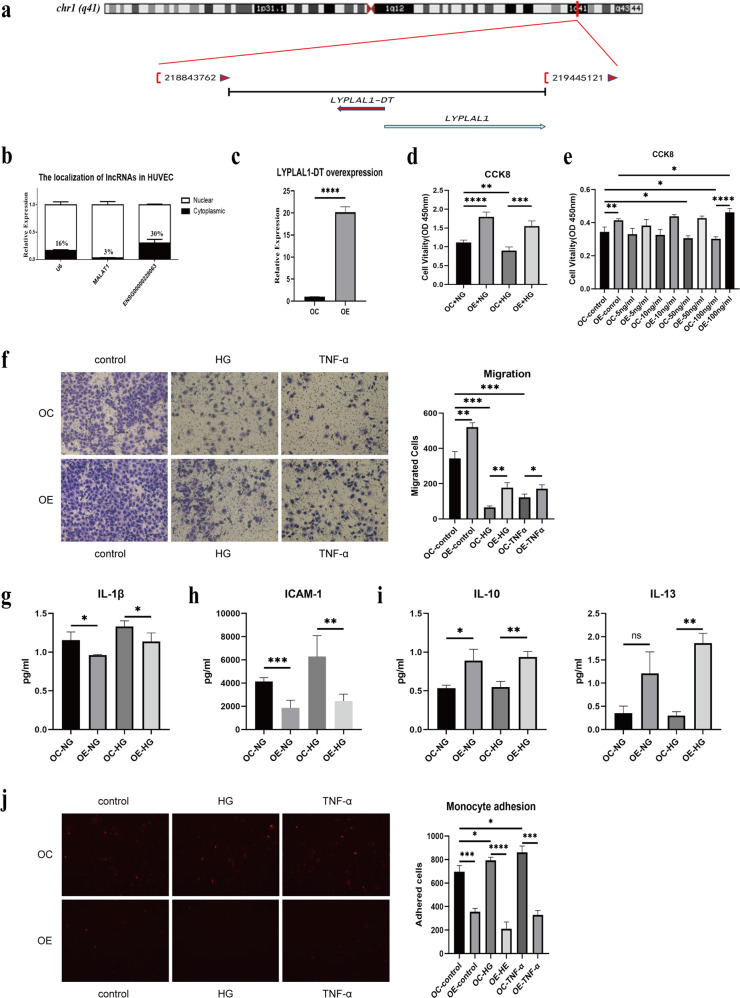
Long noncoding RNAs (lncRNAs) are involved in diabetes related diseases. However, the role of lncRNAs in the pathogenesis of type 2 diabetes with macrovascular complication (DMC) has seldomly been recognized. This study screened lncRNA profiles of leukocytes from DMC patients and explored protective role of lncRNA LYPLAL1-DT in endothelial cells (EC) under high glucose (HG) and inflammatory conditions (IS). Between DMC and healthy controls, 477 differential expression lncRNAs (DE-lncRNAs) were identified. The enrichment and pathway analysis showed that most of the DE-lncRNAs belonged to inflammatory, metabolic, and vascular diseases. A total of 12 lncRNAs was validated as significant DE-lncRNAs in expanding cohorts. Furthermore, these DE-lncRNAs were shown to be significantly related to hypoxia, HG, and IS in EC, especially lncRNA LYPLAL1-DT. LYPLAL1-DT overexpression results in the promotion of the proliferation, and migration of EC, as well as an elevation of autophagy. Overexpressed LYPLAL1-DT reduces the adhesion of monocytes to EC, boosts anti-inflammation, and suppresses inflammatory molecules secreted in the medium. Mechanistically, LYPLAL1-DT acts as competing endogenous RNA (ceRNA) by downregulating miR-204-5p, therefore enhancing SIRT1 and protecting EC autophagy function; thus, alleviating apoptosis. Finally, exosome sequencing revealed LYPLAL1-DT expression was 4 times lower in DMC cells than in healthy samples. In general, we identified LYPLAL1-DT having protective effects on EC as ceRNA mediated through the miR-204-5p/SIRT1 pathway. Therefore, it inhibits the autophagy of EC as well as modulating systemic inflammation. This approach could be regarded as a new potential therapeutic target in DMC.
长链非编码RNA(lncRNAs)参与糖尿病相关疾病。然而,lncRNAs在2型糖尿病合并大血管并发症(DMC)发病机制中的作用鲜为人知。本研究筛选了DMC患者白细胞的lncRNA谱,并探讨了lncRNA LYPLAL1-DT在高糖(HG)和炎症条件(IS)下对内皮细胞(EC)的保护作用。在DMC患者和健康对照之间,鉴定出477个差异表达lncRNAs(DE-lncRNAs)。富集和通路分析表明,大多数DE-lncRNAs属于炎症、代谢和血管疾病。在扩大队列中,共有12个lncRNAs被验证为显著的DE-lncRNAs。此外,这些DE-lncRNAs在EC中与缺氧、HG和IS显著相关,尤其是lncRNA LYPLAL1-DT。LYPLAL1-DT过表达促进EC的增殖、迁移,并提高自噬水平。过表达的LYPLAL1-DT减少单核细胞与EC的粘附,增强抗炎作用,并抑制培养基中分泌的炎症分子。机制上,LYPLAL1-DT作为竞争性内源RNA(ceRNA)下调miR-204-5p,从而增强SIRT1并保护EC自噬功能,减轻细胞凋亡。最后,外泌体测序显示DMC细胞中LYPLAL1-DT表达比健康样本低4倍。总体而言,我们鉴定出LYPLAL1-DT作为通过miR-204-5p/SIRT1途径介导的ceRNA对EC具有保护作用。因此,它抑制EC的自噬并调节全身炎症。这种方法可被视为DMC的一个新的潜在治疗靶点。