Huang Ao, Zhang Xin, Zhou Shao-Lai, Cao Ya, Huang Xiao-Wu, Fan Jia, Yang Xin-Rong, Zhou Jian
Liver Surgery Department, Liver Cancer Institute, Zhongshan Hospital, Fudan University.
Cancer Research Institute, Central South University.
J Cancer. 2016 Sep 13;7(13):1907-1914. doi: 10.7150/jca.15823. eCollection 2016.
Circulating tumor DNA (ctDNA) is increasingly recognized as liquid biopsy to profile tumor genome. Droplet digital PCR (ddPCR) is a highly sensitive and easily operable platform for mutant detection. Here, we tried to detect ctDNA in hepatocellular carcinoma (HCC) patients using ddPCR.
Studies sequencing the genome of HCCs and COSMIC (Catalogue of Somatic Mutations in Cancer) database were reviewed to identify hotspot mutations. Circulating cell-free DNAs (cfDNAs) extracted from 1 ml preoperative plasma sample were analyzed to detect circulating mutants using ddPCR. The DNAs from matched tumor and adjacent liver tissues or peripheral blood mononuclear cells (PBMCs) were sequenced to identify the origin of circulating mutants.
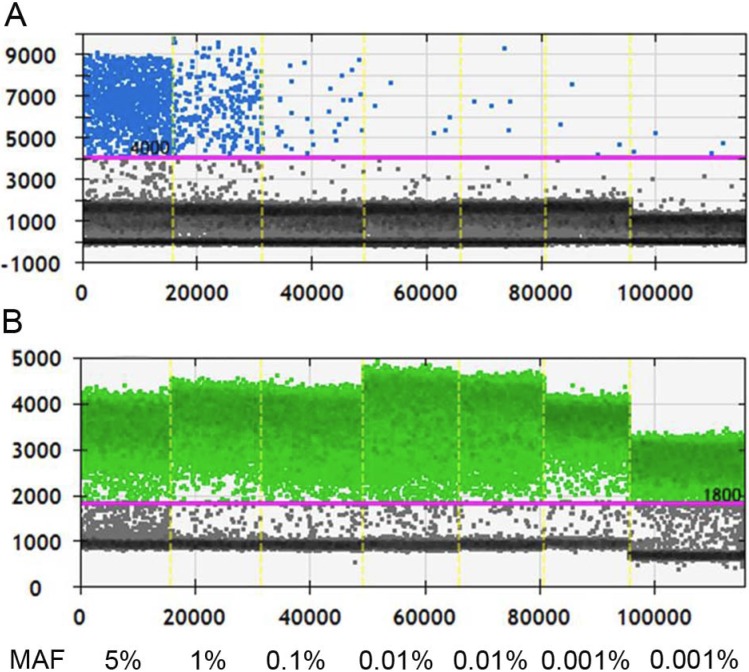
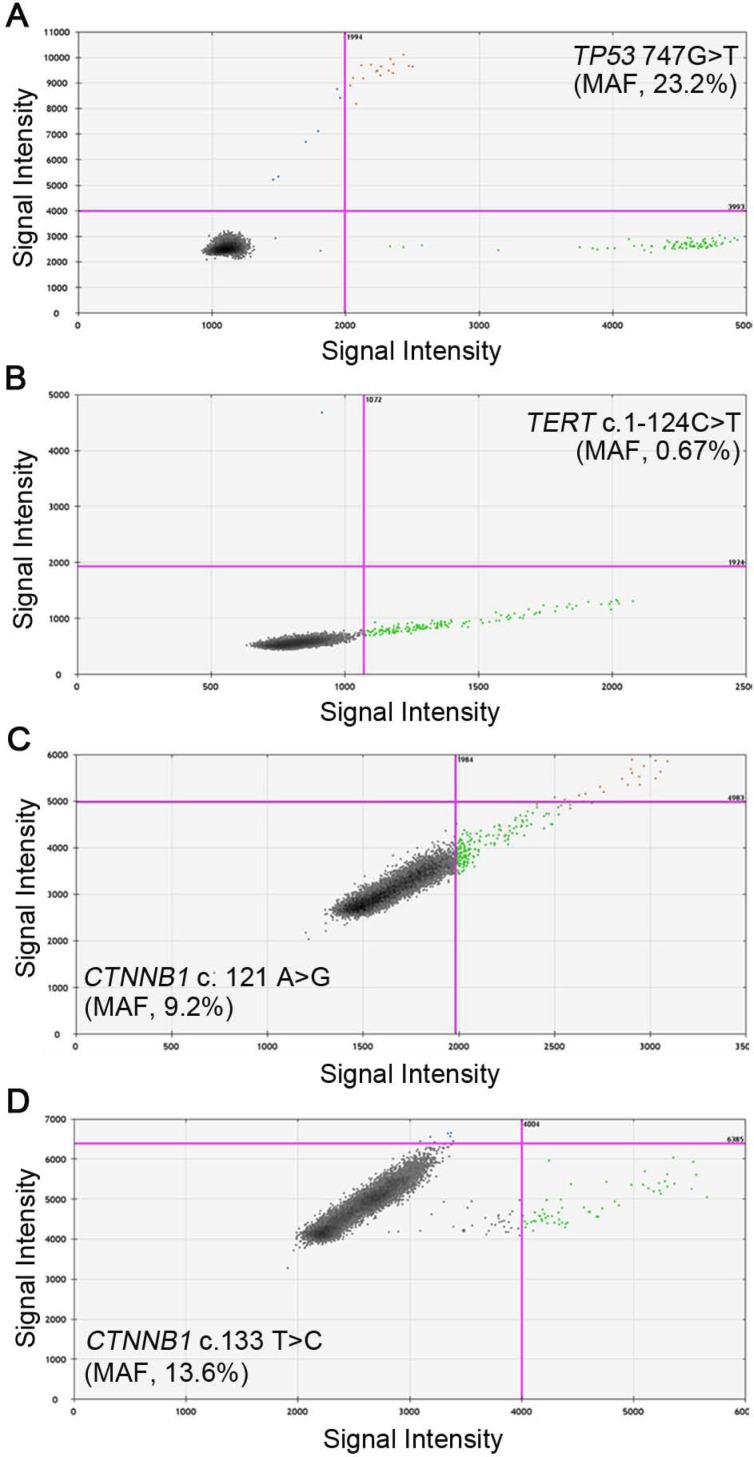
Forty-eight HCC patients were enrolled and four gene loci, (c.747G>T), (c.121A>G, c.133T>C), and (c.1-124C>T) were chosen as targets for ddPCR assay. Serial dilution demonstrated the detection limit of ddPCR to be 0.01%. Twenty-seven patients (56.3%, 27/48) were found to have at least one kind of circulating mutants, with the mutant allele frequency ranging from 0.33% to 23.7%. Six patients (22.2%, 6/27) also had matched mutants in tumor tissues while none of the mutants were detected in adjacent liver tissues or PBMCs in all patients, which excluded the nonneoplastic origin of these circulating mutants and qualified them as ctDNA.
ctDNA could be readily detected in HCC patients by targeting hotspot mutations using ddPCR and might reflect intratumoral heterogeneity. ctDNA detecting may serve as a promising liquid biopsy in HCC management.
循环肿瘤DNA(ctDNA)作为一种用于分析肿瘤基因组的液体活检方法,越来越受到认可。液滴数字PCR(ddPCR)是一种用于突变检测的高灵敏度且易于操作的平台。在此,我们尝试使用ddPCR检测肝细胞癌(HCC)患者的ctDNA。
回顾对HCC基因组进行测序的研究以及癌症体细胞突变目录(COSMIC)数据库,以鉴定热点突变。对从1 ml术前血浆样本中提取的循环游离DNA(cfDNA)进行分析,使用ddPCR检测循环突变体。对匹配的肿瘤组织、癌旁肝组织或外周血单个核细胞(PBMC)的DNA进行测序,以确定循环突变体的来源。
纳入48例HCC患者,选择四个基因位点(c.747G>T)、(c.121A>G,c.133T>C)和(c.1-124C>T)作为ddPCR检测的靶点。系列稀释显示ddPCR的检测限为0.01%。发现27例患者(56.3%,27/48)至少有一种循环突变体,突变等位基因频率范围为0.33%至23.7%。6例患者(22.2%,6/27)在肿瘤组织中也有匹配的突变体,而所有患者的癌旁肝组织或PBMC中均未检测到突变体,这排除了这些循环突变体的非肿瘤来源,并将它们鉴定为ctDNA。
通过使用ddPCR靶向热点突变,可在HCC患者中轻松检测到ctDNA,并且ctDNA可能反映肿瘤内的异质性。ctDNA检测可能成为HCC管理中一种有前景的液体活检方法。