Ayzenshtat Inbal, Jackson Jesse, Yuste Rafael
NeuroTechnology Center, Department of Biological Sciences, Columbia University , New York, New York 10027.
eNeuro. 2016 Sep 28;3(5). doi: 10.1523/ENEURO.0217-16.2016. eCollection 2016 Sep-Oct.
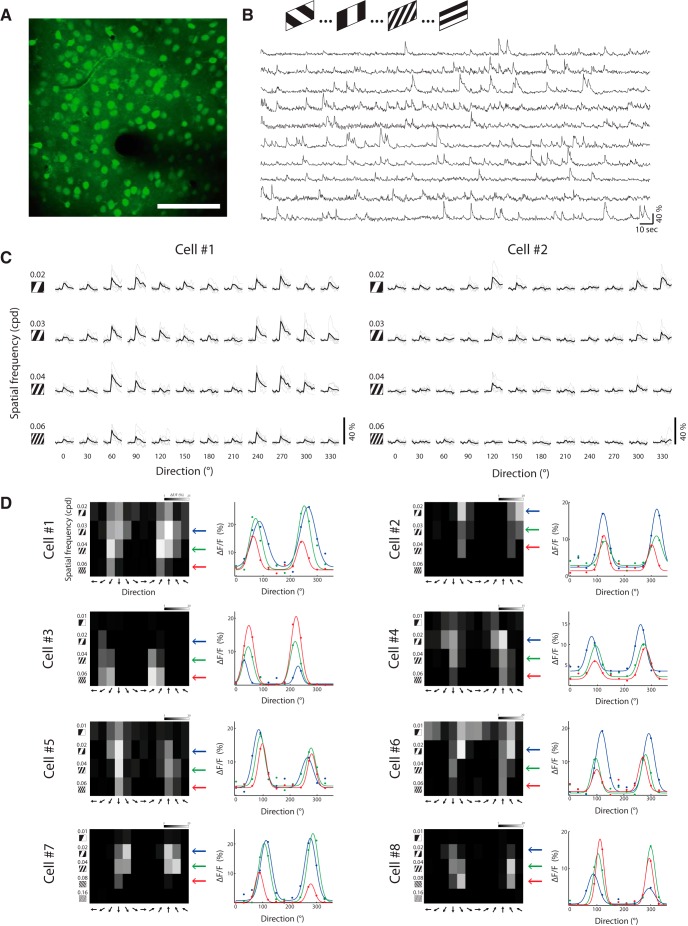
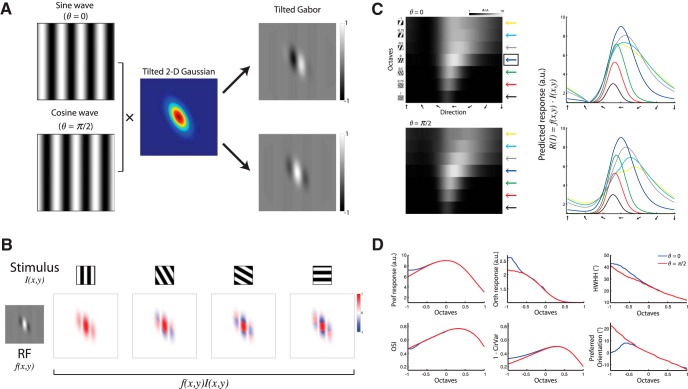
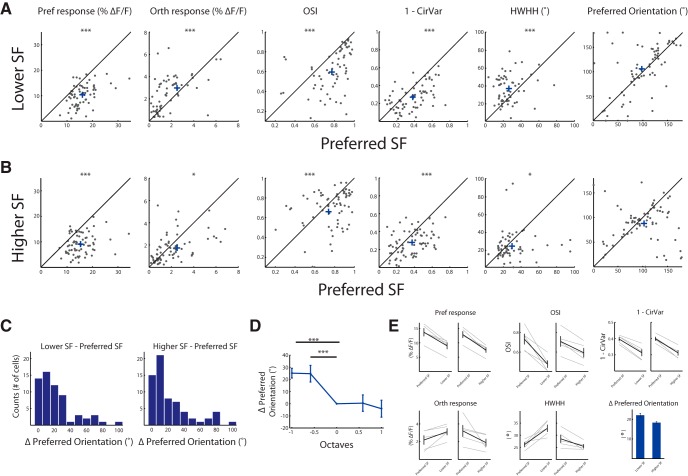
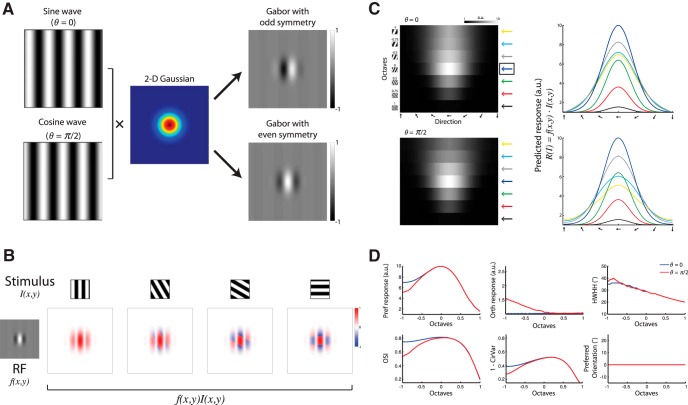
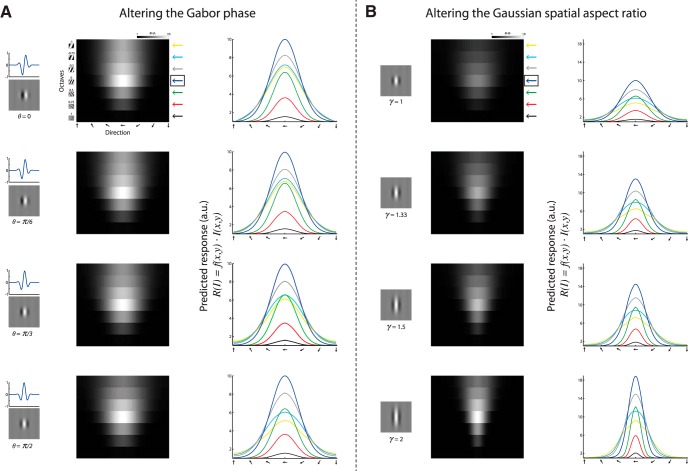
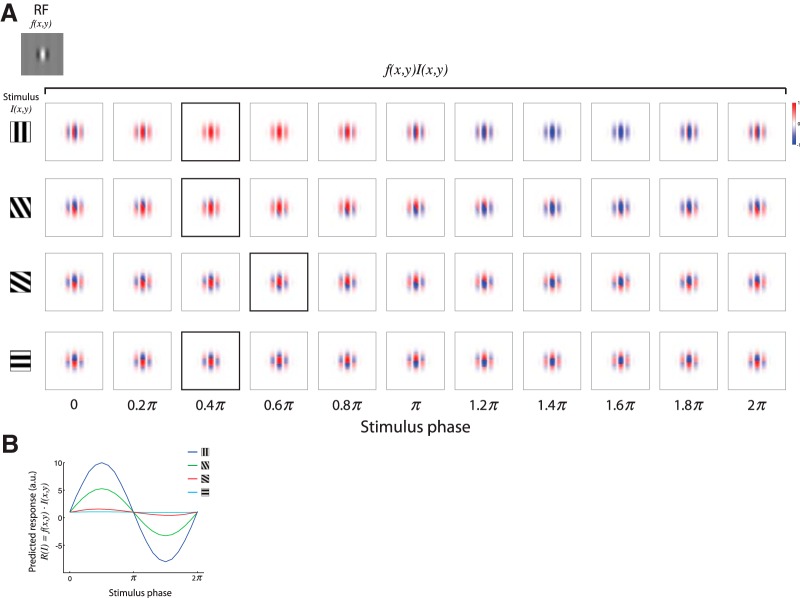
The response properties of neurons to sensory stimuli have been used to identify their receptive fields and to functionally map sensory systems. In primary visual cortex, most neurons are selective to a particular orientation and spatial frequency of the visual stimulus. Using two-photon calcium imaging of neuronal populations from the primary visual cortex of mice, we have characterized the response properties of neurons to various orientations and spatial frequencies. Surprisingly, we found that the orientation selectivity of neurons actually depends on the spatial frequency of the stimulus. This dependence can be easily explained if one assumed spatially asymmetric Gabor-type receptive fields. We propose that receptive fields of neurons in layer 2/3 of visual cortex are indeed spatially asymmetric, and that this asymmetry could be used effectively by the visual system to encode natural scenes.
神经元对感觉刺激的反应特性已被用于识别其感受野并对感觉系统进行功能映射。在初级视觉皮层中,大多数神经元对视觉刺激的特定方向和空间频率具有选择性。通过对小鼠初级视觉皮层神经元群体进行双光子钙成像,我们表征了神经元对各种方向和空间频率的反应特性。令人惊讶的是,我们发现神经元的方向选择性实际上取决于刺激的空间频率。如果假设存在空间不对称的伽柏型感受野,这种依赖性很容易解释。我们提出,视觉皮层第2/3层神经元的感受野确实是空间不对称的,并且这种不对称性可以被视觉系统有效地用于编码自然场景。