Systems Neurobiology Laboratories, The Salk Institute for Biological Studies, La Jolla, CA 92037, USA.
Neuron. 2011 Dec 22;72(6):1040-54. doi: 10.1016/j.neuron.2011.12.004.
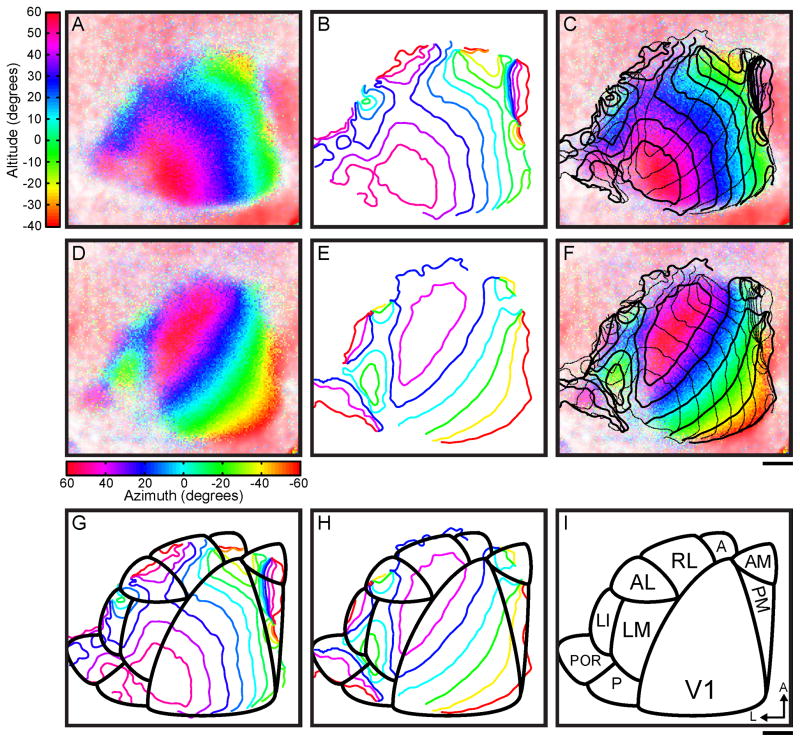
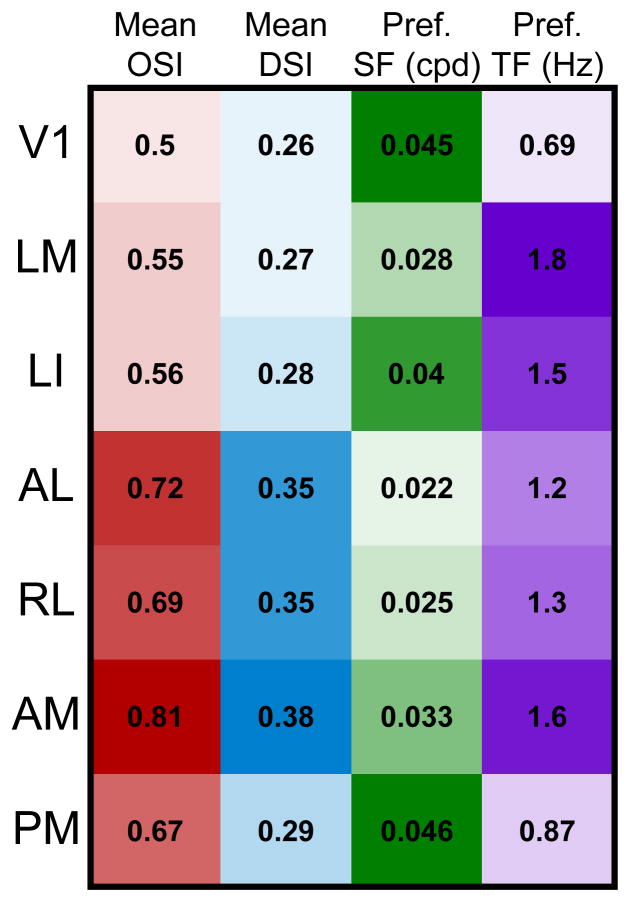
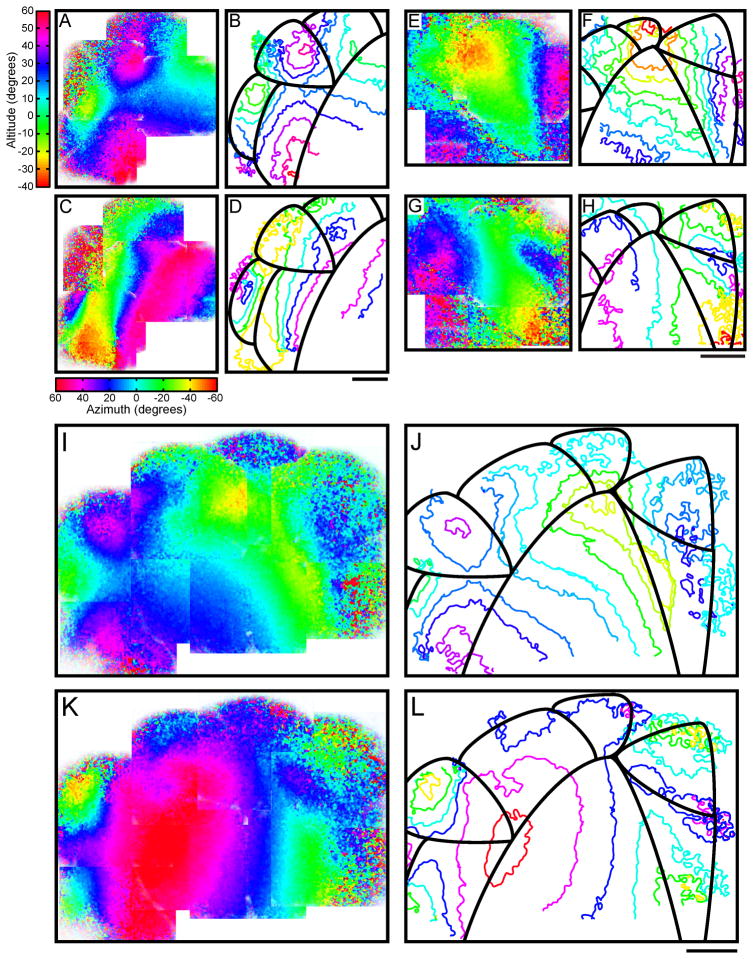
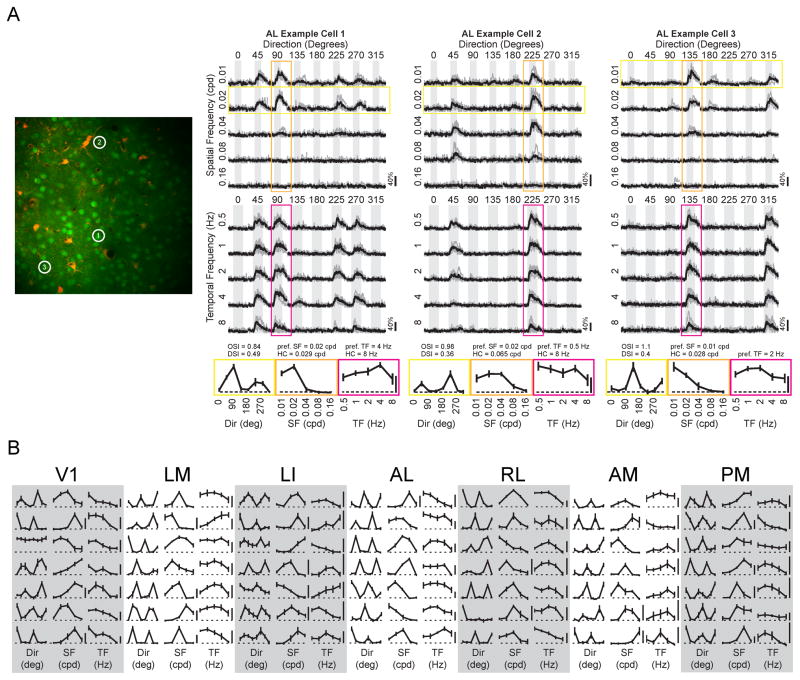
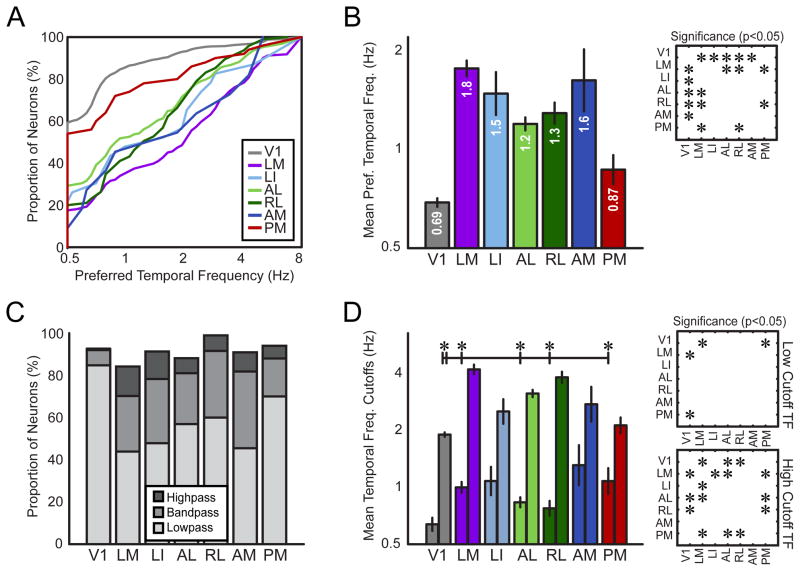
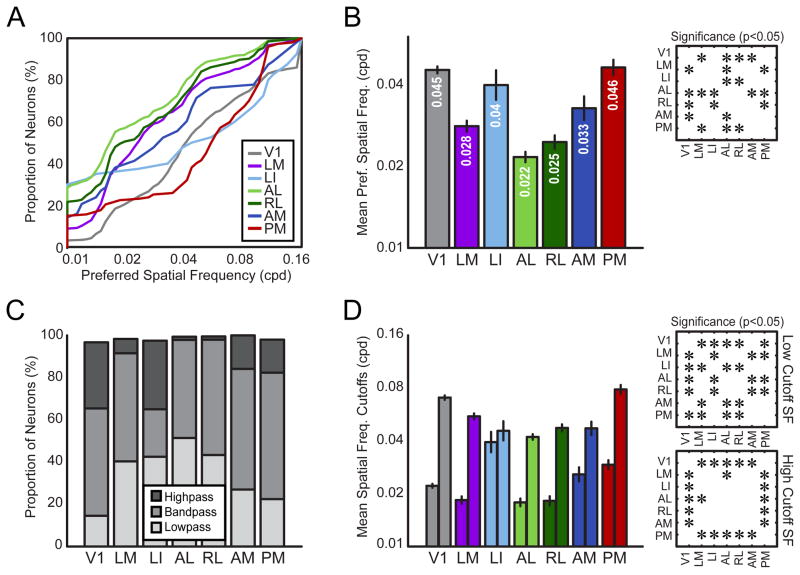
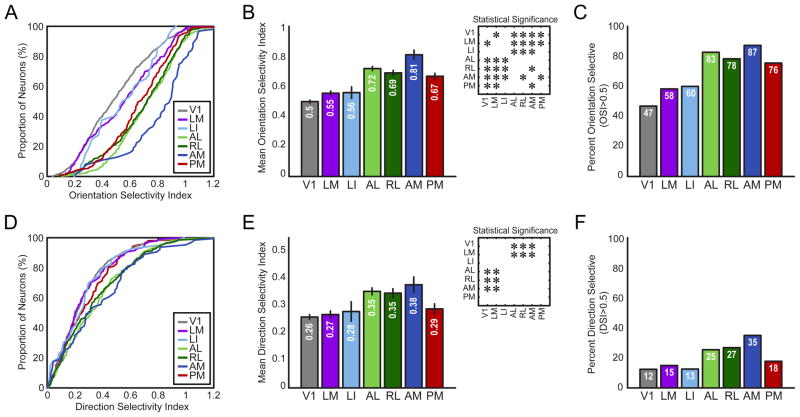
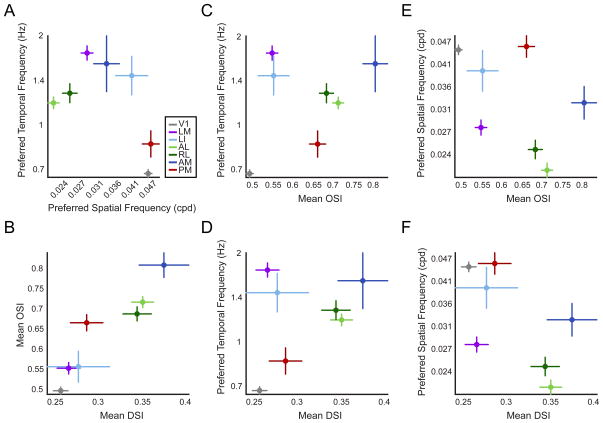
To establish the mouse as a genetically tractable model for high-order visual processing, we characterized fine-scale retinotopic organization of visual cortex and determined functional specialization of layer 2/3 neuronal populations in seven retinotopically identified areas. Each area contains a distinct visuotopic representation and encodes a unique combination of spatiotemporal features. Areas LM, AL, RL, and AM prefer up to three times faster temporal frequencies and significantly lower spatial frequencies than V1, while V1 and PM prefer high spatial and low temporal frequencies. LI prefers both high spatial and temporal frequencies. All extrastriate areas except LI increase orientation selectivity compared to V1, and three areas are significantly more direction selective (AL, RL, and AM). Specific combinations of spatiotemporal representations further distinguish areas. These results reveal that mouse higher visual areas are functionally distinct, and separate groups of areas may be specialized for motion-related versus pattern-related computations, perhaps forming pathways analogous to dorsal and ventral streams in other species.
为了建立一个用于高级视觉处理的遗传上易于操作的小鼠模型,我们描述了视觉皮层的精细视网膜组织,并确定了七个视网膜鉴定区域中第 2/3 层神经元群体的功能专业化。每个区域都包含独特的视知觉代表,并编码独特的时空特征组合。LM、AL、RL 和 AM 区域比 V1 更喜欢高达三倍的更快的时间频率和显著更低的空间频率,而 V1 和 PM 则更喜欢高空间和低时间频率。LI 则更喜欢高空间和时间频率。除了 LI 之外的所有外纹状区都比 V1 增加了方位选择性,三个区域的方向选择性显著更强(AL、RL 和 AM)。时空表示的特定组合进一步区分了区域。这些结果表明,小鼠的高级视觉区域在功能上是不同的,并且可能有特定的分组专门用于与运动相关的或与模式相关的计算,也许形成了类似于其他物种的背侧和腹侧流的通路。